Planoplan: My Indispensable Assistant for Interior Design Success
Ekaterina Petrova, Conceptual Design Expert – on Visualization Quality, Expanding Services, and Building Client Trust
- 21 april 2026
- 1769
The heroine of this interview is Ekaterina Petrova, an interior designer from Ivanovo. Since 2018, she has been working on conceptual interior design projects. What started as a hobby has now, for eight years, been her full‑time profession – and Ekaterina has chosen Planoplan as her main working tool.
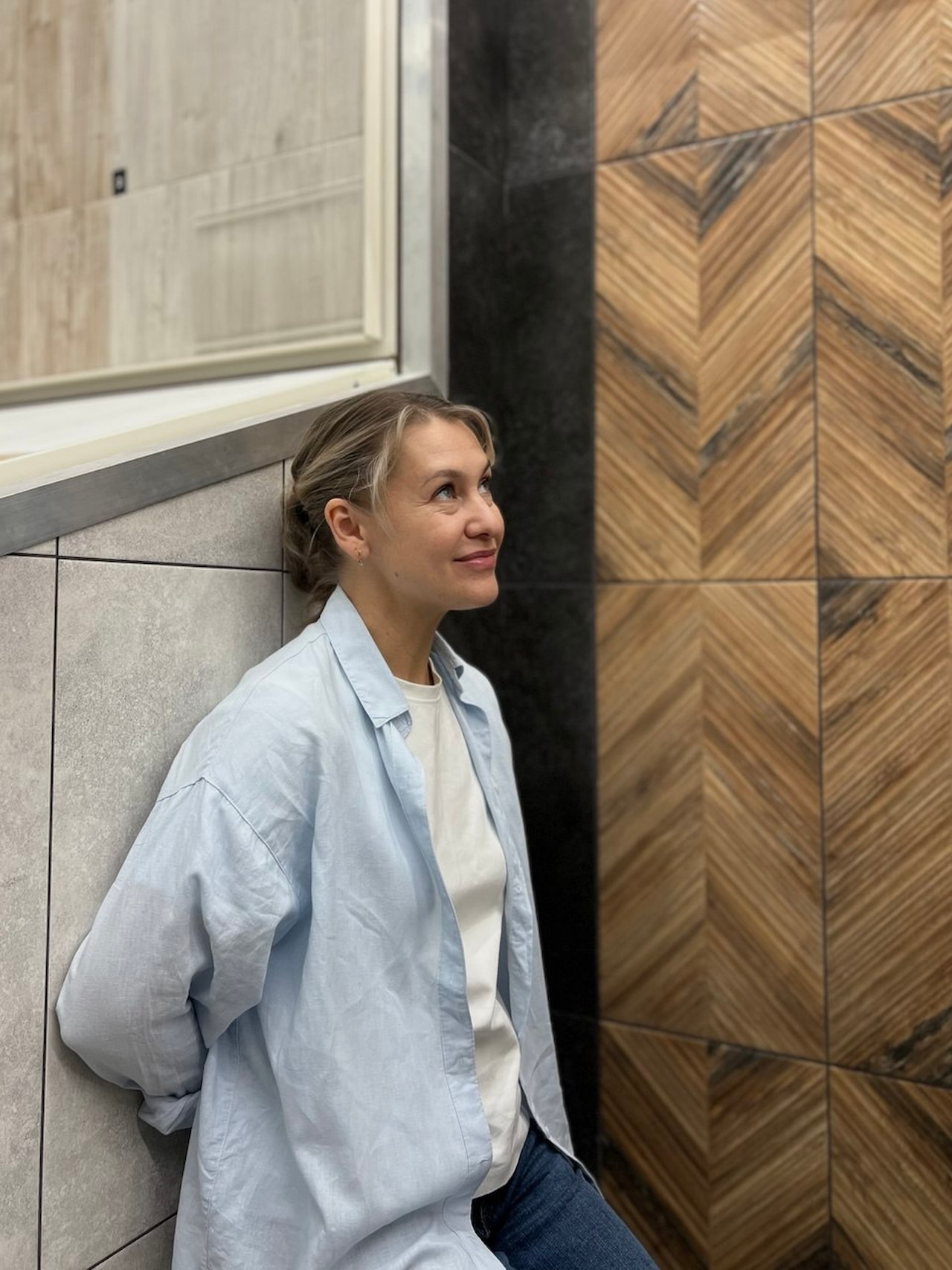
In this blog interview, we talked about how Ekaterina sets her pricing policy, what she believes matters most for successful project execution, and a real‑life case of a “full‑trust” project. We also analyze current client requests and share three practical tips for beginners.
The visualization quality – and I fell in love
— Ekaterina, how did you get into interior design, and why did you choose Planoplan among all the programs?
I’ve always been fascinated by aesthetically pleasing spaces and creating comfort and coziness. But I never thought this interest would turn into a career. While on maternity leave with my second child, I got more seriously into design. My husband supported me and pushed me to take interior design courses. And I got hooked…
Then I realized: to do this professionally, I needed to master a 3D visualization program. That’s when fate brought me to Planoplan. Now it’s my indispensable assistant and tool to communicate all my ideas to the client.
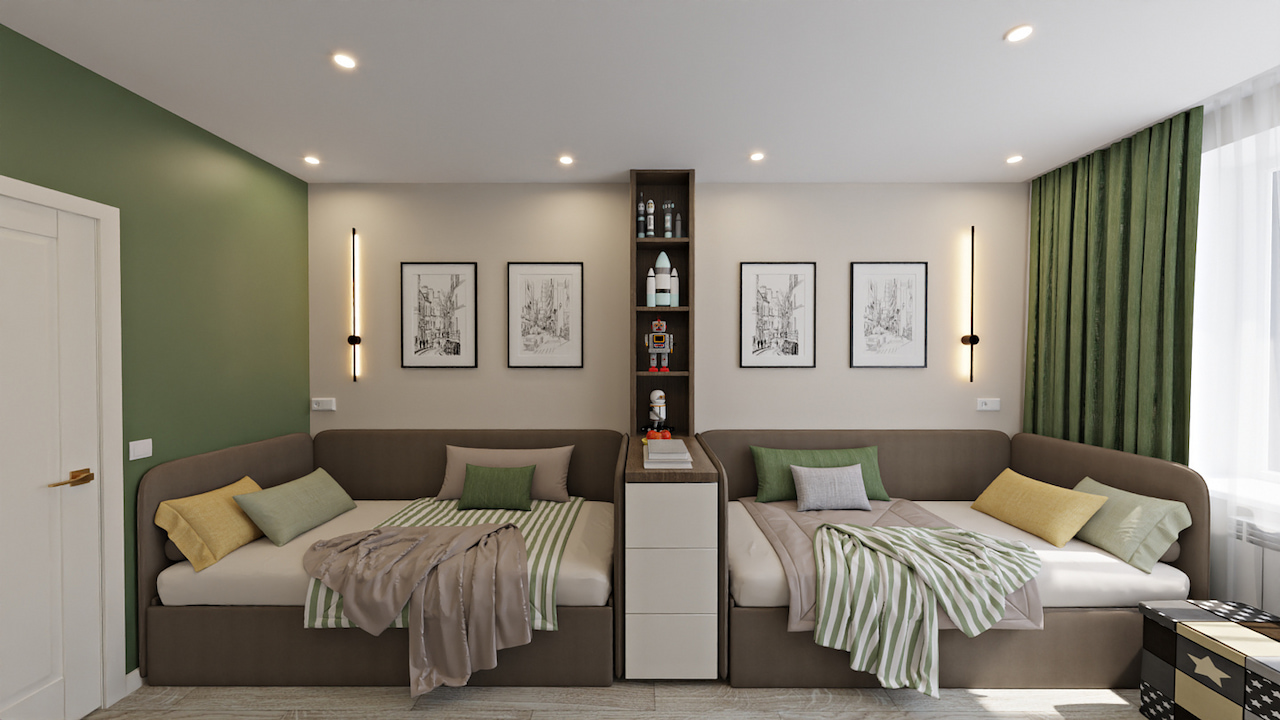
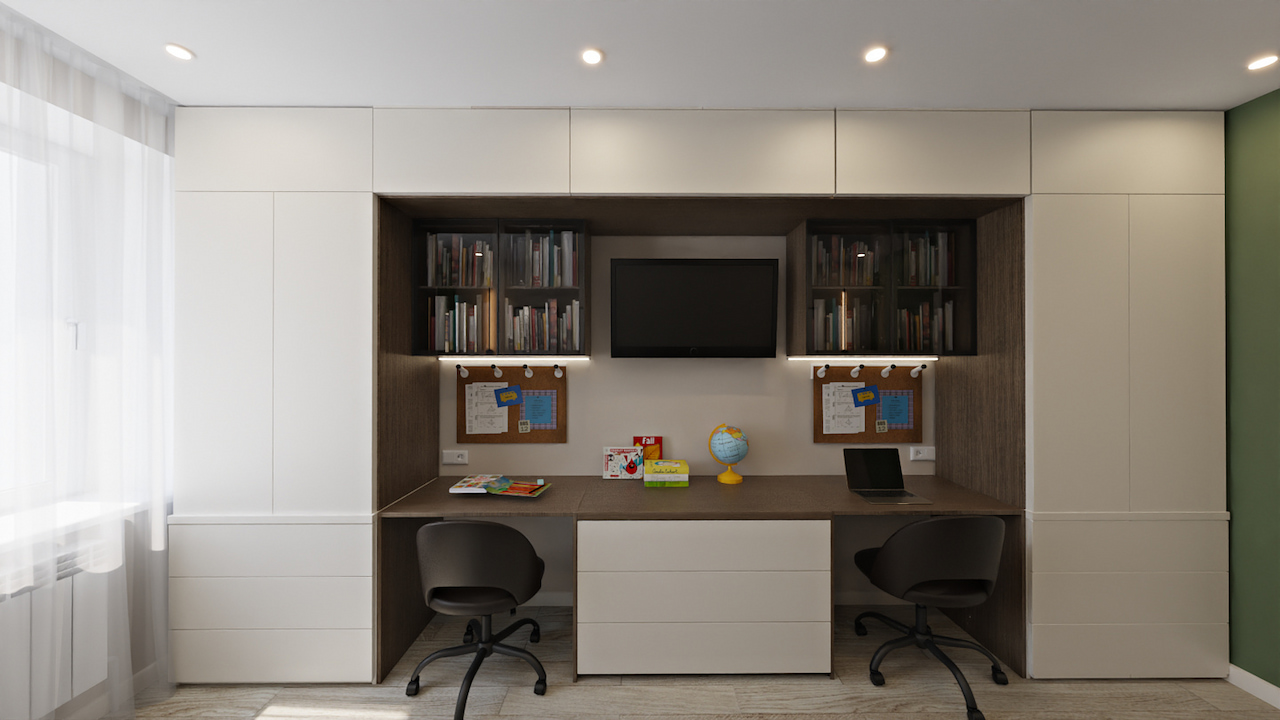
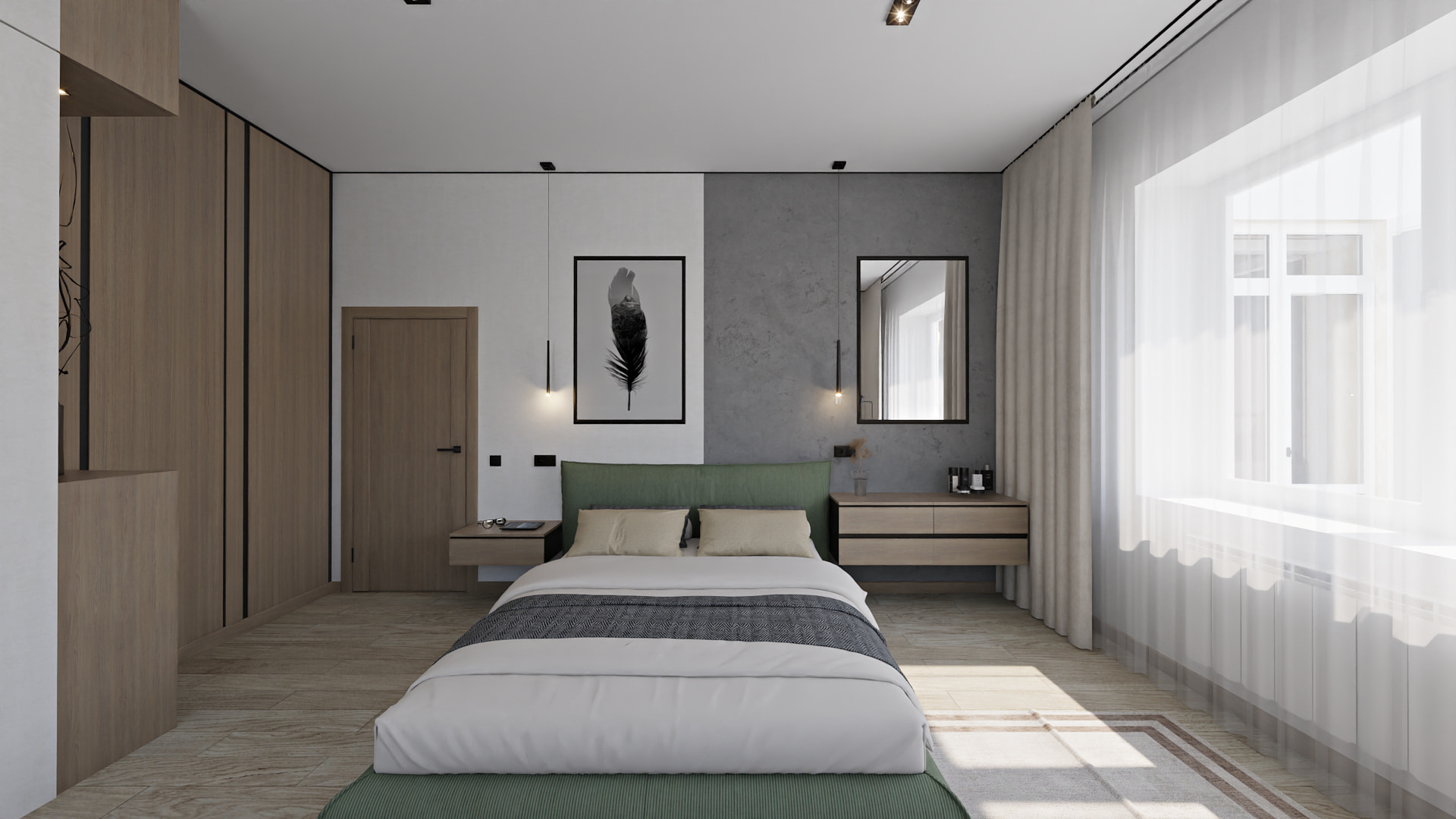
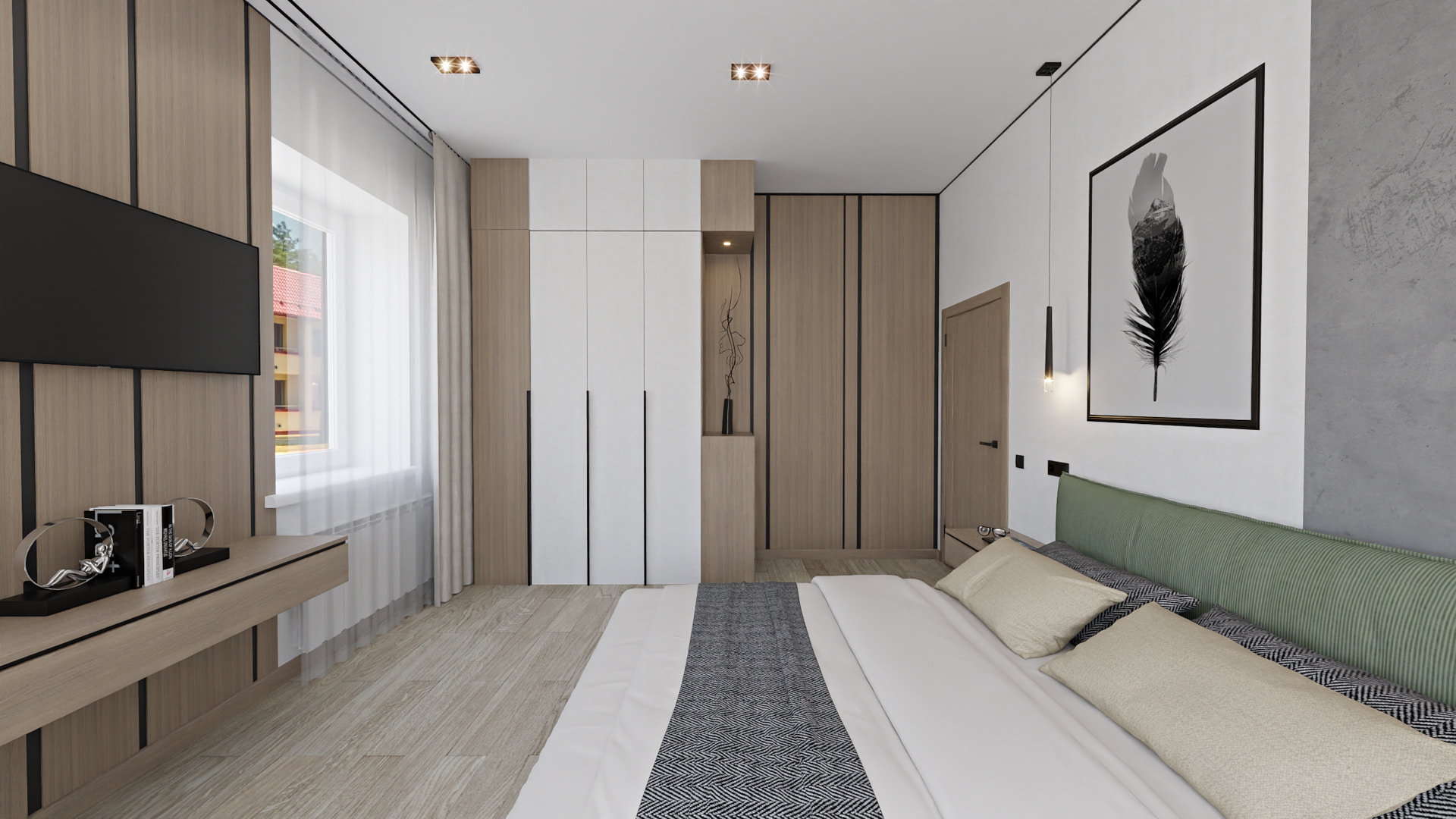
Planoplan attracted me with its clarity, accessibility, and ease of learning. My priority when choosing a 3D program was visualization quality – and in that respect, Planoplan is simply a giant.
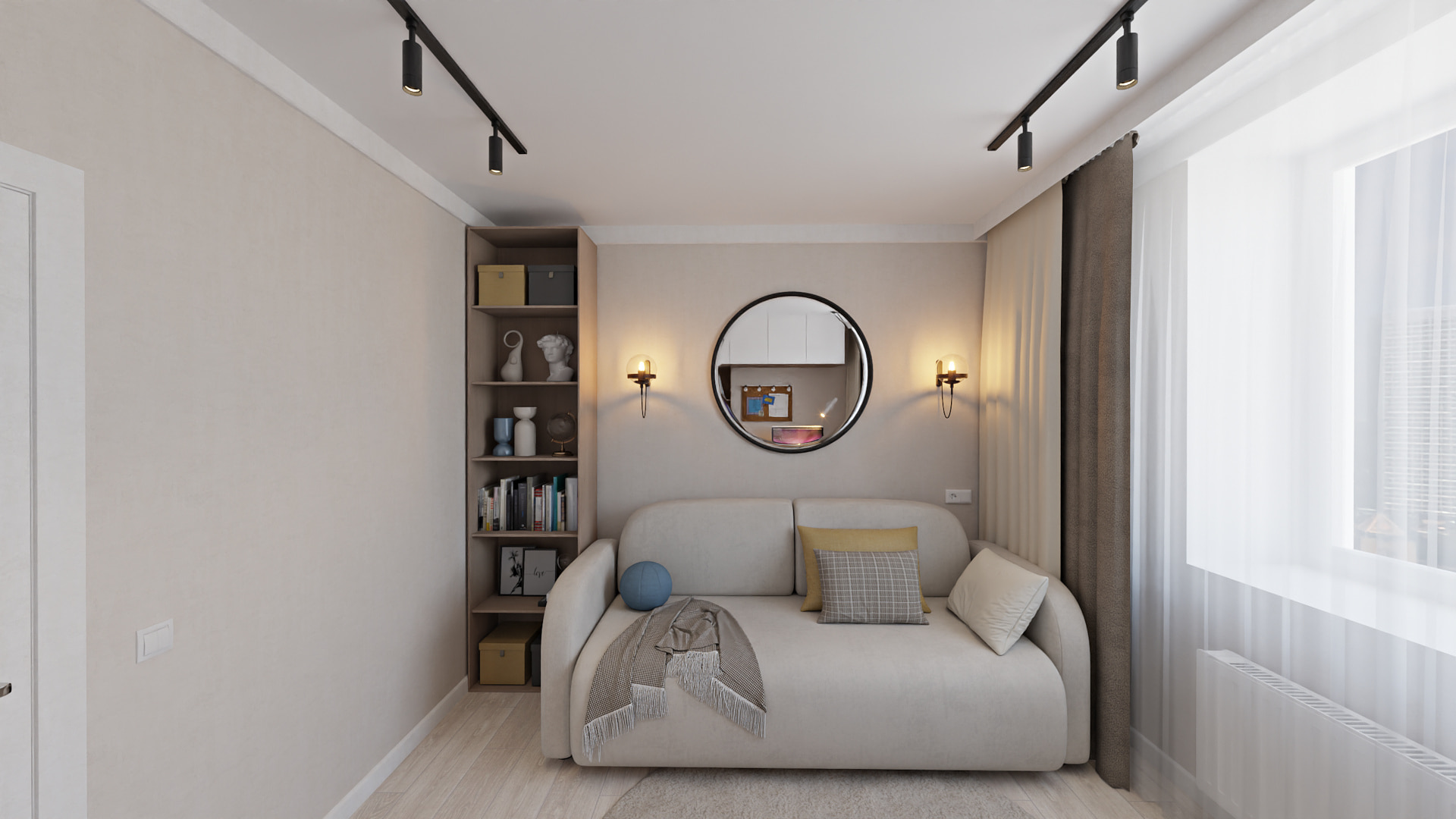
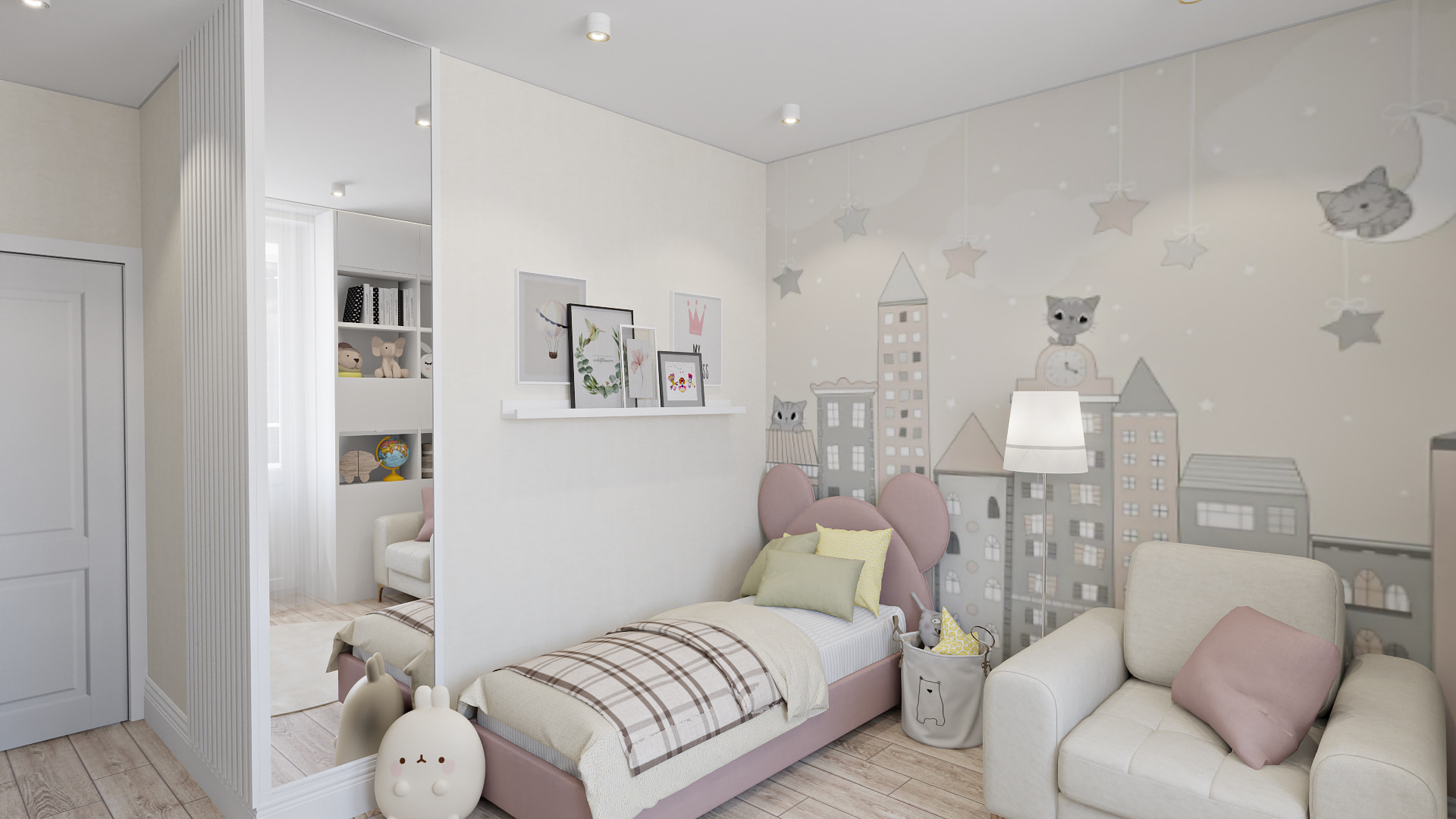
It’s especially interesting to compare the visualization at the design stage with the actual result – to see if everything I envisioned was realized. Sometimes potential clients, looking at my portfolio, ask: “Is this a 3D render or a real photo?” That’s already a compliment to Planoplan.
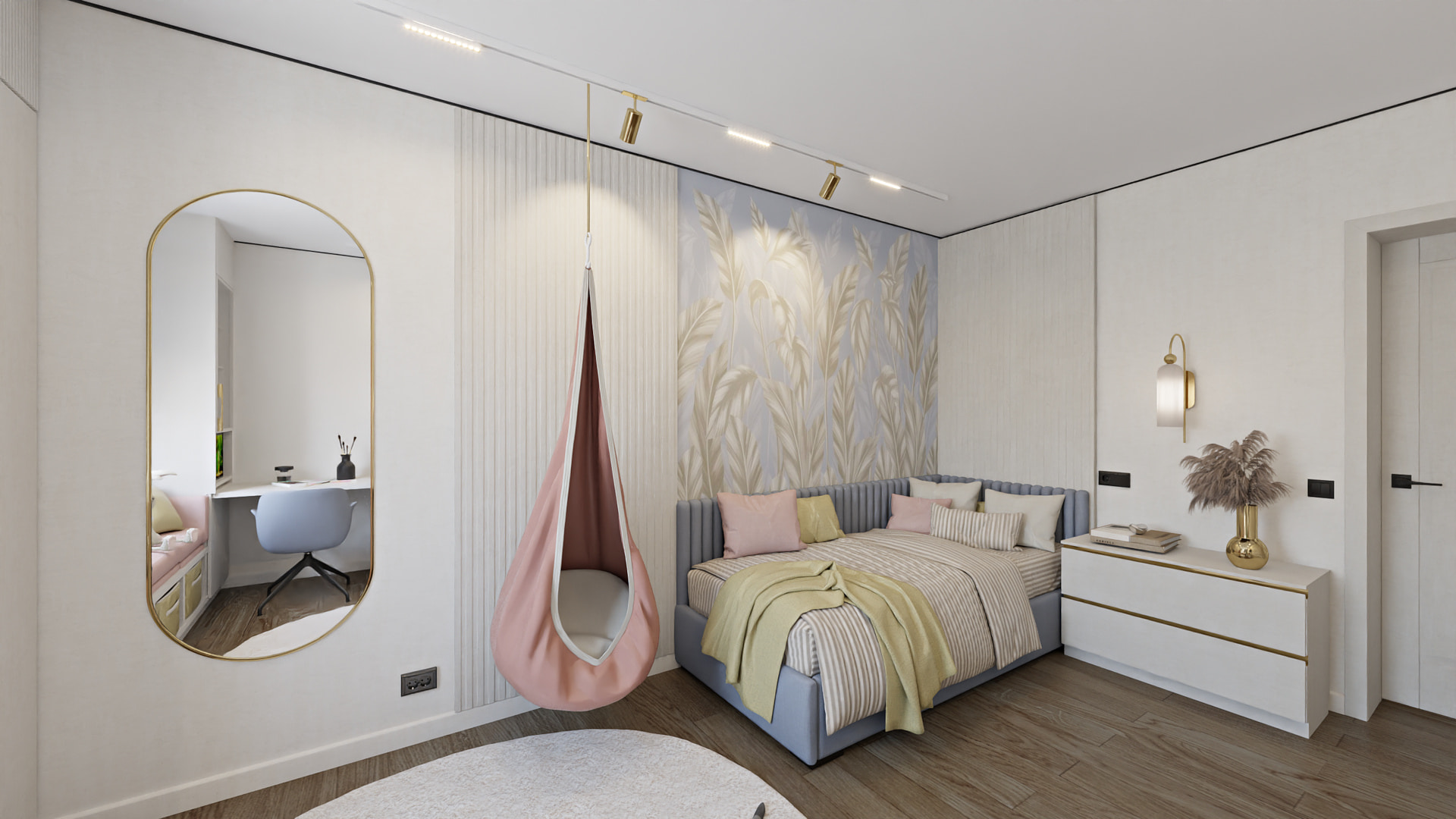
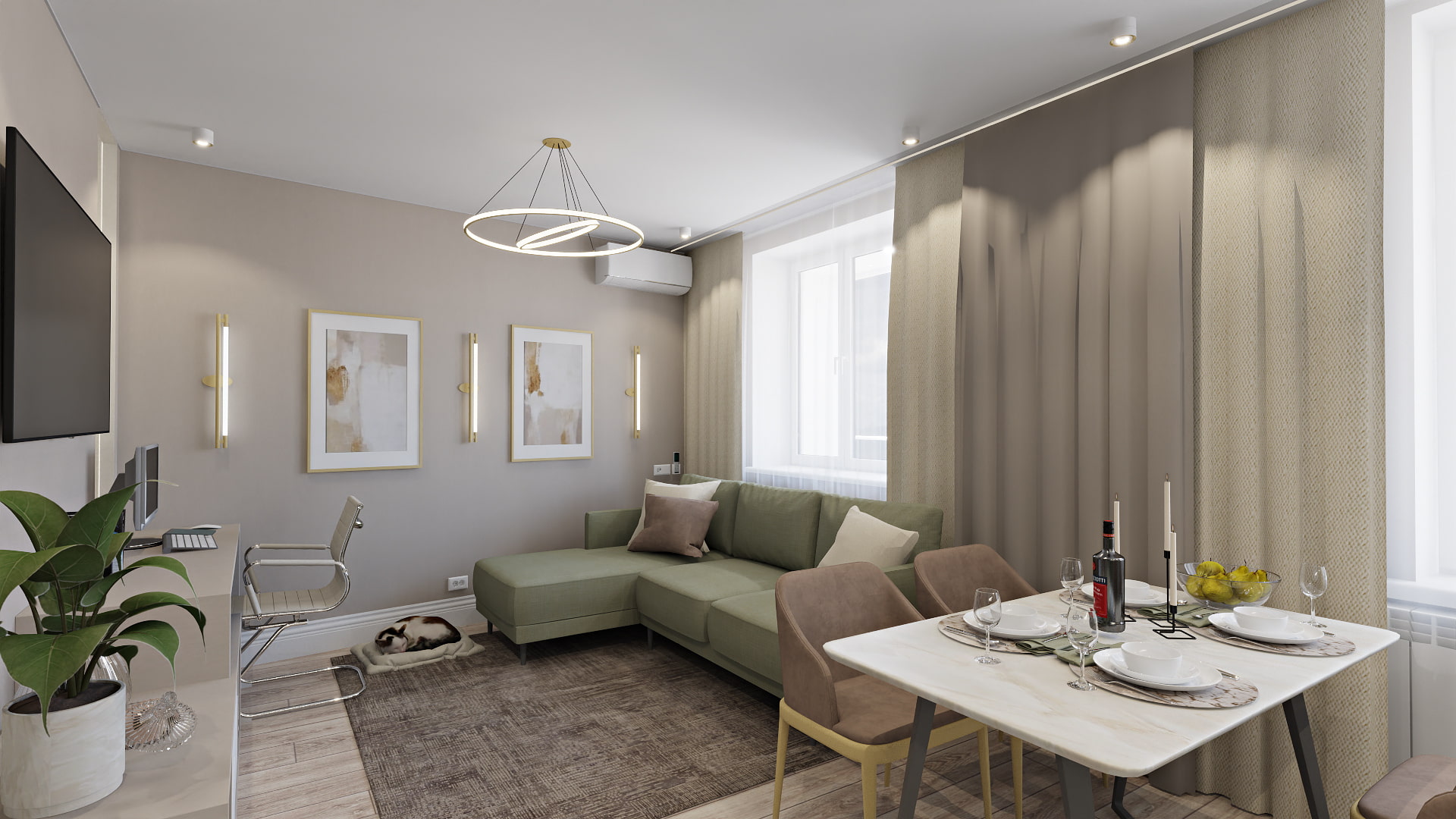
The client said: do it to your taste – and we approved the project on the first try
— Tell us about one project that you particularly remember.
A client from Moscow reached out to me. We needed to design a one‑bedroom apartment for rent. There was a lot of creative freedom because this wasn’t my first time working with her – in total, we’ve done six projects together. She already knew me and trusted me completely: “This apartment isn’t for me, it’s for rent, so I’m relying on you. Do it to your taste.” That’s what made this project memorable.
Maybe because there was no personal attachment, we approved the project on the first try. The client was thrilled: “I probably wouldn’t have ordered something like this for myself, but I’m very happy with the result – even with the colors I would never have considered. When you let go and trust the designer, the outcome is great.”
— What was your starting point for the design?
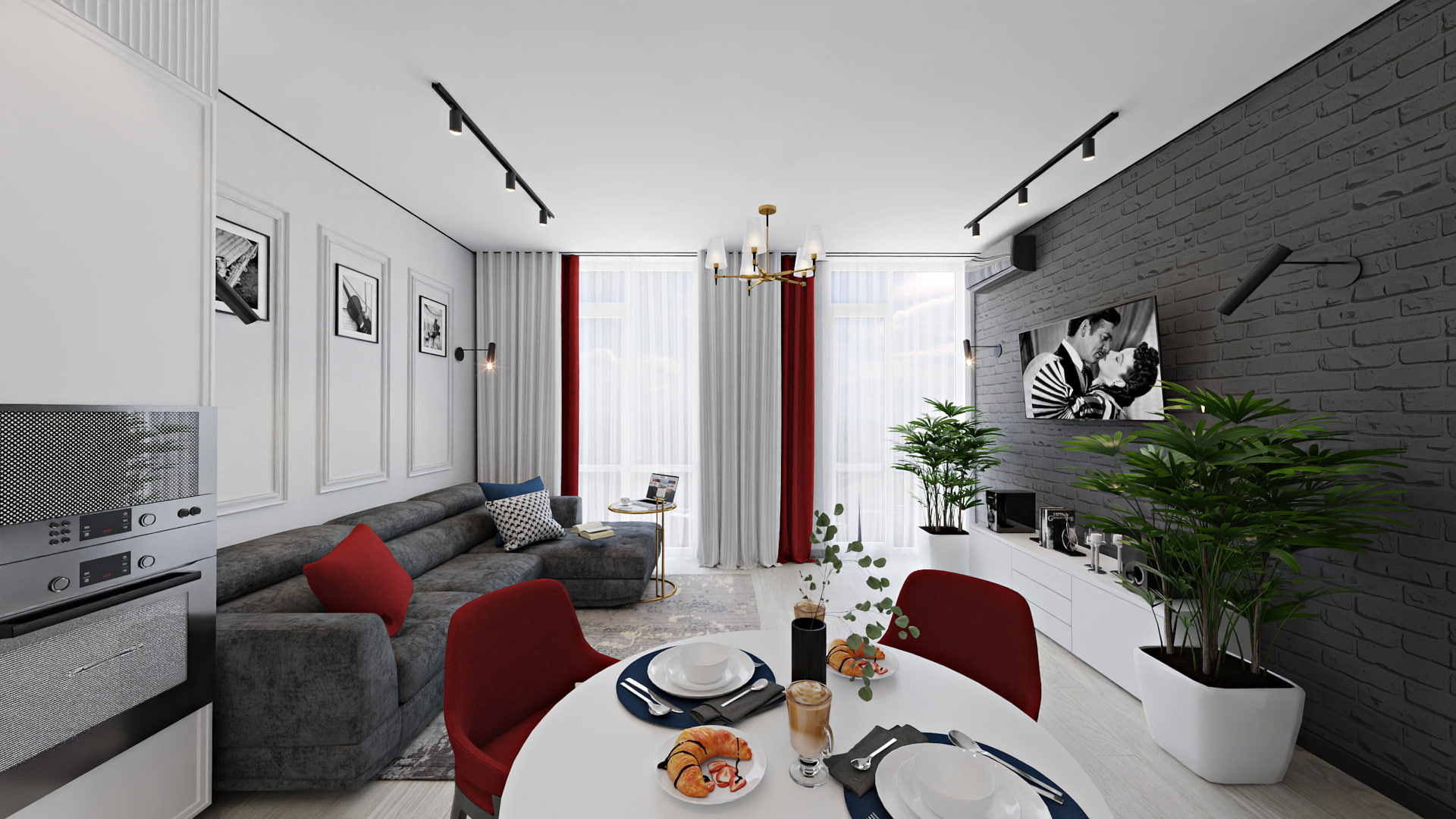
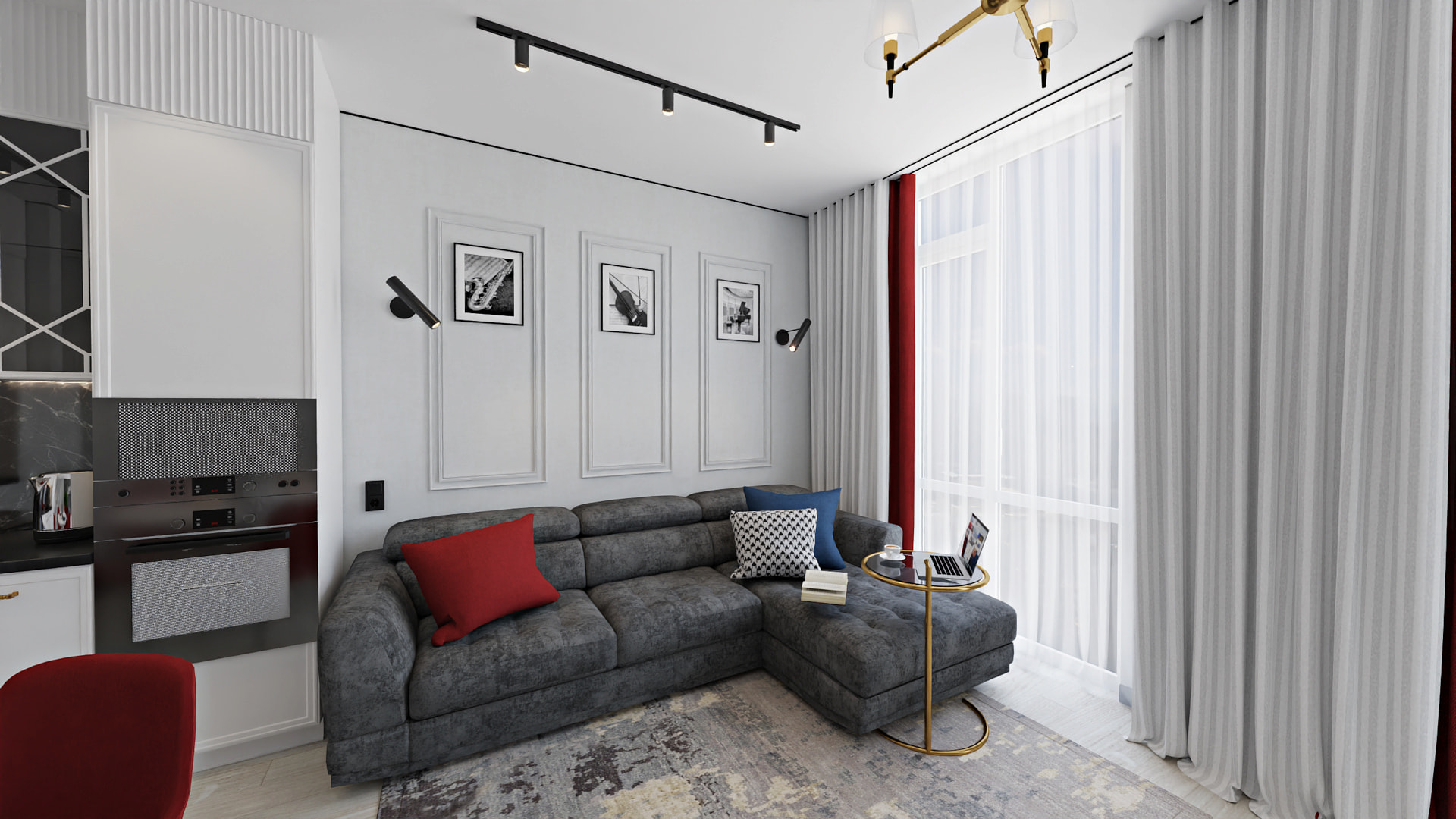
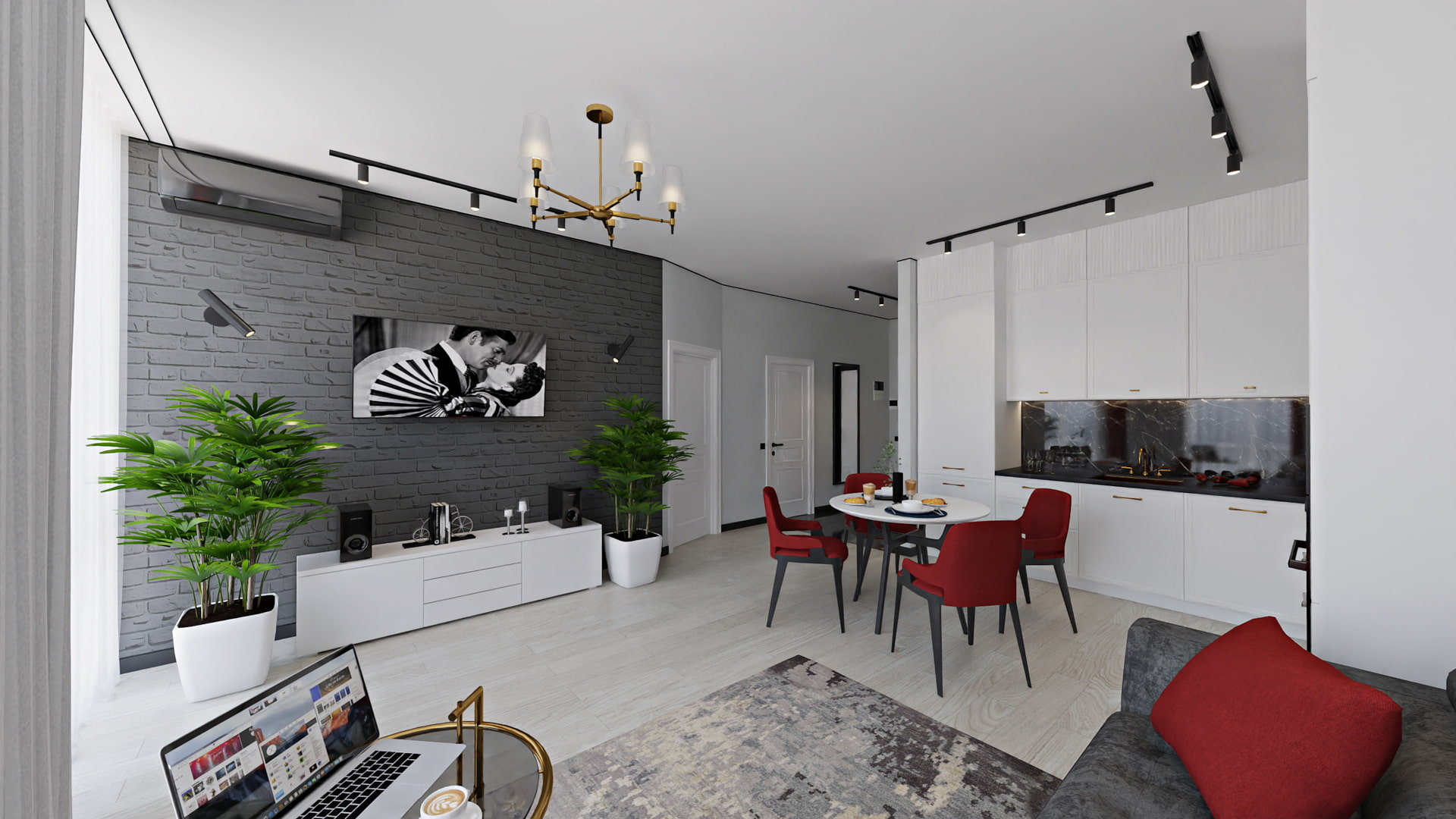
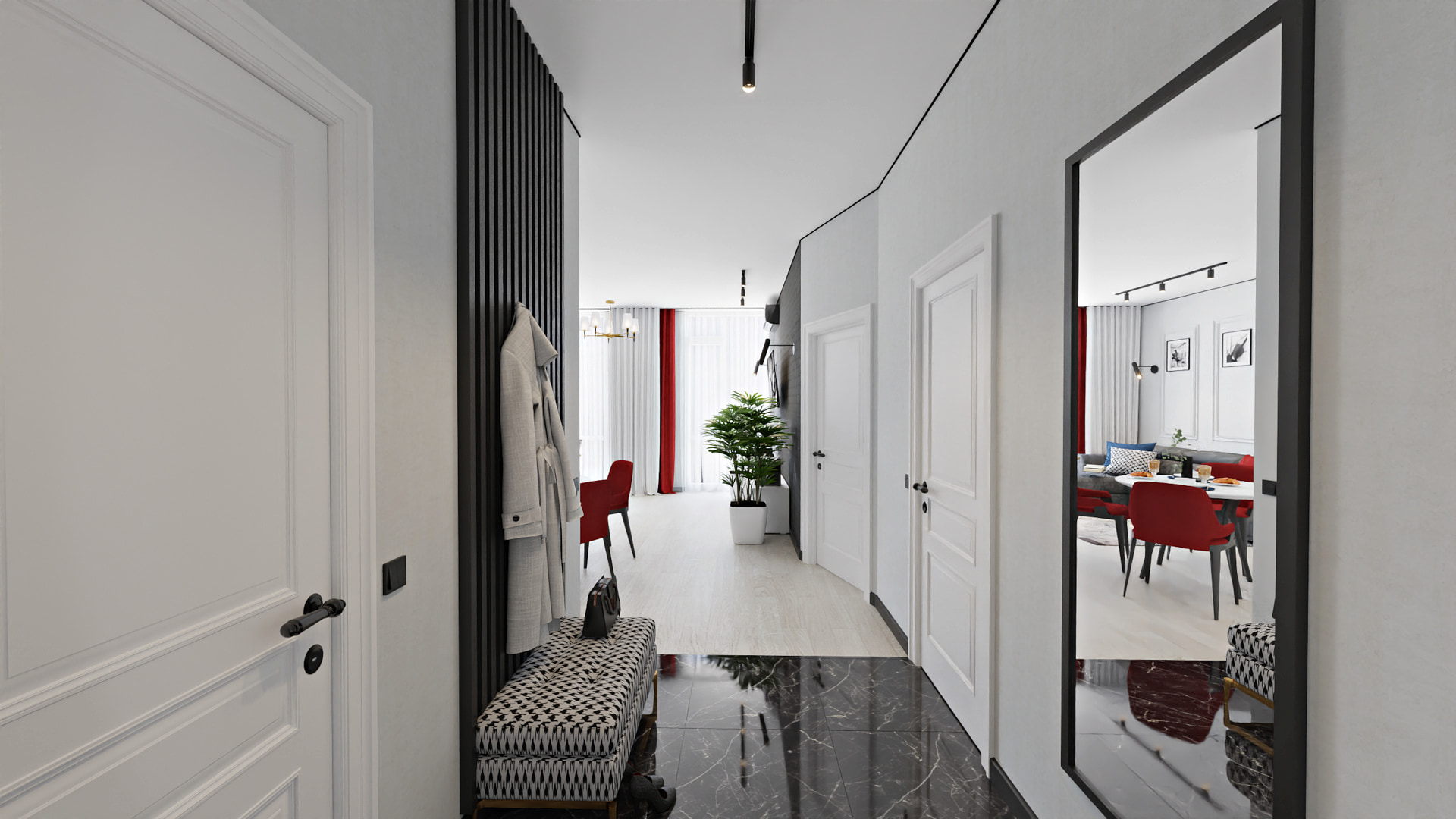
First, the name of the residential complex – “The Composers” in Moscow, business class. The main brief was: the renovation must match the building’s status so we could rent it at a higher price. We quickly settled on a classic style and a light color scheme – to make the apartment feel larger, airier, and more breathable.
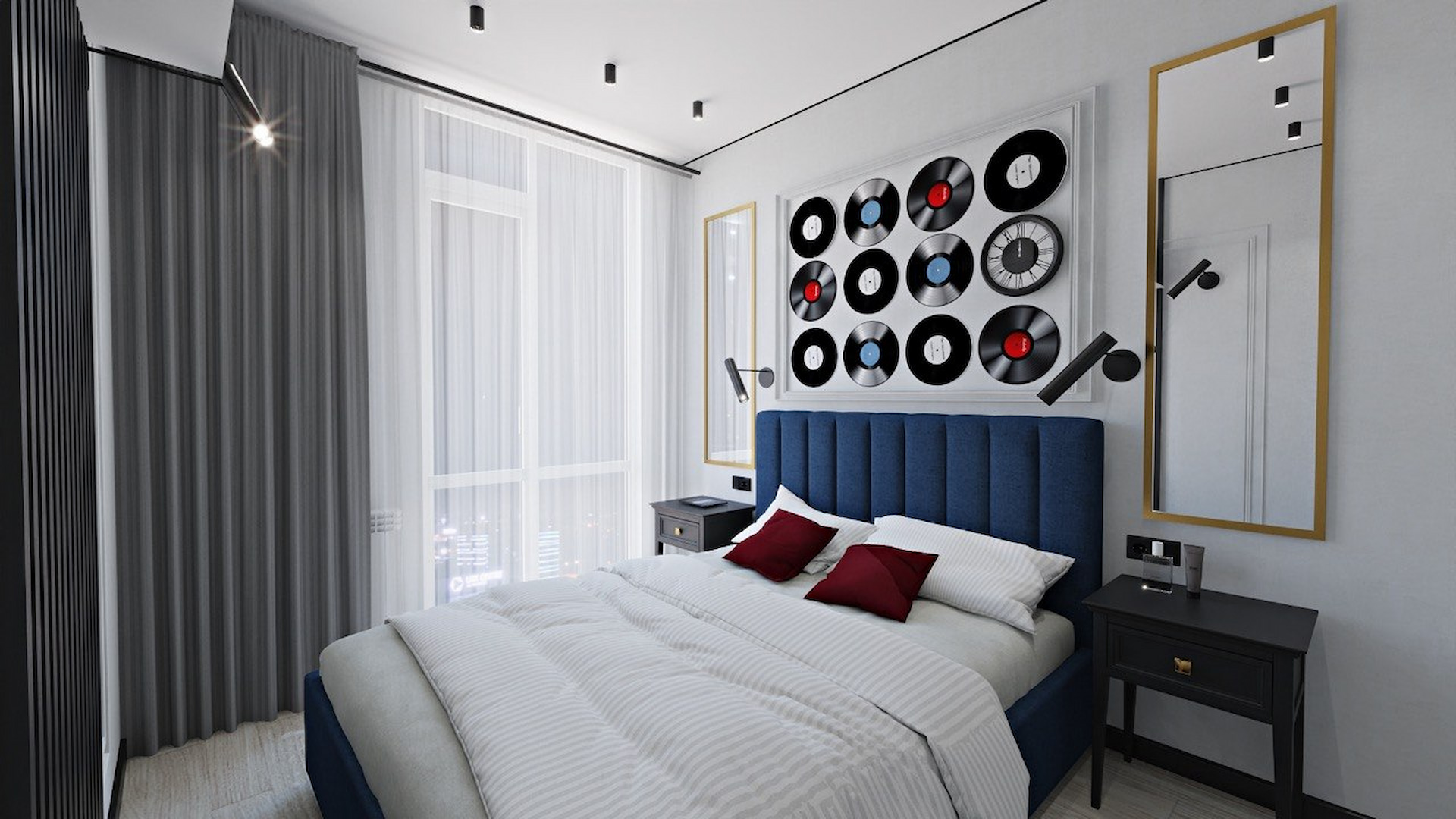
I also decided to play off the name a little. I added small musical notes: in the living room, posters above the sofa with images of musical instruments, black‑and‑white photos. In the bedroom, a panel made of vinyl records (unfortunately, no final photo – the project was from 2023, and the implementation was still ongoing).
— So the final version was approved immediately. Were there any difficulties during execution?
In terms of execution: the project was conceptual, without strict supervision, because the client lives in another region. I came for measurements, the initial questionnaire, and signing the contract – after that, the work was remote. She managed the construction team very well on her own. I was on call – advising on material selection, she sent photos and videos, and together we chose colors, fronts, and finishes. For working independently, she did a great job.
Being a designer is not just an office job – it’s also dust and talking to the construction team
— Your services include “client supervision during implementation.” Some designers believe that a project without on‑site supervision is a headache for builders and a risk to the profession’s reputation. What’s your view?
We have to admit: when a designer is involved not only in planning but also in implementation and material selection, the result truly is different. The designer notices many nuances that the client simply wouldn’t think about.
But not everyone can afford supervision – it costs extra. And the attitude of workers varies. Some teams are ready to discuss every detail with the designer and consider it important. Others are convinced: “We’ll figure it out ourselves, the designer only gets in the way.” It all depends on the team, the timeline, and the cost. There’s no single answer.
— What about the technical side of your projects: engineering documentation, electrical plans, elevations, tile layouts?
Planoplan makes this possible, and that’s super great. It allows you to hand over the project to the workers, go on vacation, and not worry about anything (well, almost). But again, it comes down to price: the more detailed and dense the project documentation, the more expensive it is. You have to see what the client is willing to pay for and what they expect to receive.
It’s important to understand: even very detailed technical documentation does not guarantee that no issues will arise during implementation (especially in secondary housing – demolition can bring surprises). I believe it’s more important to work in tandem with the construction team. That’s more valuable than just drawings. If you have a good team that sees the project as a guide rather than a rigid instruction, and is willing to think and communicate – then my format works. But if a client wants full engineering documentation – that means different prices, different timelines, and there can still be disappointments: items discontinued from production, long wait times, or quality that doesn’t satisfy on site. You always need to clarify upfront what the client gets for their money.
20 conceptual projects a year – my current comfort zone
— You mentioned balancing family, work, and your passion. In that mix, is design both work and passion? Or do you have another main job?
No, interior design is now my full‑time profession – I do it every day. It used to be a hobby, but after courses and mastering Planoplan, it turned into work. I completely changed my field of activity.
— We live in challenging times. Have you noticed any changes in the number of client inquiries?
I complete about 20 conceptual projects each year. Some of them I supervise, some I don’t.
Honestly, even during the pandemic, I didn’t see a drop in demand. As soon as I posted my information online, orders started coming in, and then word of mouth took over. Thankfully, I’ve been able to maintain roughly the same volume.
My current pace allows me to work without assistants, balance family, my favorite job, sports, “beauty treatments,” and just enjoy my work.
— What requests do you hear most often from clients now? Any trends?
Mostly families with one or two children, in the mid‑range and mid‑plus price segment. People want to live comfortably and calmly, with their home as a place of rest and relaxation. They ask for functionality and calm colors – gray and beige tones with small color accents (green, blue, purple – on sofas, curtains, etc.).
Why? The region where I mainly work (Ivanovo) is not super wealthy. People buy apartments with mortgages; they need a “long‑lasting” interior that won’t get boring, is easy to update, and where color can be changed through textiles. Bright walls are a temporary desire – redoing them is difficult and expensive. Renovation is exhausting, and people want to do it once and for a long time.
We often plan ahead: a family with one child plans a second – we put a sofa in the kids’ room that can become a bed, leave space for a second desk. A young couple – we prepare the electrics for a future crib niche. The main request is an adaptive interior. I suppose I’m a proponent of that myself, so that’s the kind of client who finds me.
— Tell us about your pricing policy. Does the cost of Planoplan affect it?
I try to keep my prices around the regional average. How? I work for myself, as a one‑person business. I don’t have an office, a staff of administrators, visualizers, or engineers. That allows me to keep prices reasonable. But it also defines my service list – to expand further, I’ll need employees. Also, besides Ivanovo, I work in other regions, where prices are different.
Do I raise my prices when you raise your rates? No, not synchronously. Planoplan’s share of my expenses isn’t that large. I raise prices when bread in the store costs twice as much or gasoline goes up. I look at the overall economic situation in the region and the country. People need to eat, so I have to raise prices. There’s no direct link to your tariff.
Advice for beginners: listen to the client and don’t be afraid to visit the site
— Please give 3–4 practical tips for those following your path.
- The designer is a tool for the client. We need to hear their needs, possibilities, desires, and priorities. Help people, don’t use their apartment as a canvas for your own creative outbursts. In the end, the client will live there. Yes, we guide, we constructively point out what works and what doesn’t, we advise. But the main thing is to feel the client and adapt their wishes to the apartment’s possibilities and budget.
- Design is not just office work. It’s also about dust and dirt. Be prepared to go to the site. Even if you have a measurer, you should assess the lighting, utilities, beams – things that don’t always appear on plans. Visit the site, even if you weren’t hired for supervision. At the initial stage, offer it yourself: “Let me come and see how things are going.” You can even do it for free. It’s important to see how your ideas come to life, learn to talk to workers, and understand what questions they ask.
- Befriend construction and finishing teams. Don’t be afraid or shy – sometimes ask their advice: “Guys, what would you recommend?” That’s how great results happen. On your next project, you’ll already account for the nuances and mistakes from the last one.
Conclusion
— Ekaterina, does working as a designer give you the freedom you dreamed of?
Yes. Interior design has become a way for me to balance family, work, and my passion. I control my income, my workload, and my daily schedule. In tandem with Planoplan, my work becomes clear and accessible to the client, efficient, and minimizes the risk of rework.
— What are your plans for further growth with Planoplan?
In recent years, the program has added many features – the ability to upload textures, 3D models, create electrical plans, elevations, tile layouts, and much more. Previously, my services only included space planning and visualization, but now thanks to Planoplan, I can expand my range.
— What would you say to designers who are considering Planoplan but still hesitant?
Give it a try. The program is intuitive, and the visualization quality will pleasantly surprise you. And when your renders start being mistaken for real photos – you’ll know you made the right choice.

Planoplan is a professional tool for easy and comfortable work
High-quality visualizations, construction documents, specifications, and stunning virtual tours for your clients — these and other Planoplan features with one subscription. 7-day free trial for all new users!