How to Become an Interior Designer: Real Stories from Beginners
Two New Stories of Beginner Designers Who Are Already Taking Orders
- 23 may 2026
- 1840
We’ve already published one collection of stories from beginner interior designers. And we realized: we need to keep doing this. Because the fear of “I’m too green” isn’t going away, and examples of everything working out perfectly from the first try are rare. They inspire, but don’t always help. What does help are honest stories from real people about what their journey actually looks like, how they start working in the profession, and how in the beginning it can be scary, funny, frustrating — and still great.
In this new article, two heroes. Each from a different city, age, and background. What unites them: they are already taking orders and gaining the necessary experience. And they have no plans to stop.
We’ll never tire of saying: it’s okay to start and not know everything. You don’t need a diploma. You can make mistakes. You can work from home as a freelancer. The main thing is to do the work — the path will be conquered by those who walk it. And Planoplan, along with our support, will help you not get lost in drawings, renderings, or your own doubts.
Designer 1 – Ksenia Mot: “At 13, I Was Designing for My Whole Family Instead of Playing Games. At 23, I’m Studying Design and Working for Myself”

How I got into this field
After high school, I dreamed of studying design at a major university. I did well on my final exams, earned extra points for a gold medal, and passed the creative entrance tests. I thought, “I’ve got this in the bag!”
But it was 2020, the pandemic, remote everything. I prepared for exams and my portfolio, but I didn’t take part in online contests or olympiads. And those gave participants (not even winners — just participants!) the right to top scores on entrance exams. When those results were added to the rankings, I dropped from 15th place for a tuition-free spot to 118th… There were only 110 tuition-free spots, and 800 applicants.
I wanted to cry and blame everyone around me.
A year later, I was on vacation in a southern city, saw billboards for a state university, and decided to try again. I got in. And right away, I landed a job at a furniture design studio. There I learned how to construct furniture, calculate materials, and make selections. I learned a lot about renovation and interior design. I decided: sooner or later, I’d get into full-scope interior design.
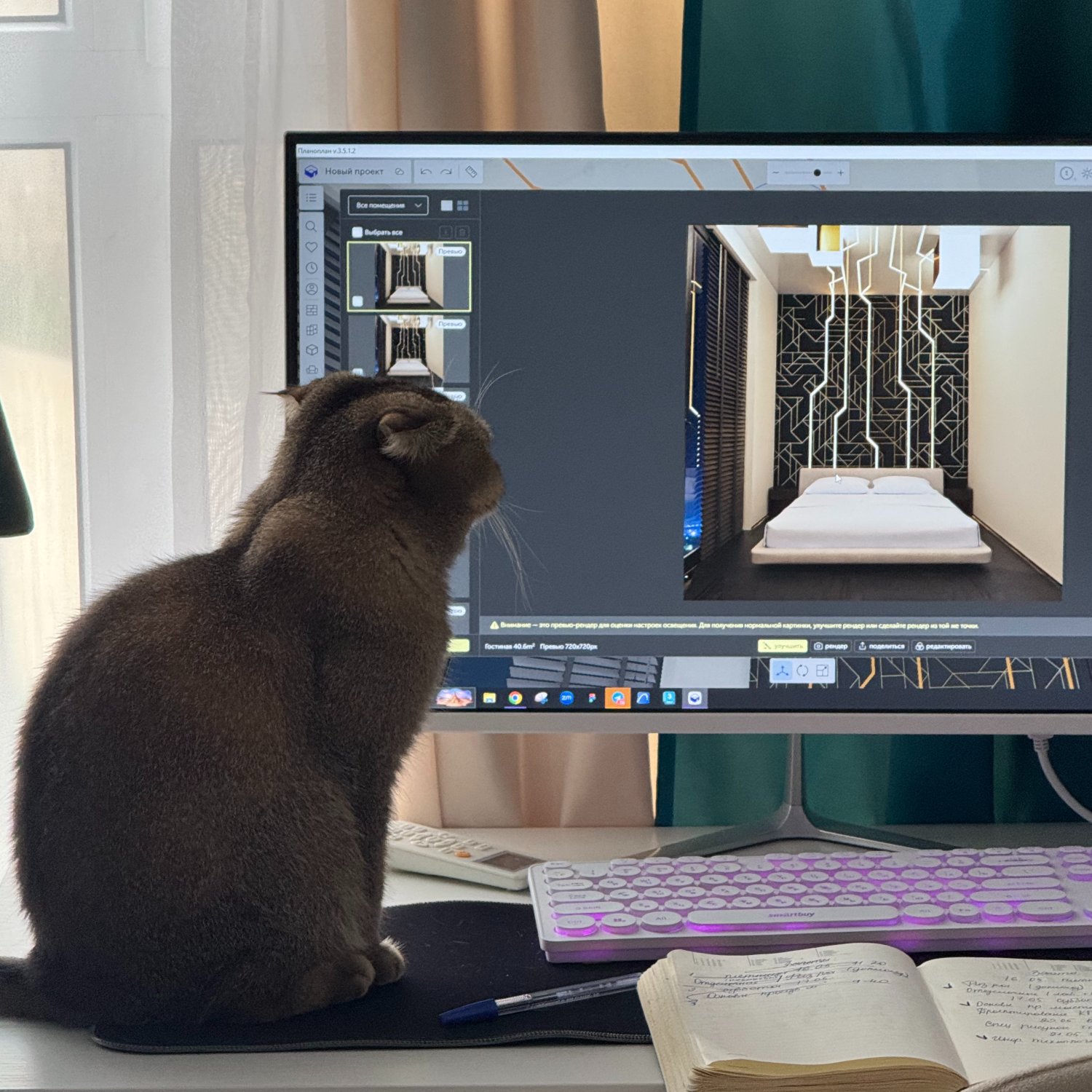
I didn’t have to wait long. Six months later, a guy from university saw in my social media that I worked with interiors and gave my contact to his mom. She became my first client — first an apartment, then two more projects for herself and her sister.
Around the same time, I was looking for clients on freelance platforms. After about a year, word of mouth started working on its own. A design studio found me, and we worked together remotely for almost two years — I did renderings and drawings, later became a procurement coordinator, talked with suppliers, sold materials and furniture.
Because I got into work so quickly, I had to take an academic leave after my first year. I returned a year later, after I had streamlined my workflow. By then, university became more of a creative outlet: I painted, drew, attended art history and philosophy classes. They didn’t teach software, technical requirements, or electrical planning there — I learned all that on my own through experience, building codes, standards, and talking to contractors.
By the way, for a beginner designer, working in a furniture studio is a great start. You memorize materials, colors, dimensions — everything you need for design.
This year I’m finishing university. In almost five years of work, only suppliers and companies working with designers have ever asked for my “magic” diploma. And in the end, they were fine either with proof of formal education or a strong portfolio. So being a designer without a diploma is totally normal. But I’ll have mine anyway — for the checkbox and to keep my mom and grandma happy.
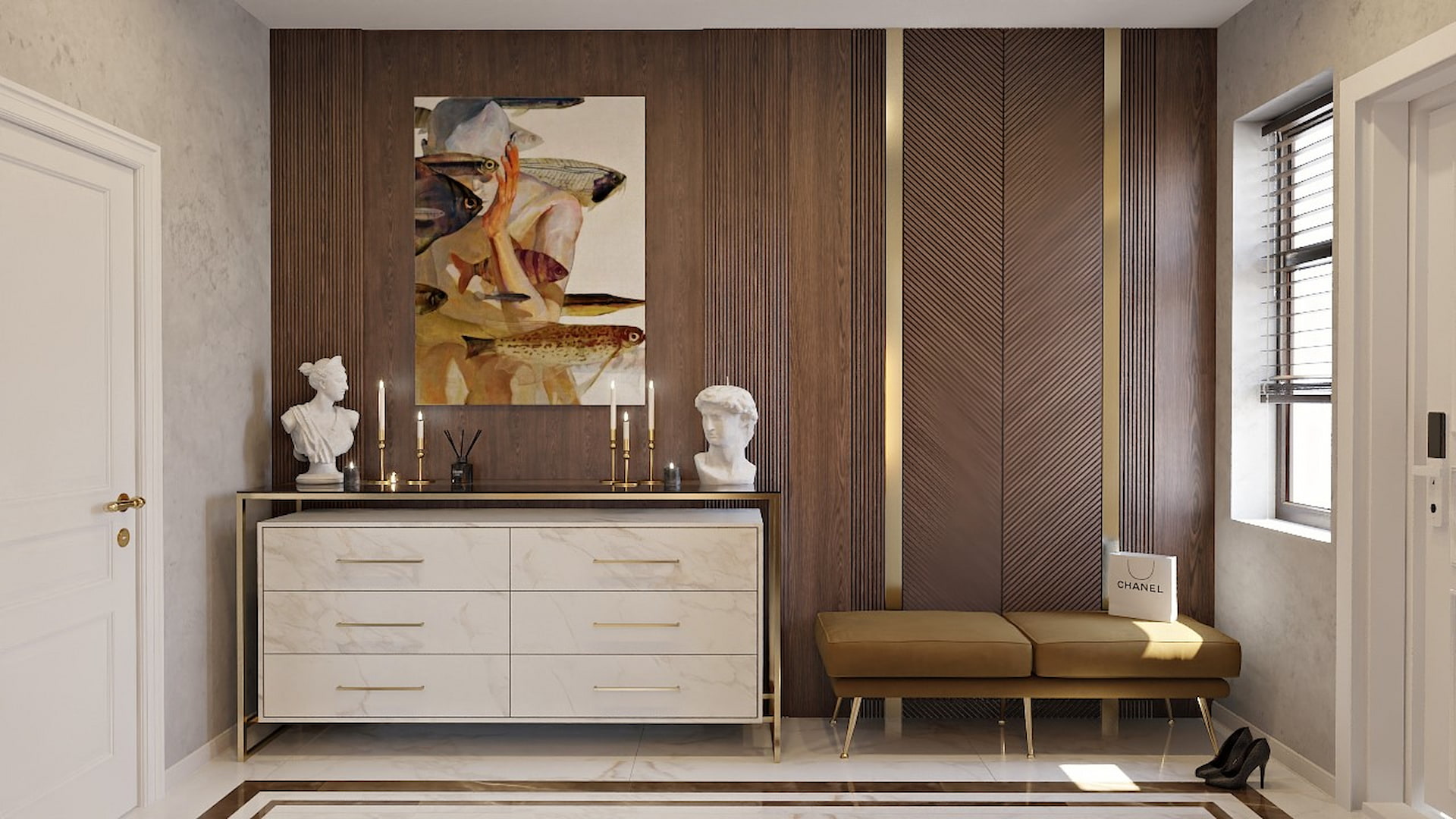
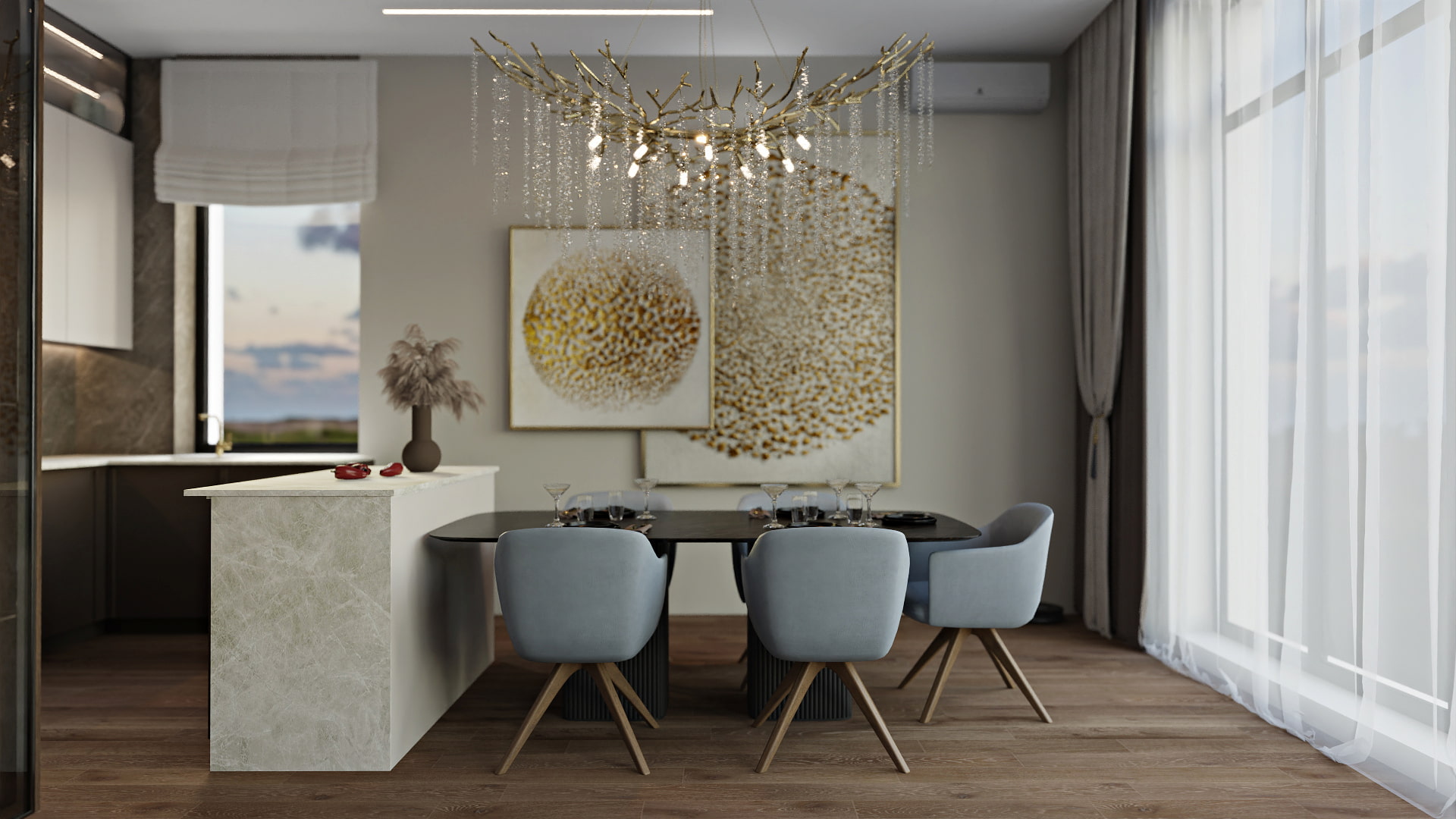
First real project
I was very scared at the time. I was afraid people would think of me as someone without formal training but with a big desire to design something that would actually be built.
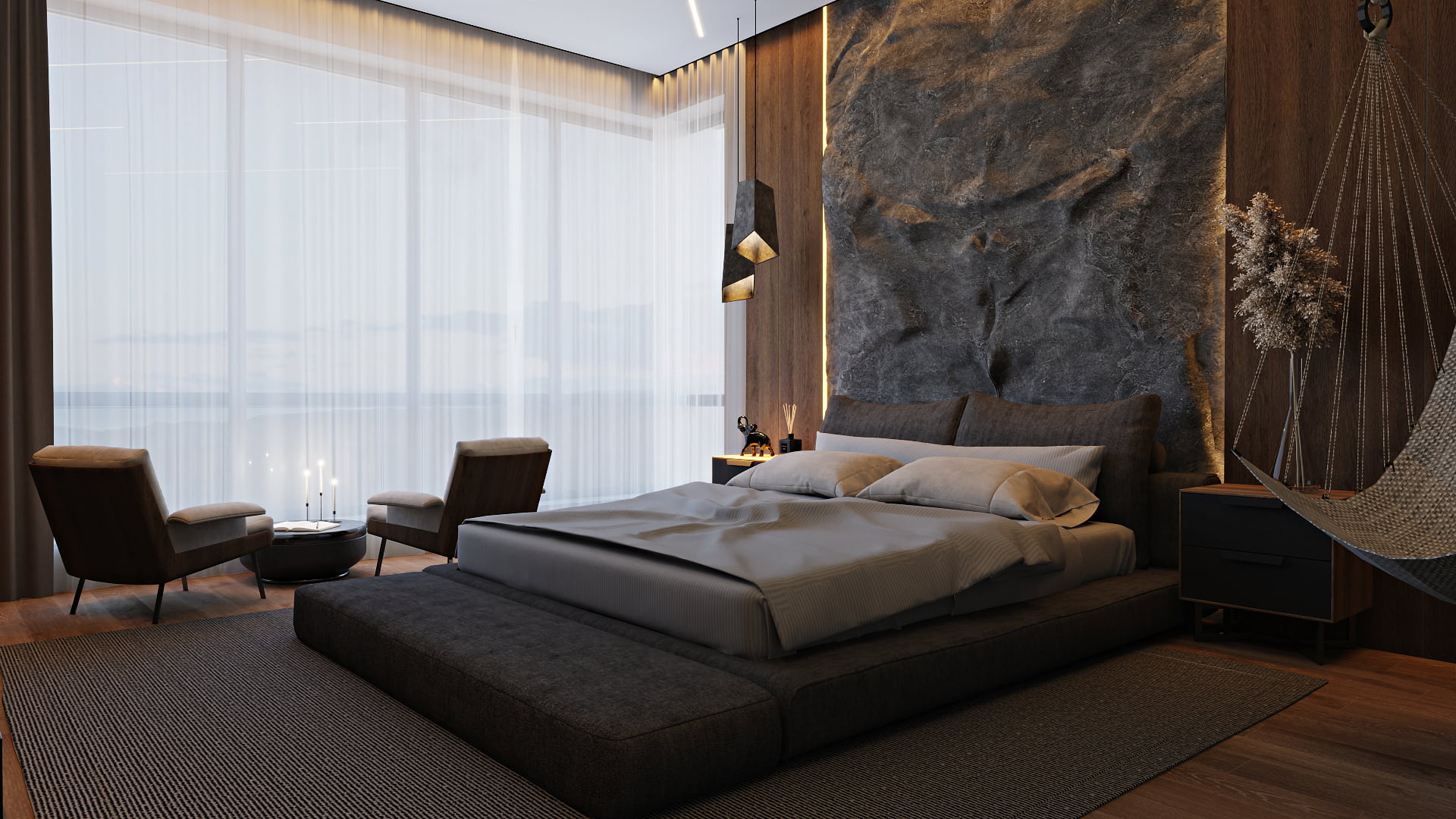
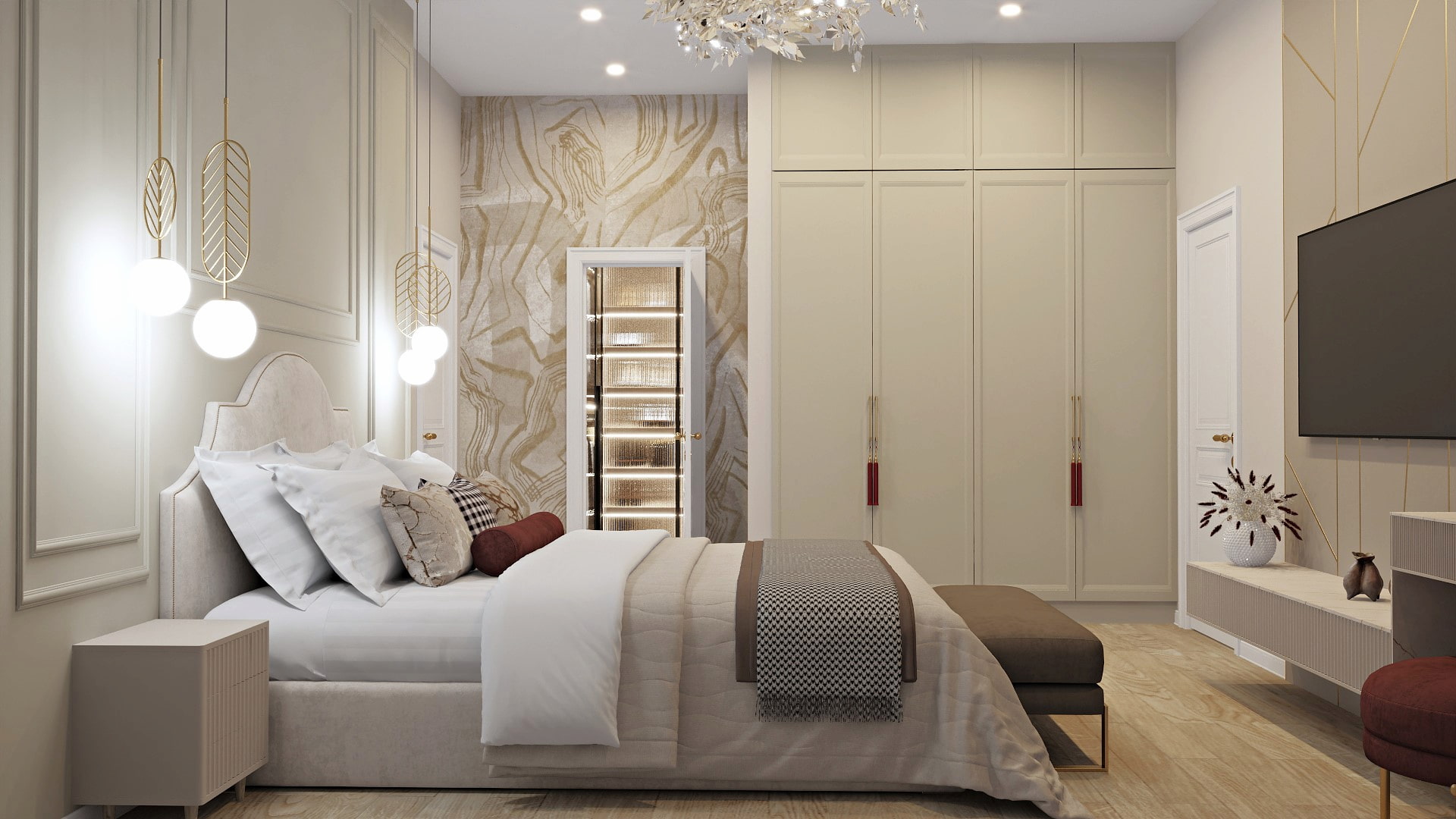
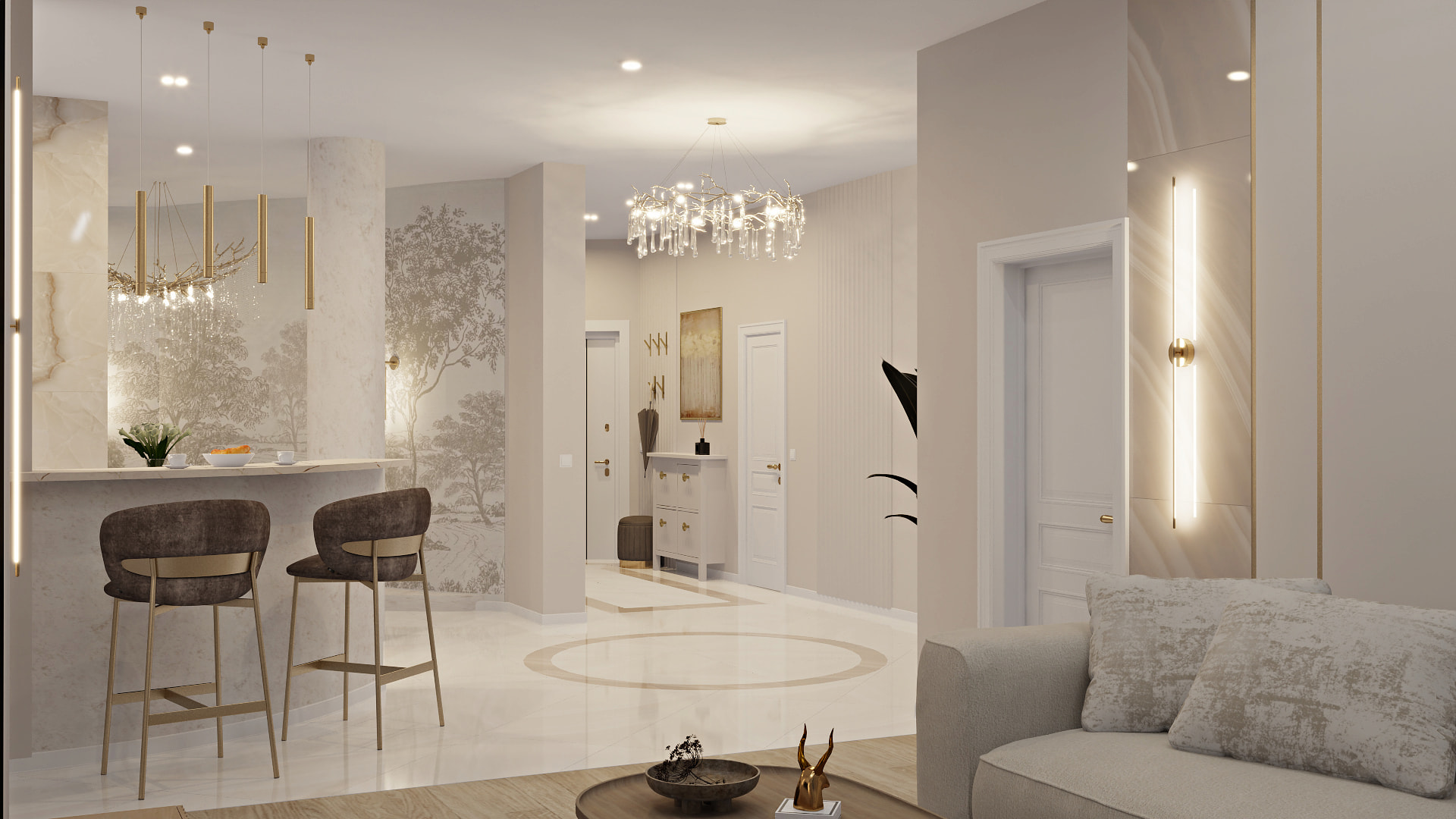
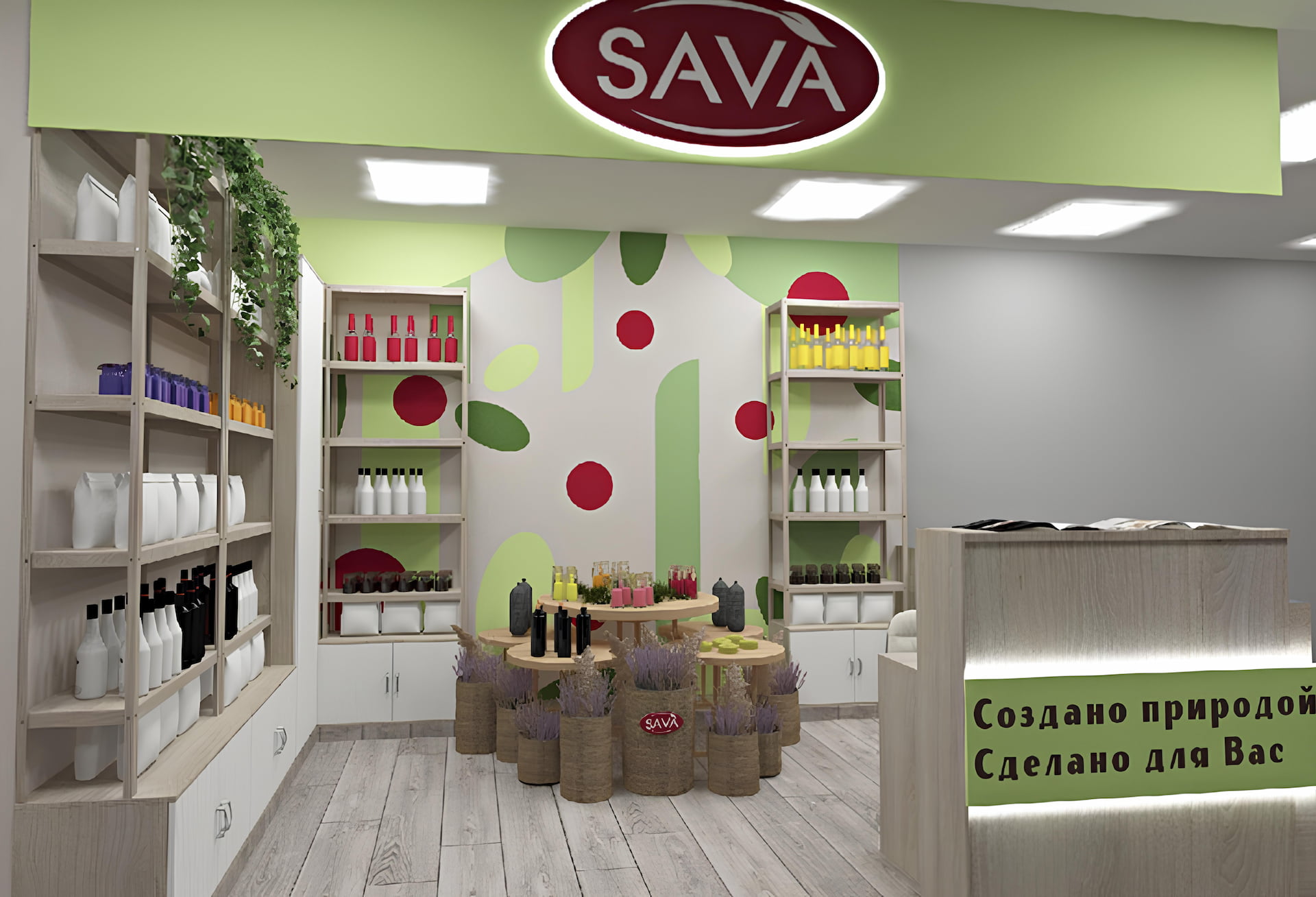
The client found me as a beginner designer. We agreed on a small fee for rendering a small retail space — about 100 square feet. I made several completely different options so she’d like at least one. I refined the chosen option, drew a furniture layout, and a sketch for an artist to paint on the wall.
She was thrilled and even paid me extra as a thank-you. The idea was implemented almost fully — some elements were swapped for more affordable ones because they needed to open quickly.
That was a huge boost for me. I got rid of many fears and started actively looking for clients.

How I fell in love with Planoplan as a teenager
My first encounter with Planoplan happened back in 2015. I was 13. My classmates were playing Sims, and I discovered Planoplan.
My uncle had just bought his first apartment and found Planoplan as an easy, convenient, local tool for his needs. He downloaded it on my computer and said, “Arrange the furniture and materials the way you would see it.” What I saw back then was funny. I even dug up an old laptop to find those renders.
But even then, I was so excited by the idea that I could easily plan my own room that I kept making project after project for my whole family instead of playing computer games.
Later, when I got my first client, there was no question about which tool to use. I downloaded Planoplan again — by 2021 it had changed a lot, gained many features, improved rendering quality. I quickly got reacquainted with the mechanics and made it my main tool.
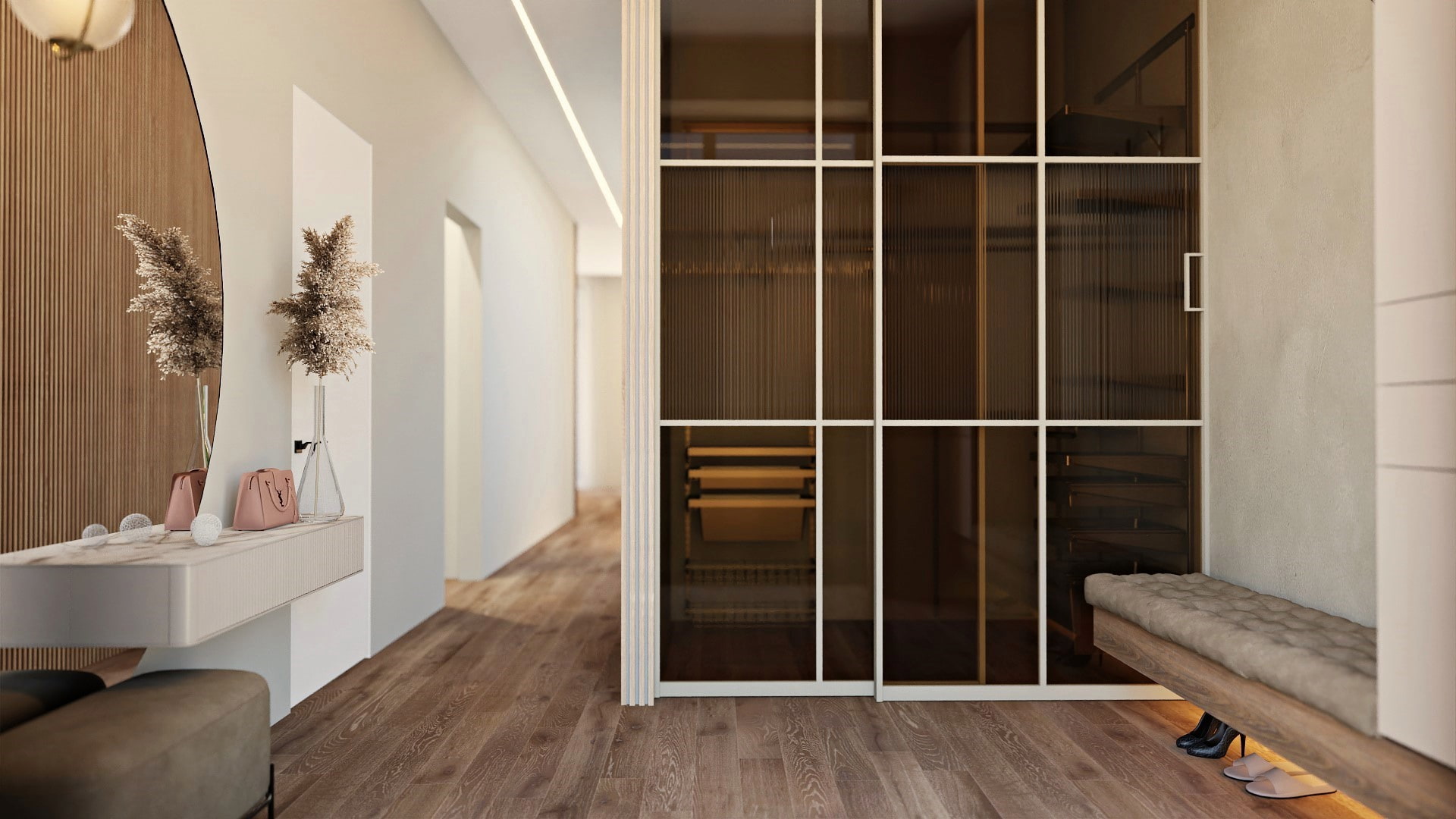
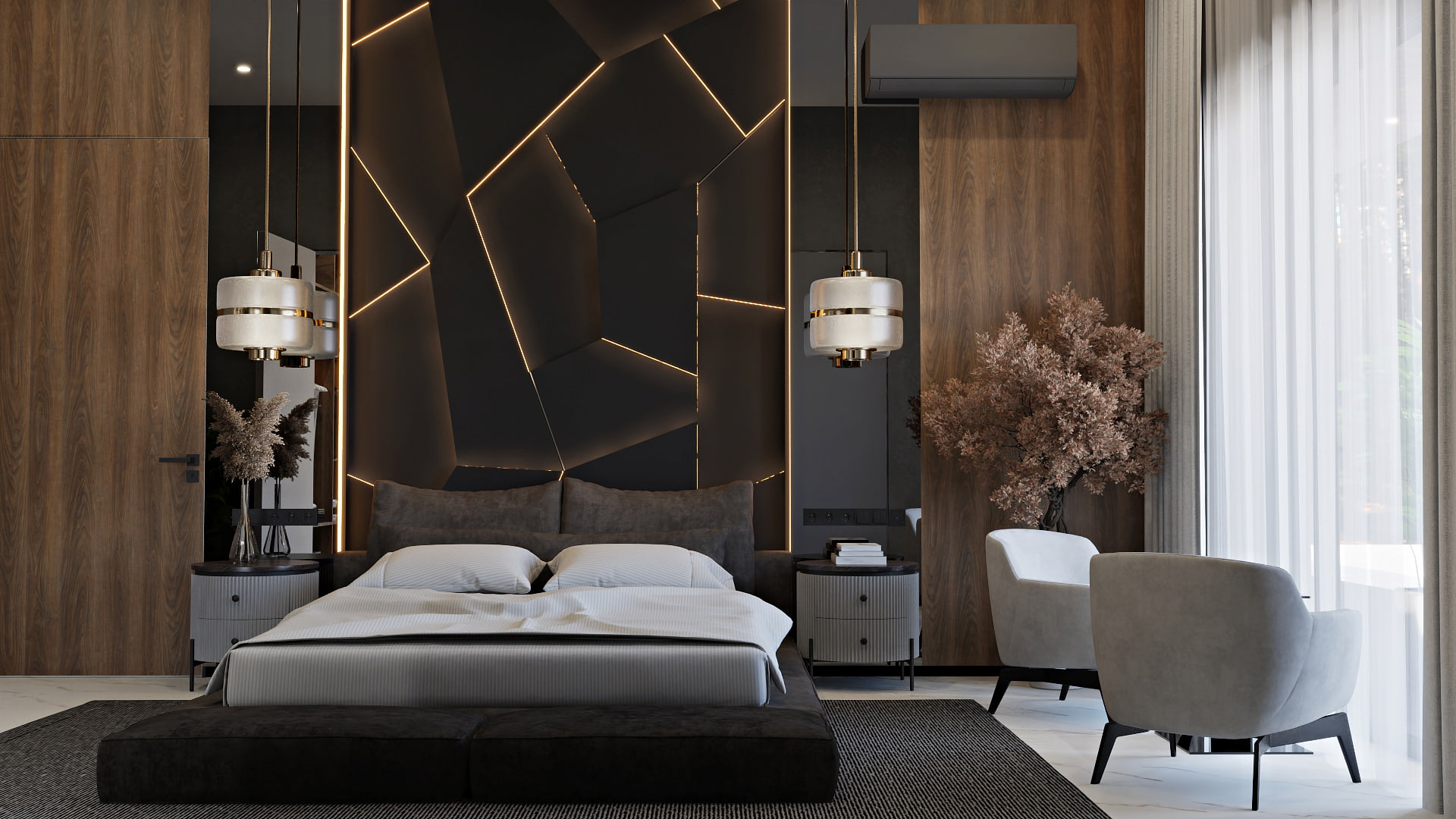
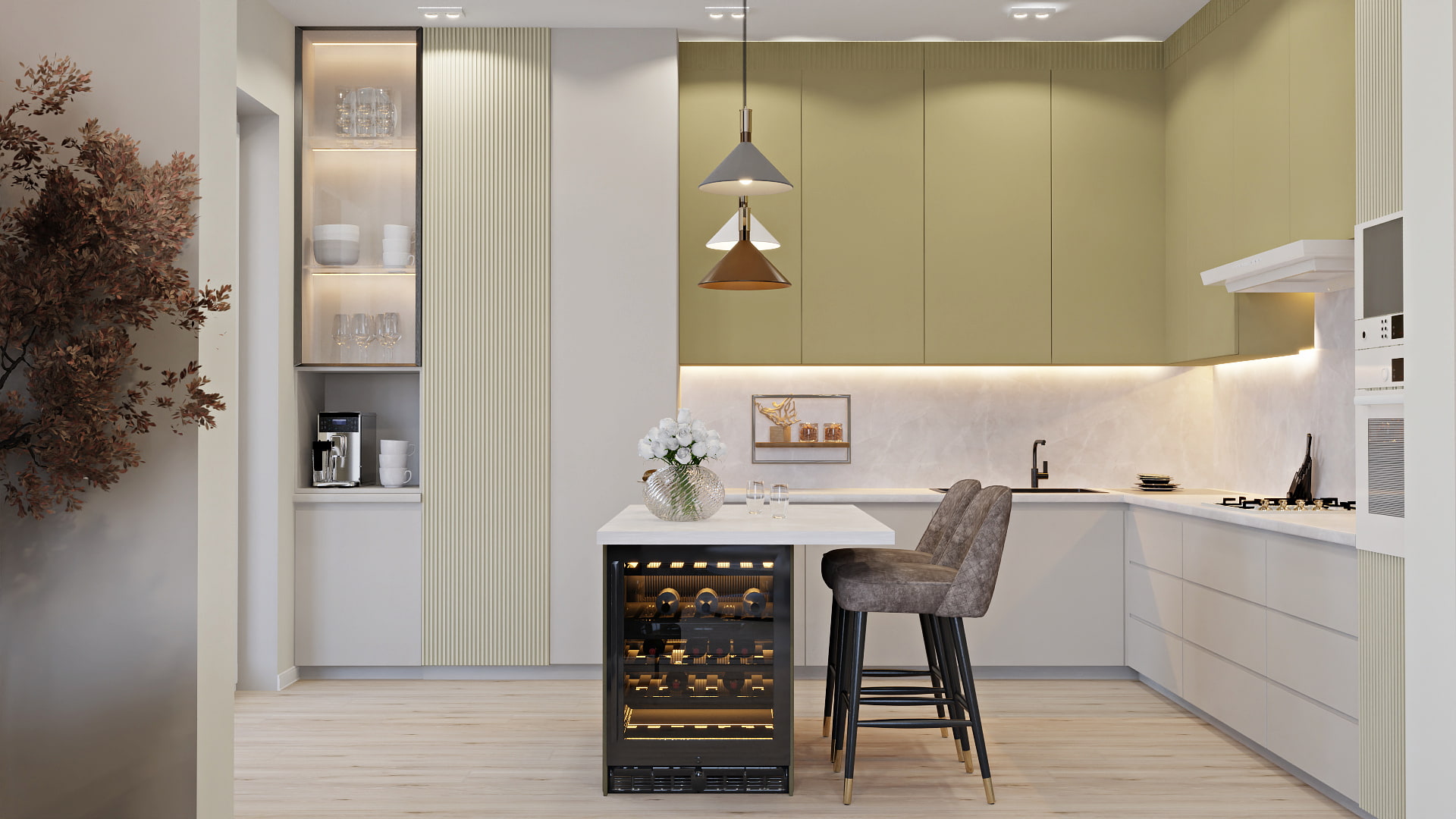
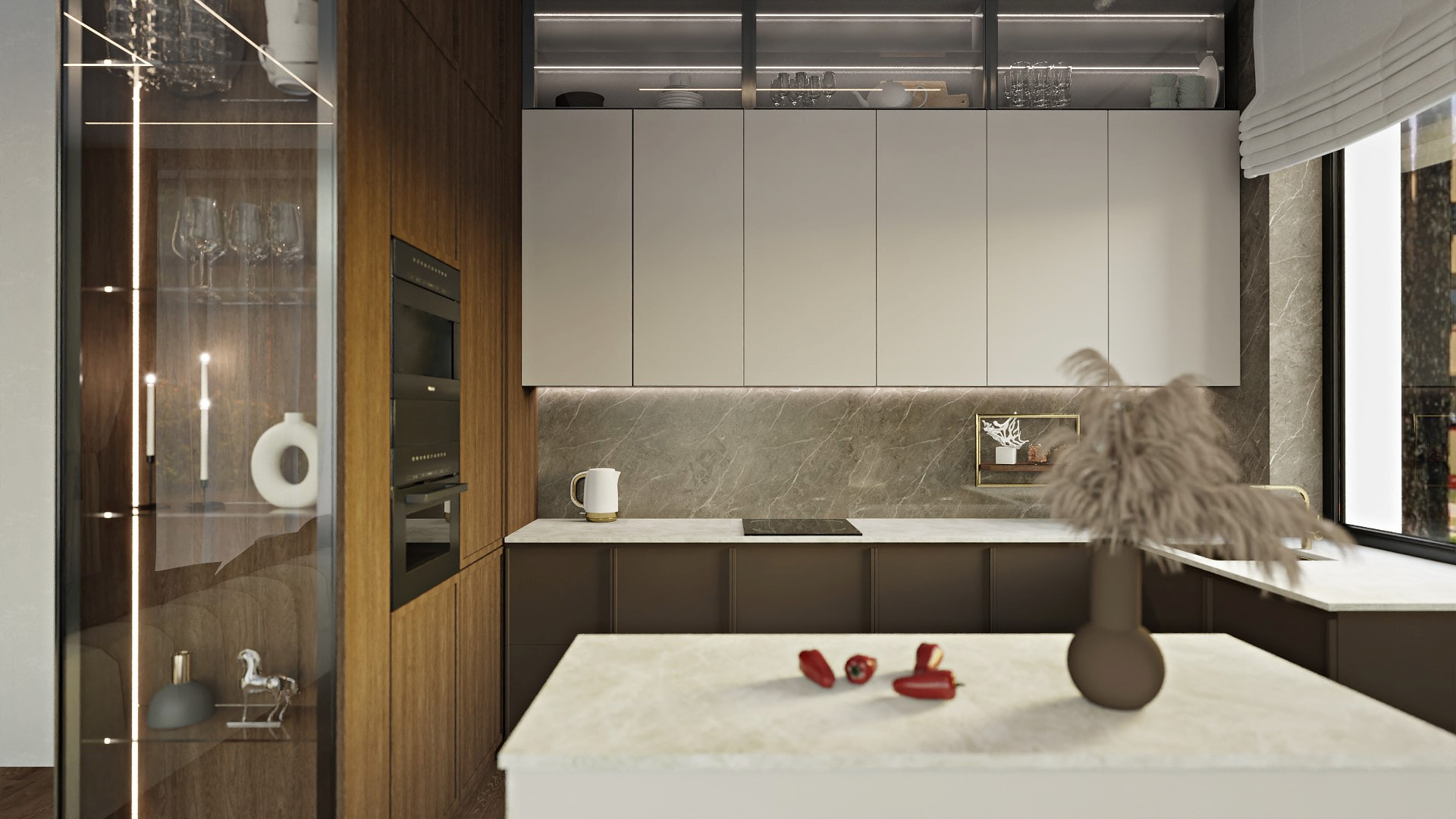
Now I’m on the Expert plan. 300 preview renders a month is almost always enough for study and work. Sometimes I buy Full HD — horizontal perspectives need the quality. Also, no limits on uploading models and textures are important to me. Each project has its own folder, and there are nearly a hundred — all archived in Planoplan.
Start without limits from the very beginning
High-quality visualizations, construction documents, specifications, and stunning virtual tours for your clients — these and other Planoplan features with one Expert subscription. 7-day free trial for all new users!
University project in a "À la Russe" style
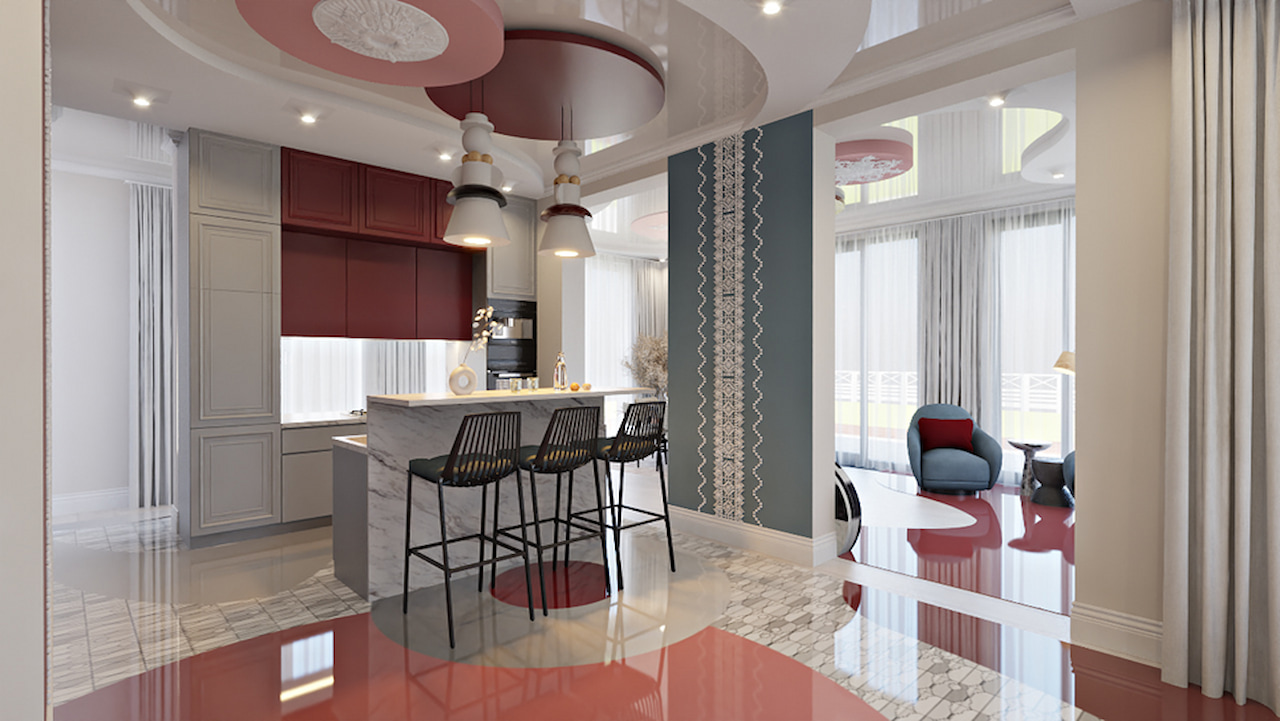
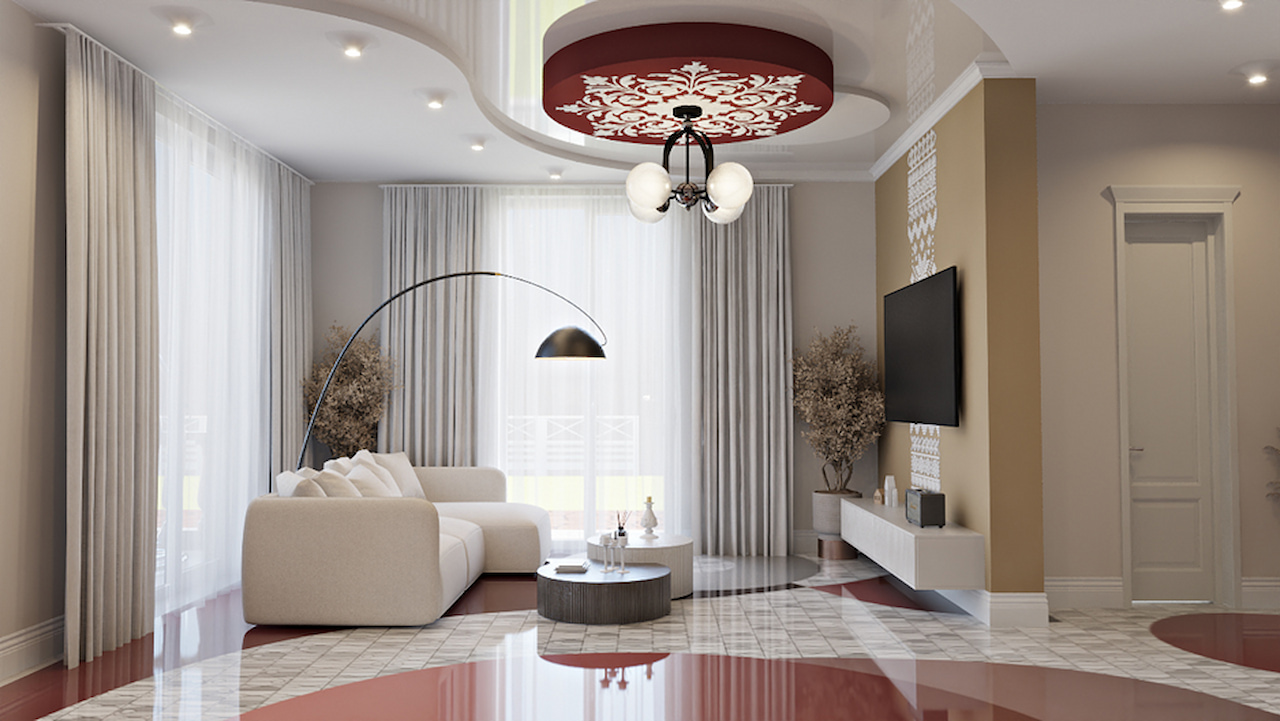
Every semester in our Design Studio class, we do a big creative design project. Over time, they became a creative outlet for me amid the flow of neutral-beige commercial projects. One such project was a cottage in my sixth semester.
The task: design the interior and exterior of a cottage (no architecture — we’re designers) in a chosen style, exaggerate it, and create unique pieces. I chose a modern rustic style that’s gaining traction.
I turned a modern cottage exterior into something like a contemporary izba. I made the facades in Planoplan, then refined them a bit with AI. I created combined plans with floor coverings and furniture layouts. And from primitives and freeform shapes, I made light fixtures and a fireplace in the shape of nesting dolls.
Once again, Planoplan proved to be a winning tool not only for work but also for study.
About money and clients
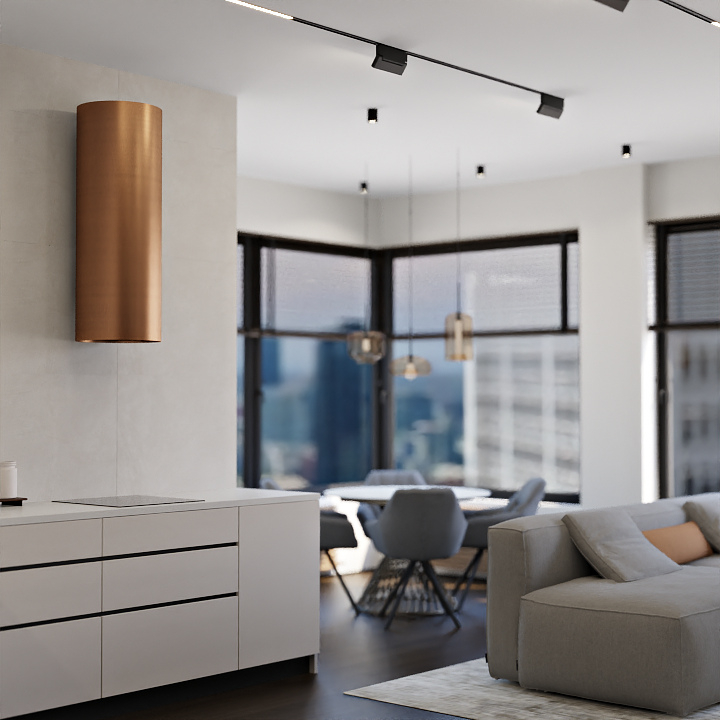
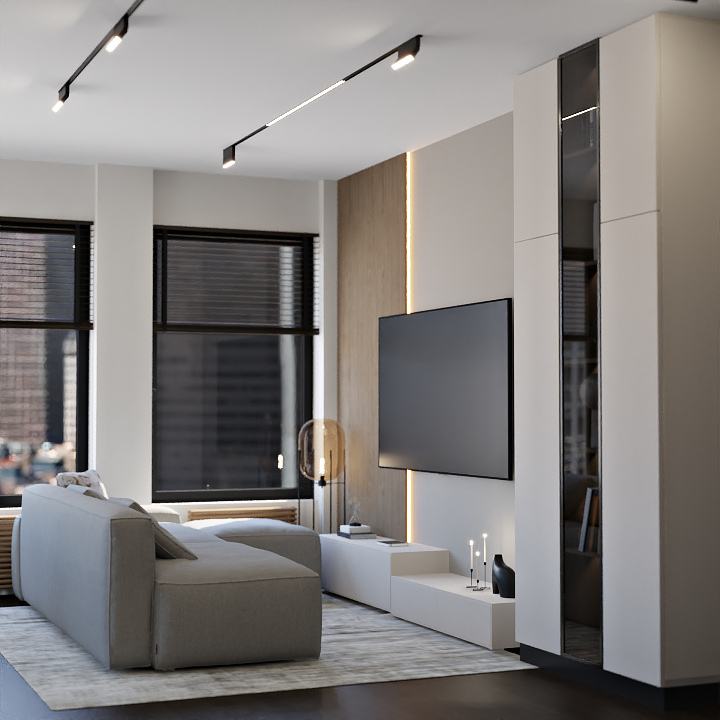
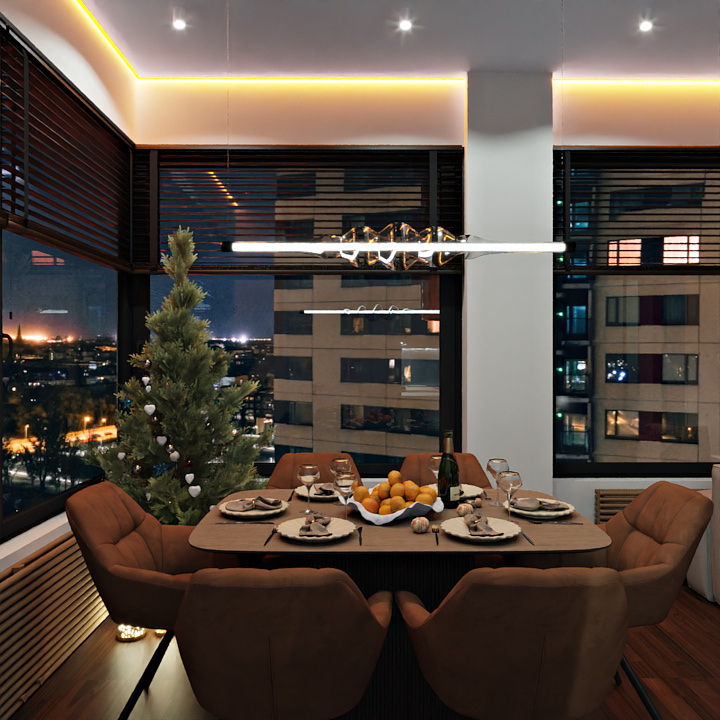
Right now, I do a full design package: renderings, drawings, mood boards, budget estimates. I can take on exteriors or landscaping — but that’s just a conceptual sketch; for accurate calculations, you need more qualified people. I love apartment projects for rent or flipping — when people rent out a unit at a higher price thanks to an interesting but simple design — it warms my heart. I dream of doing a restaurant, cafe, or office, maybe move into HoReCa eventually.
My current rate is around 15–20 per square foot, but it can go higher or lower. I started at about 2 per square foot. I work like this: when I realize there’s too much work and the income doesn’t cover the exhaustion — I raise my price. If the client agrees — we work. If not — there will be another. Working at my limit, like at the very beginning, isn’t possible anymore. For regular clients, I give reasonable discounts.
Right now, I’m working on my university diploma — designing a Youth Center of about 11,000 square feet. I’m doing that for free because I have to graduate. However, what the diploma requires and what the client needs for construction are somewhat different. They need more than my project scope requires, and I found that out after I had already been convinced to take this project for my diploma. Doing extra work for free with no guarantee that my name will be credited or that I’ll be recommended for future projects — that’s not interesting to me. I’d work for the idea, but I also need to eat.
How I ran into scammers and lost $4,500
I looked for my first clients on a freelance platform. The first two orders went great, then I got scammed. A woman reached out for a project. We called, discussed her wishes. She said she had transferred a deposit through a “secure transaction” — supposedly the platform holds the money and releases it after the work is done.
I hadn’t worked that way before and didn’t know the mechanism. A while later, I got a message from the platform’s bot in a messaging app — a verified account with a checkmark, an automated message: “A deposit has been transferred for your order. Collect it.” I clicked the link. The site looked official. I entered my card, then another — no payment came. I realized something was wrong, but it was too late.
The scammers got into my bank account and emptied my debit card, credit card, and savings account. Total — about $4,500.
It shook me badly, but it didn’t push me away from the profession. Soon I started taking orders again, found that studio I worked with for two years, and word of mouth kept working. I never advertised anywhere else. I hardly even post my work on social media — I should, but I can’t make myself.
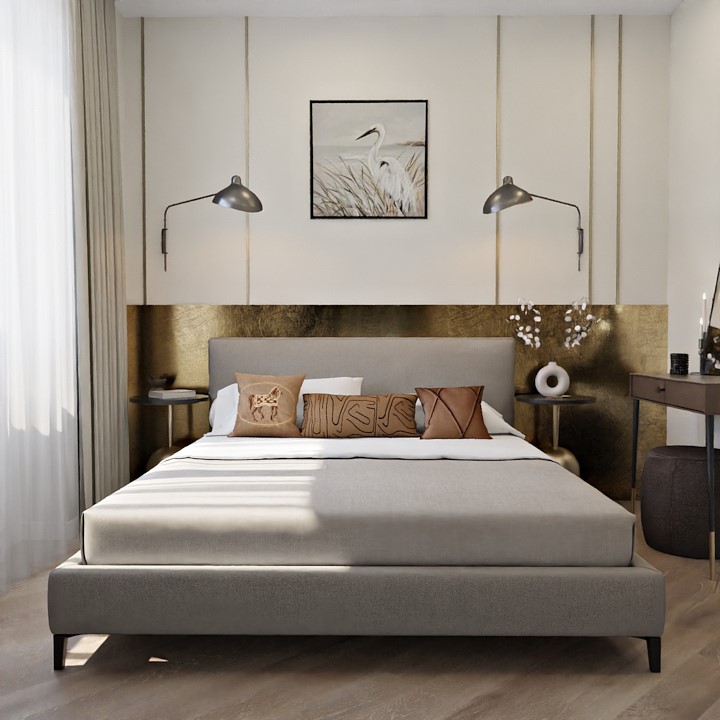
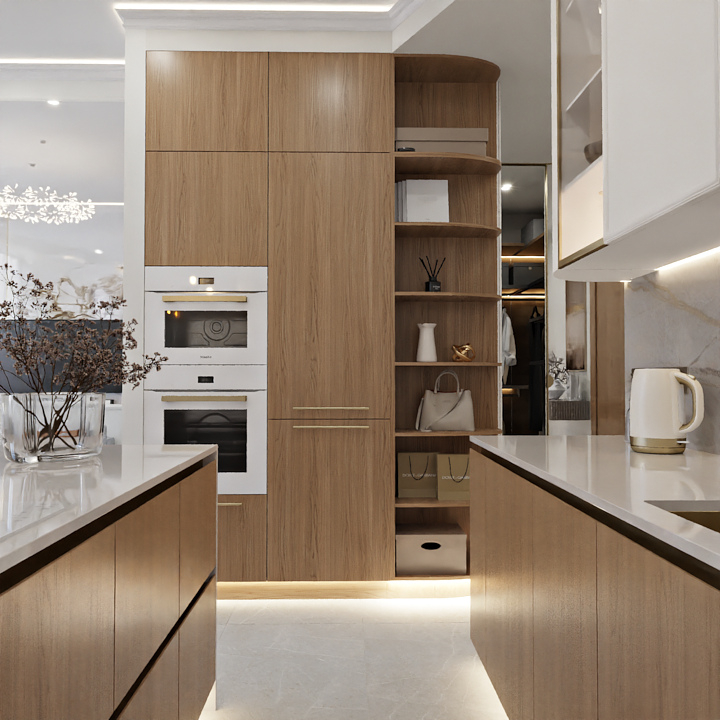
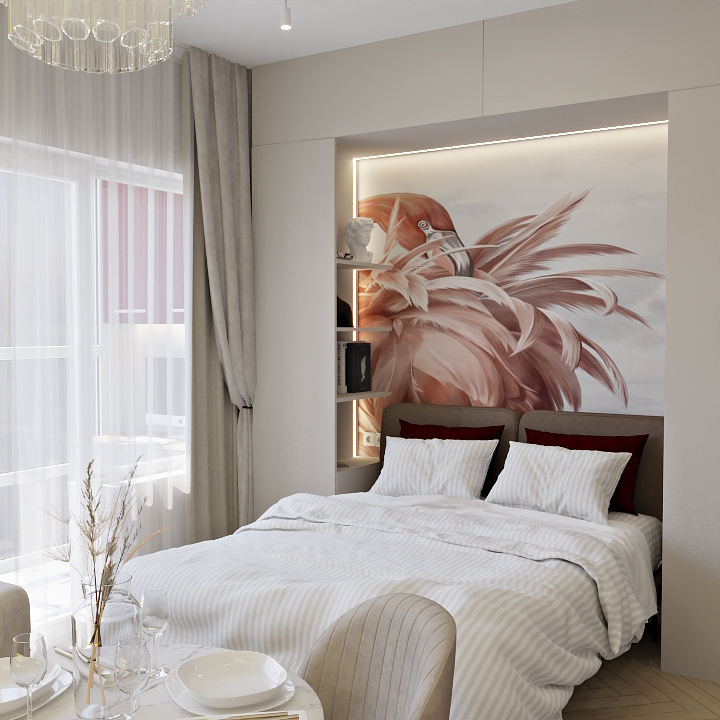
A funny story and what I learned about clients
The most memorable thing came from teamwork. Before a project started, the lead designer put all the source data into a folder. I studied it, made renderings in a minimalist style, dark palette, with eco-loft and eclectic elements. I sent it for review.
I got a ton of negative feedback. The client insisted she had asked for neoclassical — all gold, marble, light tones. Turns out, the requests got mixed up, and someone else’s project folder was added. But the damage was done. Then came endless small revisions, requests to visualize every cabinet interior, make ceiling-view renderings, order paint swatches at my expense. In the end, we finished the project with the words, “Well, at least we got something from you.”
Six months later, the same woman ordered another project from our studio and specifically asked for me (even though the team had 6–7 visualizers). I agreed — maybe I was bored. I sent the first batch of renderings, exactly matching the previous project. The client wrote: “What’s this? The last project was beautiful, with a spark. But this?” History repeated itself. Two months later, I swore I’d never work with her again.
What I would tell myself at the start
You don’t have to work day and night without weekends. Work is not a wolf — it won’t run away. If I had set a normal schedule from the very beginning, I could have avoided many health problems.
Main advice for a beginner
Think of someone you know who is about to start a renovation or is in the middle of one. Ask to come see. The more often, the better. Until a designer understands how tile is laid, how much space a person’s knees take up on a toilet, and how kitchen cabinets open — they can’t design truly comfortable spaces.
Designer 2 – Alina Avdonina: “From Geomorphology to Interior Design”

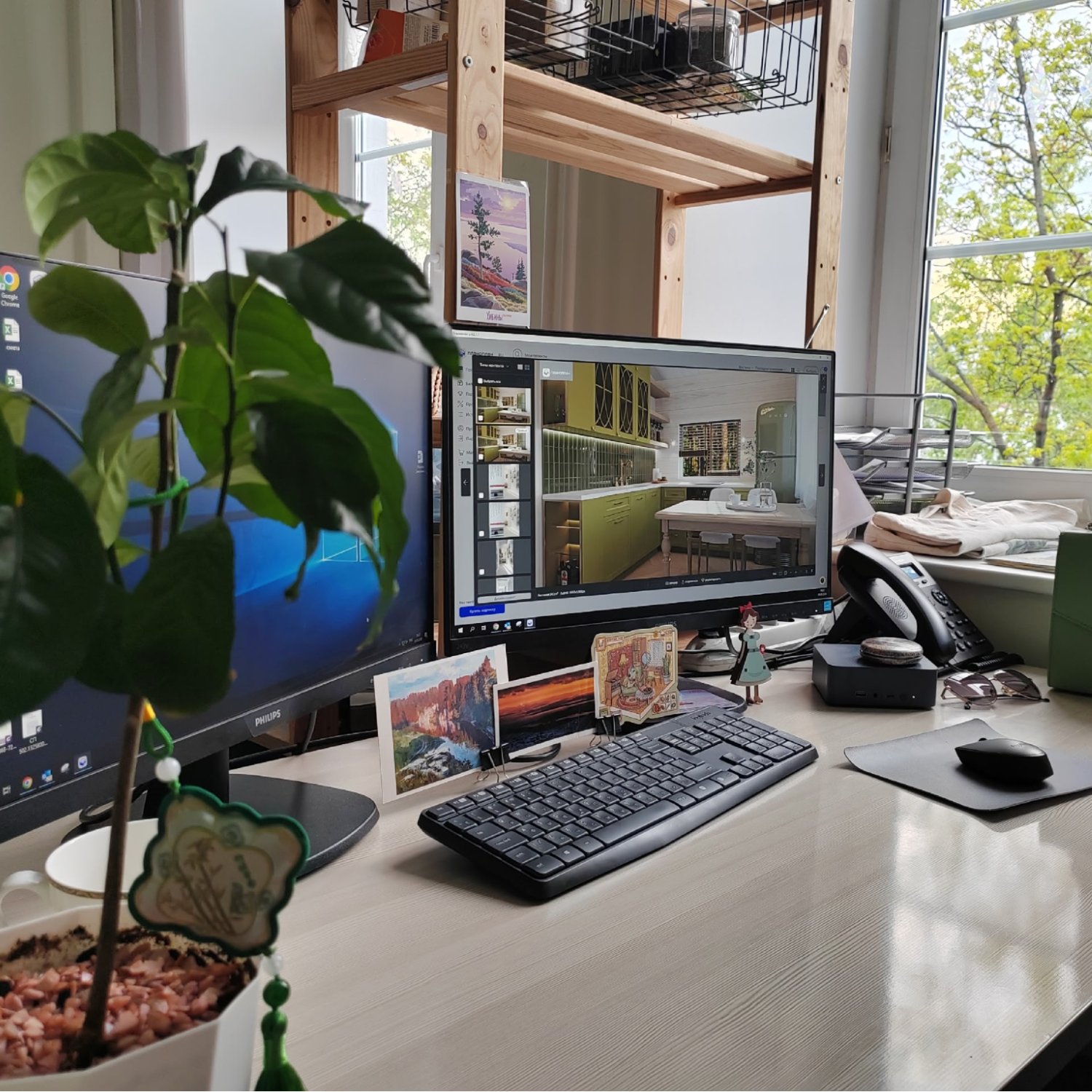
How a geomorphologist became a designer
By education, I’m a geomorphologist — I study landforms and engineering protection of territories from geological processes. But during my work, I developed a pull toward collaborating with landscape architects. Gradually, my tasks grew from “where and what kind of foundation to put” into questions about house layouts in terms of landscape functionality and practical living.
To propose the ideal layout, I needed to study the subject on my own. And it turned out to be impossible to present a layout without furnishing it with windows, utilities, and furniture. That’s how I came to interior design, where practicality and functionality combine with aesthetics.
Why Planoplan
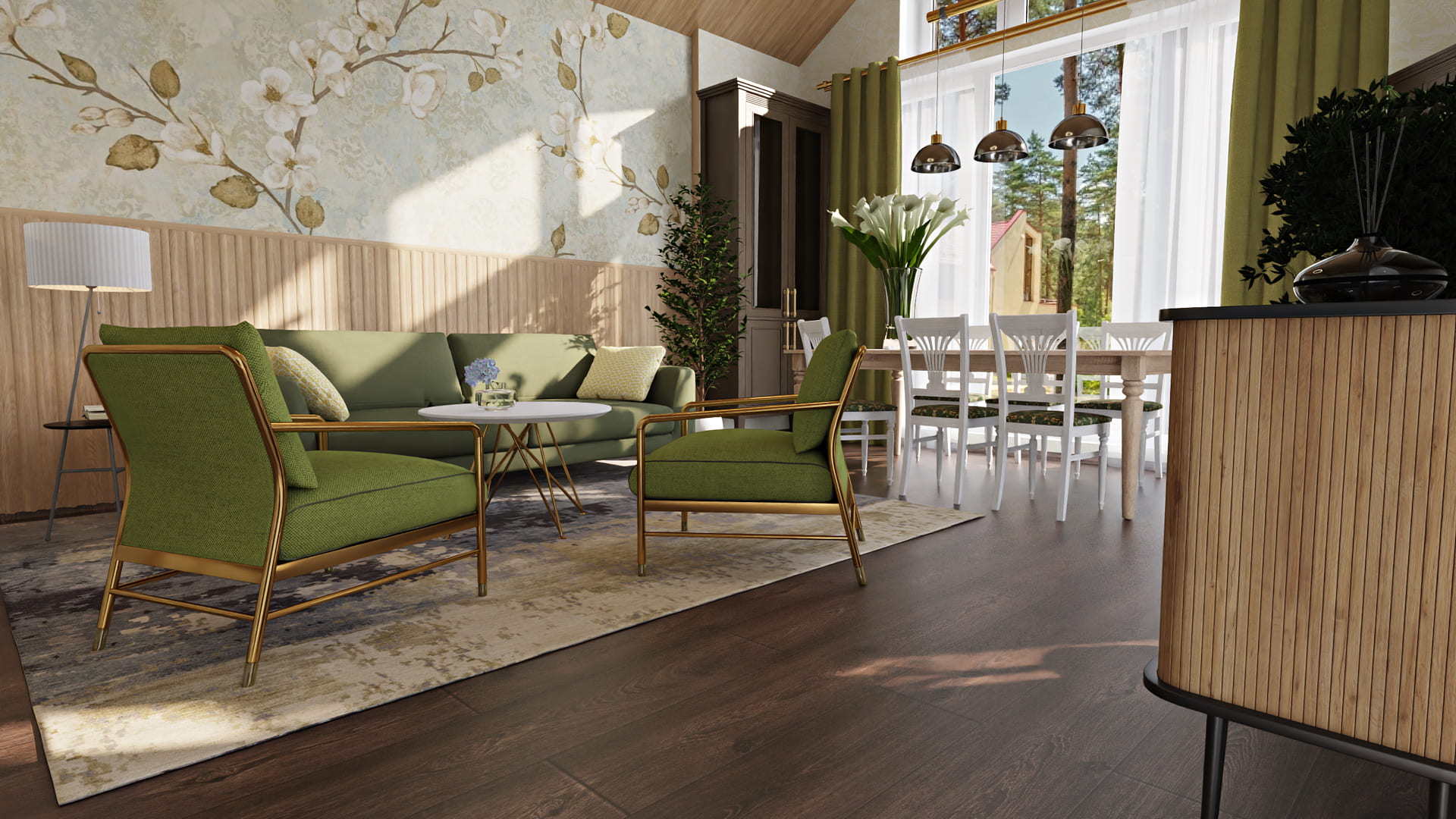
An incredibly convenient, fast, feature-rich, and client-friendly program. It took me tens of times less time to learn compared to others. Plus, it’s extremely intuitive. It also feels a bit like a video game — in its interface, menus, and the process itself.
I got the Expert plan before the latest updates, got used to it, so I don’t compare it to others.
A project where the goal was not to cut down a single tree
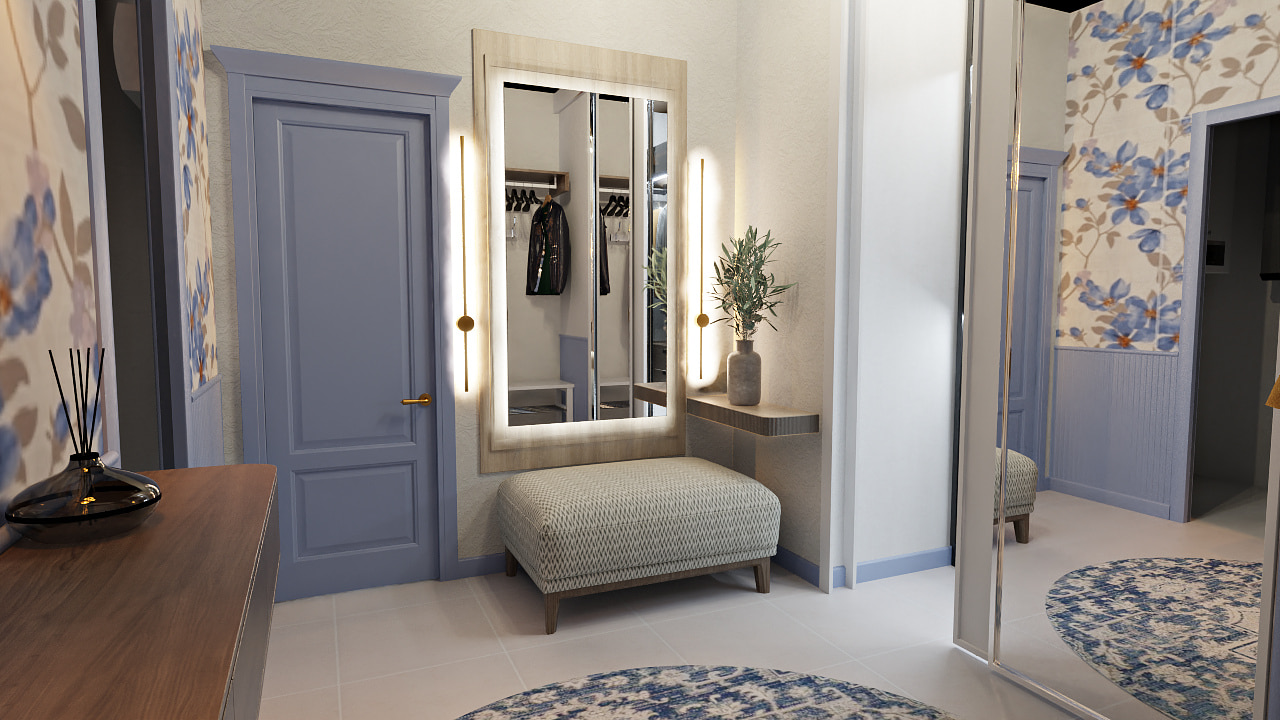
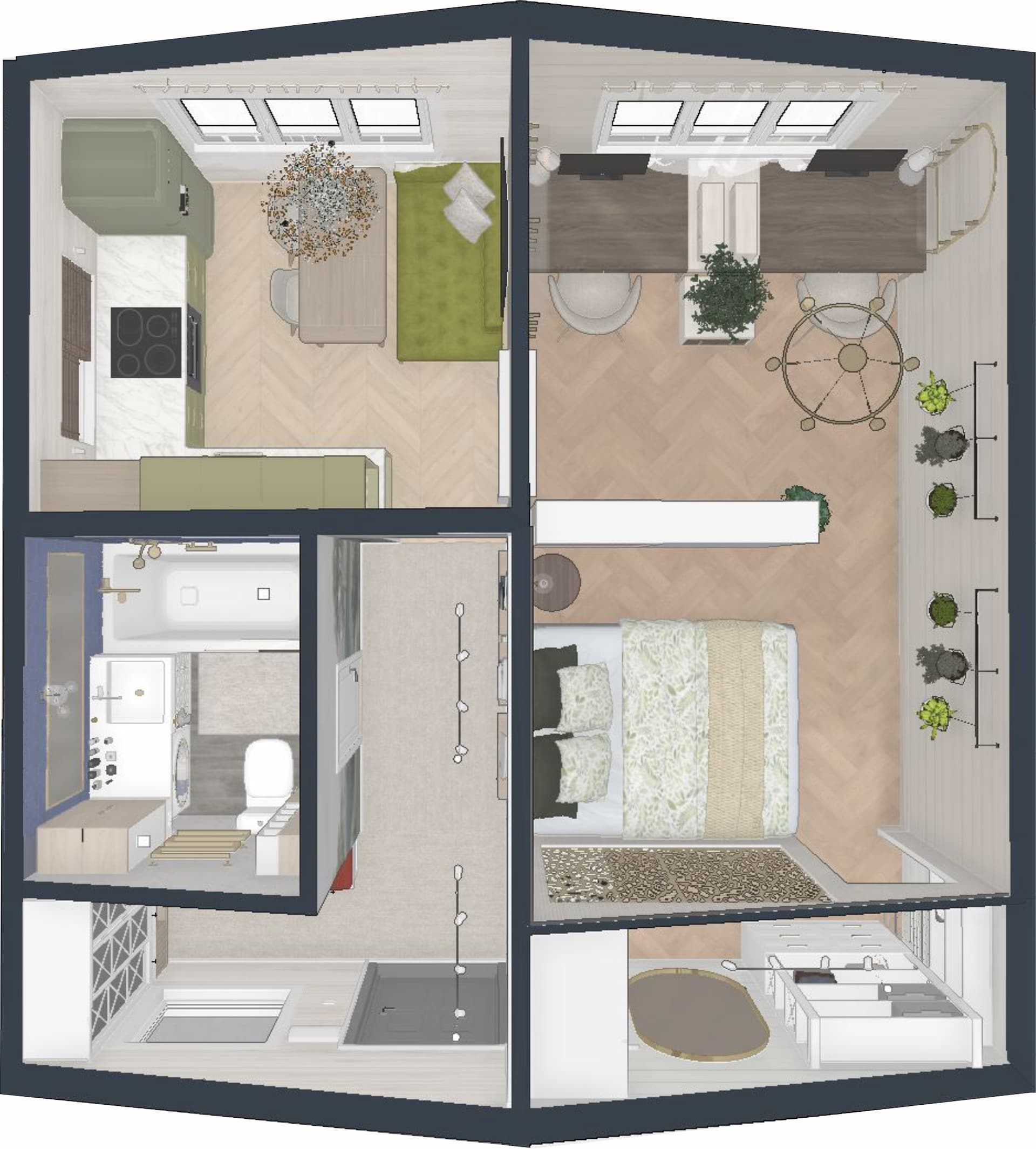
I was asked to do landscape planning for a property and prepare a house design. The property was large — about 0.6 acres — almost completely covered by forest, with a slope, prone to landslides and flooding. The house placement had to be special. The architecture offered by other companies didn’t take into account the view of old fir and pine trees, the sunrises, or privacy. Plus, all contractors urged cutting down trees and leveling the site so equipment could get through. But the client’s condition was: preserve the ecosystem.
My task was to choose the location for the house, design it, and plan the layout considering all the features.
The best building spots turned out to be two areas: near the road and down among the trees. Two houses were planned — a large one (main residence) and a small one (guest house). The small one was to be built first, with the move to the large house planned in 5–6 years. So the large house had to be closer to the road and common areas, while the small one would be the pioneer down below.
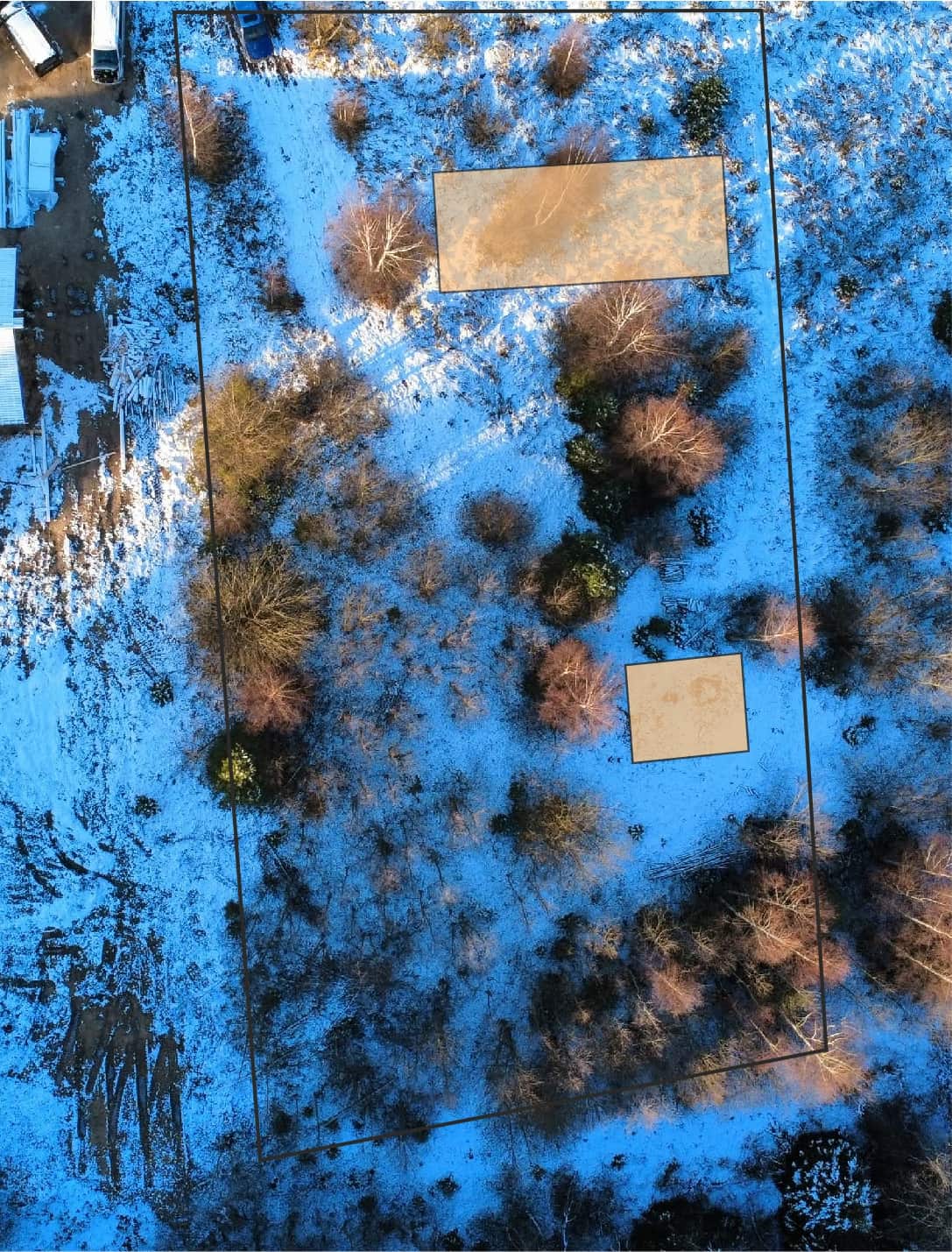
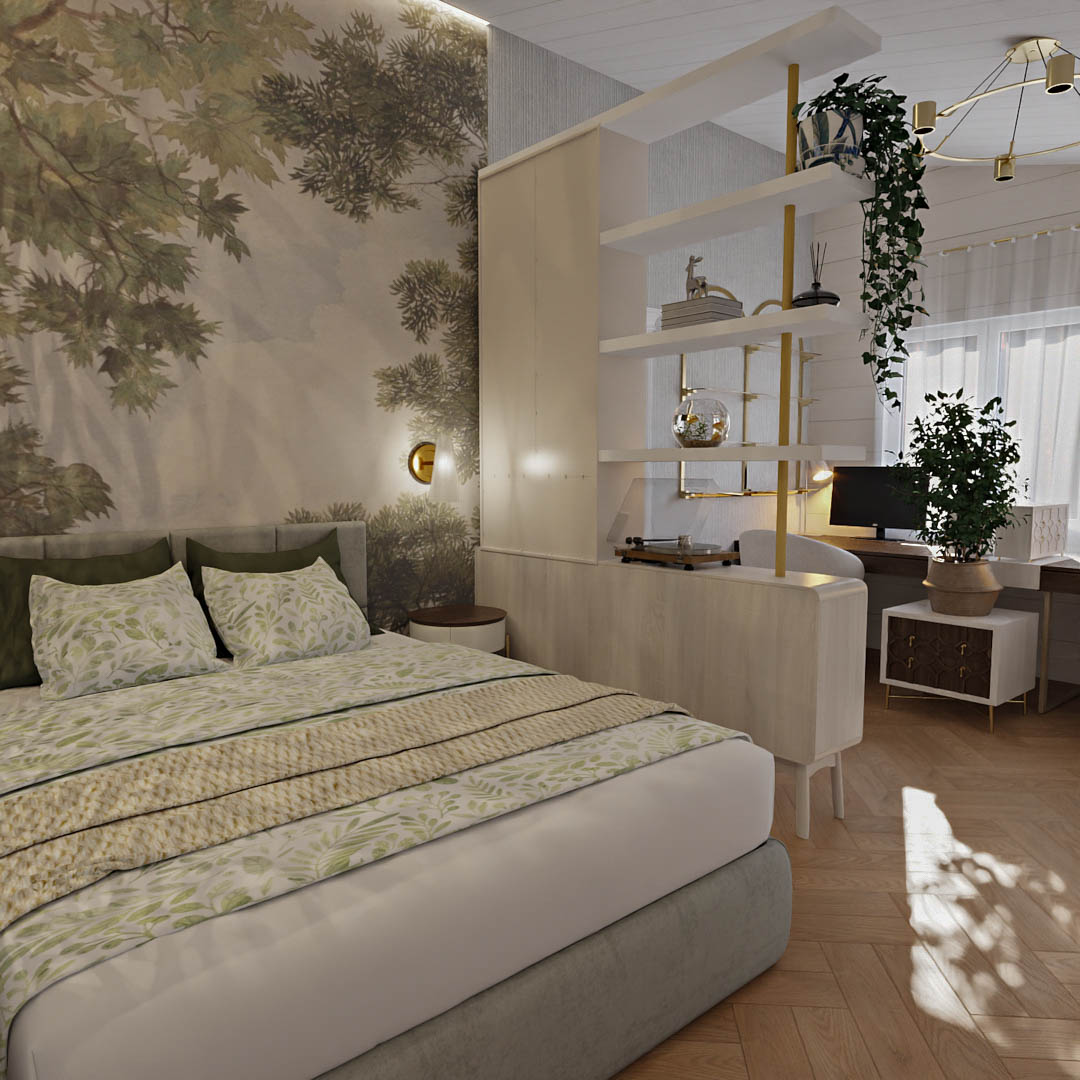
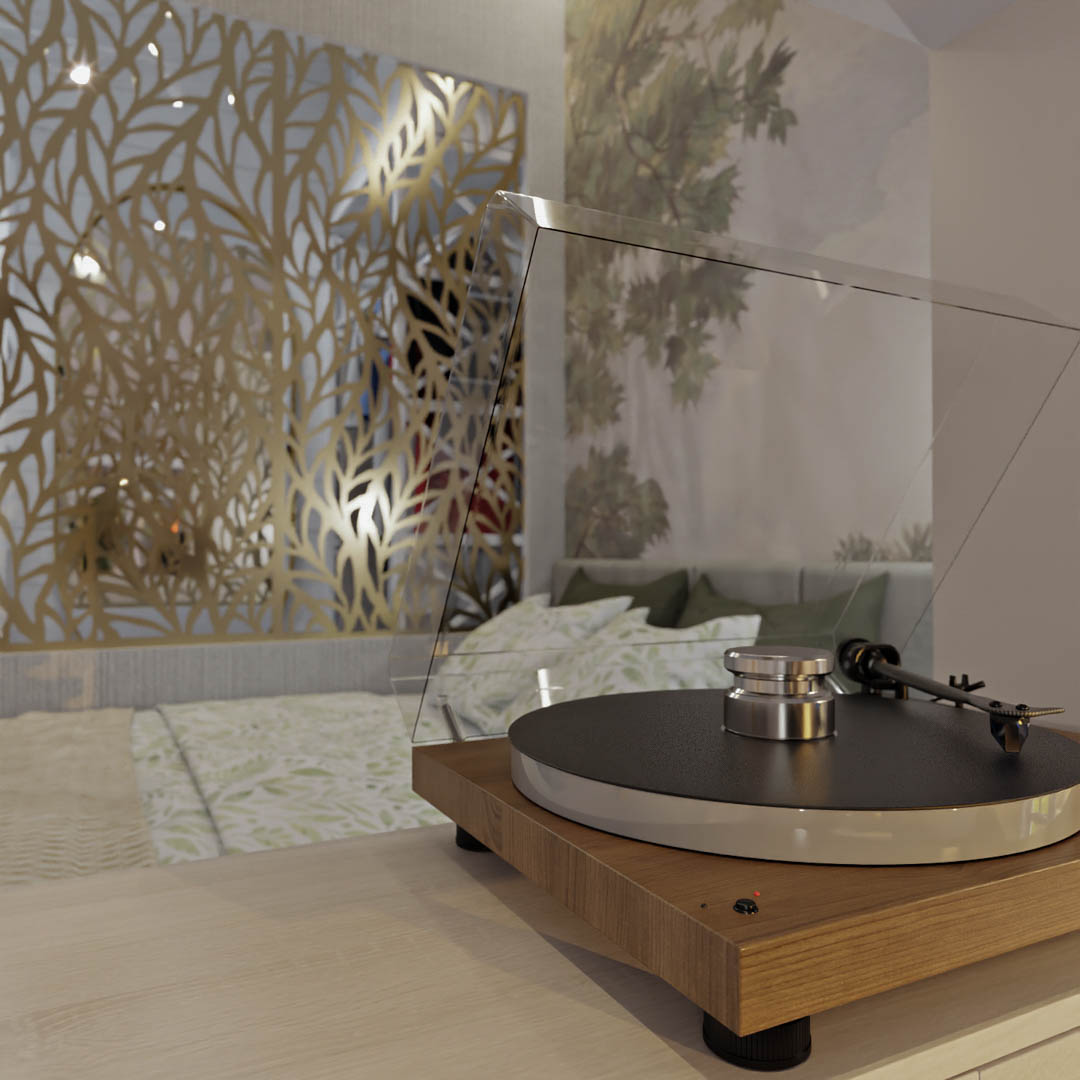
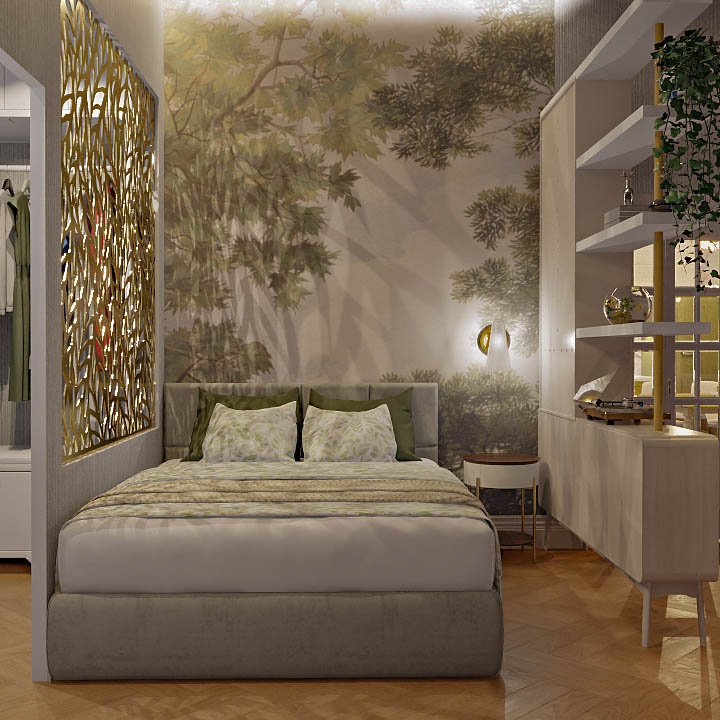
The house was to be made of glued laminated timber — to blend with the surroundings, be warm and modern. Area 387 square feet for year-round living for a young couple. A loft-style ceiling.
The foundation (screw pile) was pre-calculated to later add a terrace and porch. The terrace runs along the left wall, the porch at the main entrance.
The house has four windows:
- Two large windows (5.6×5 ft) facing west-northwest — overlook the entire property. Even in winter, evening sun comes in, but the rooms don’t overheat. Neighbors are far away, no “aquarium” effect. A home office by such windows is a pleasure.
- A window above the kitchen stove (4×4.3 ft) — southwest-facing. It gets a lot of sun, which isn’t great for a hot kitchen, but the covered terrace will soften the rays.
- A window in the entryway (3×5 ft) — narrow, southeast-facing. It looks into the forest, where the only neighbors are foxes. Adds lively light.
The right wall has no windows — view of a fence and a neighbor’s property. But thanks to the large end window, there’s still plenty of light.
In the end, all rooms remain bright, hidden from neighbors’ views, and the views from the windows are stunning.
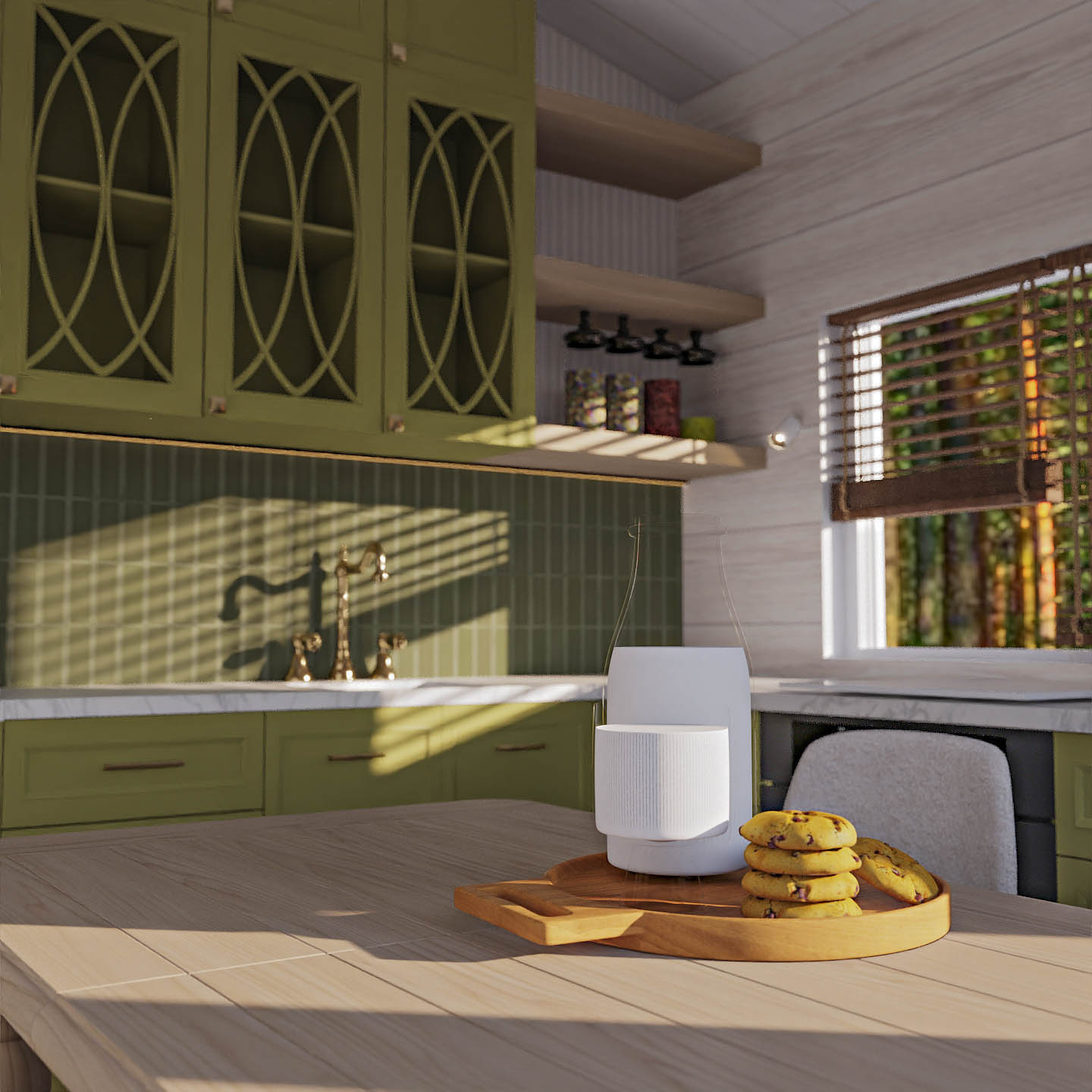
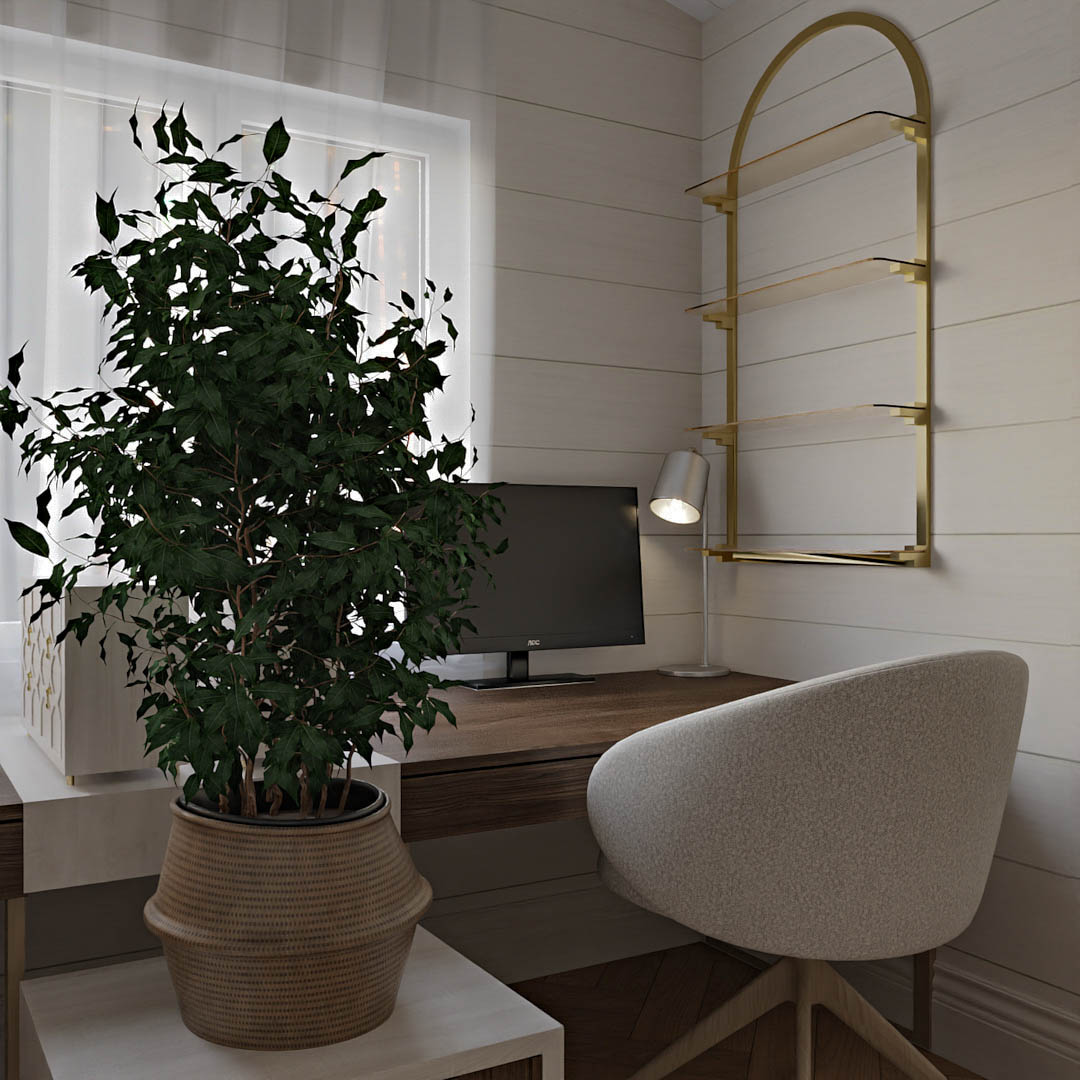
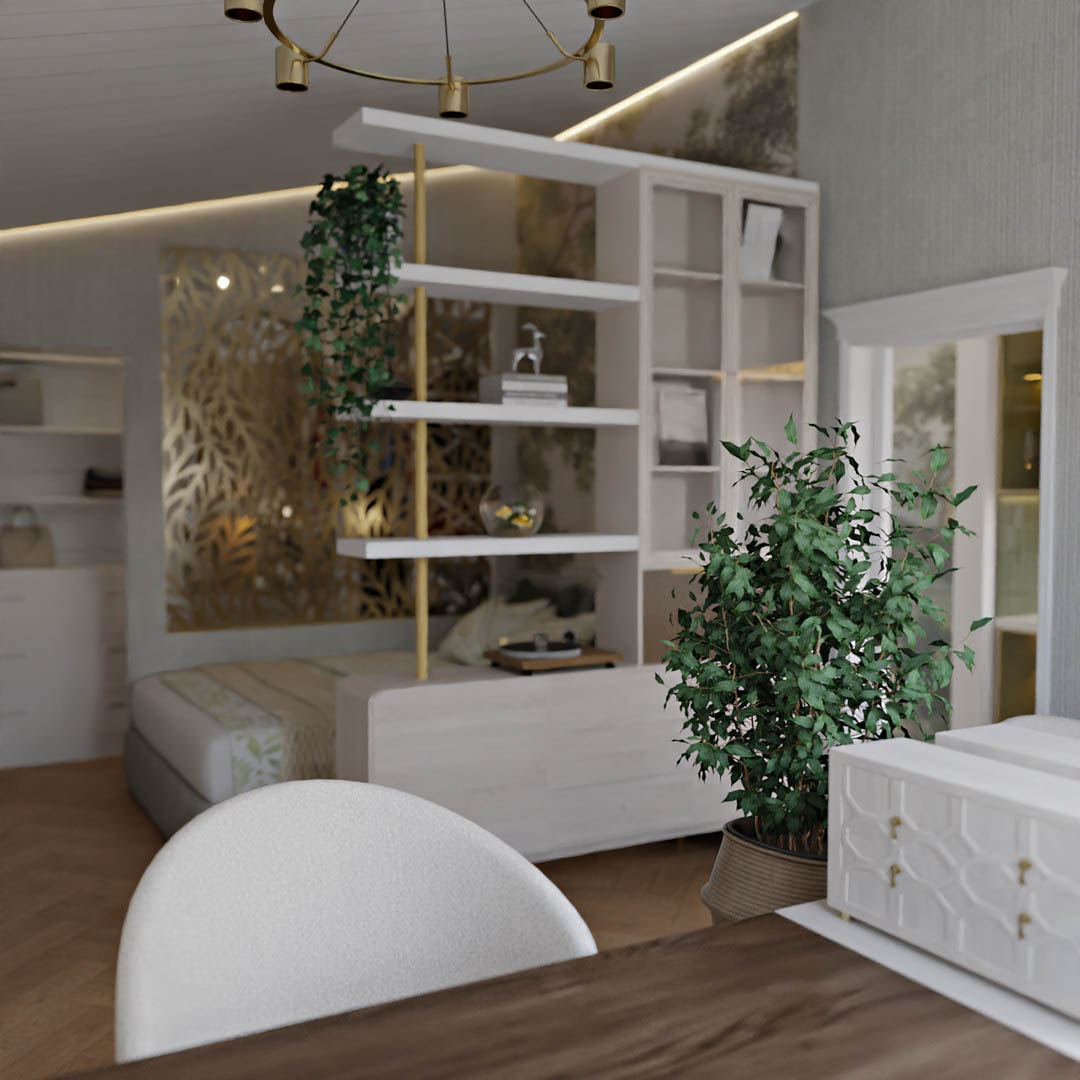
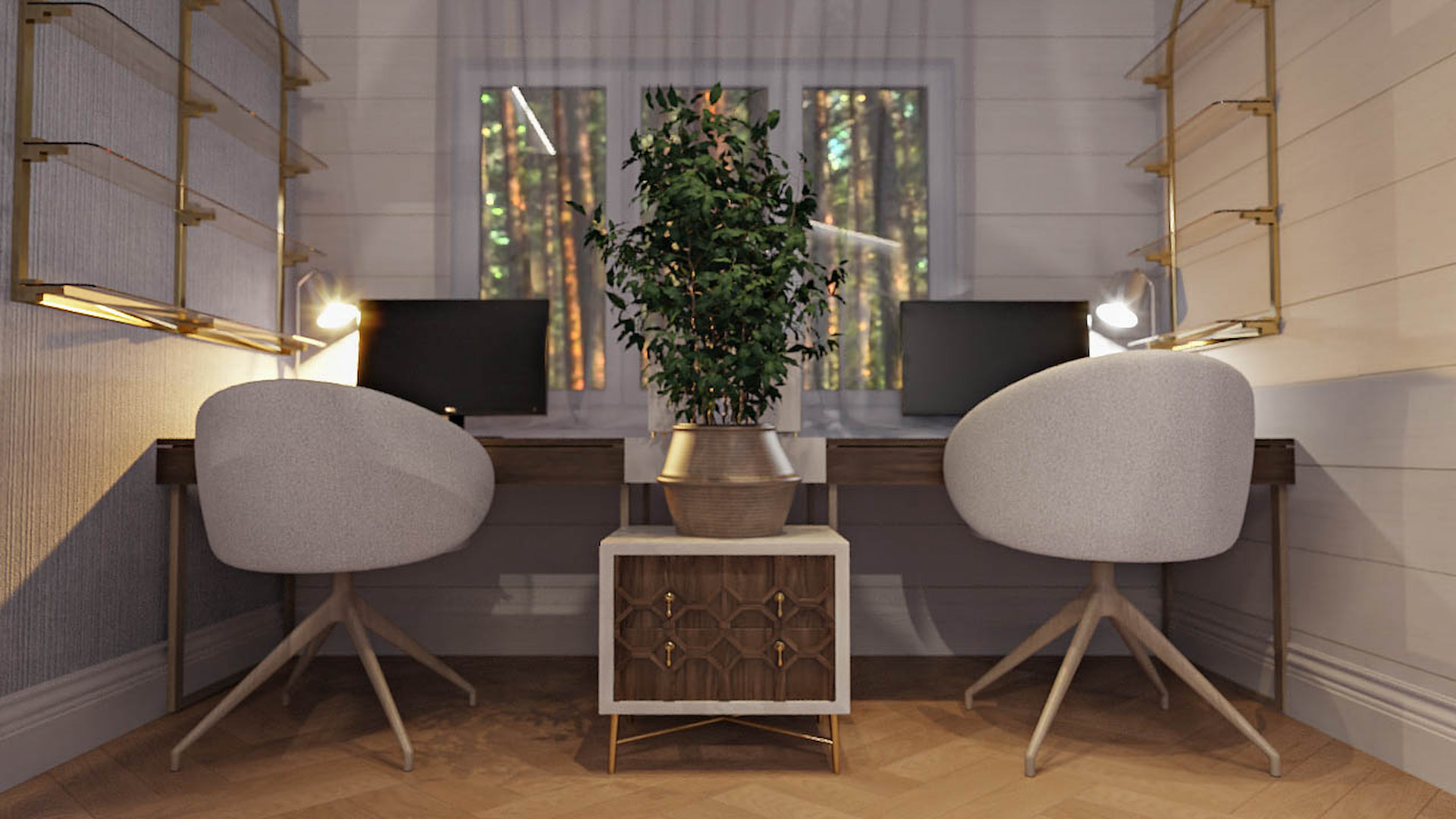
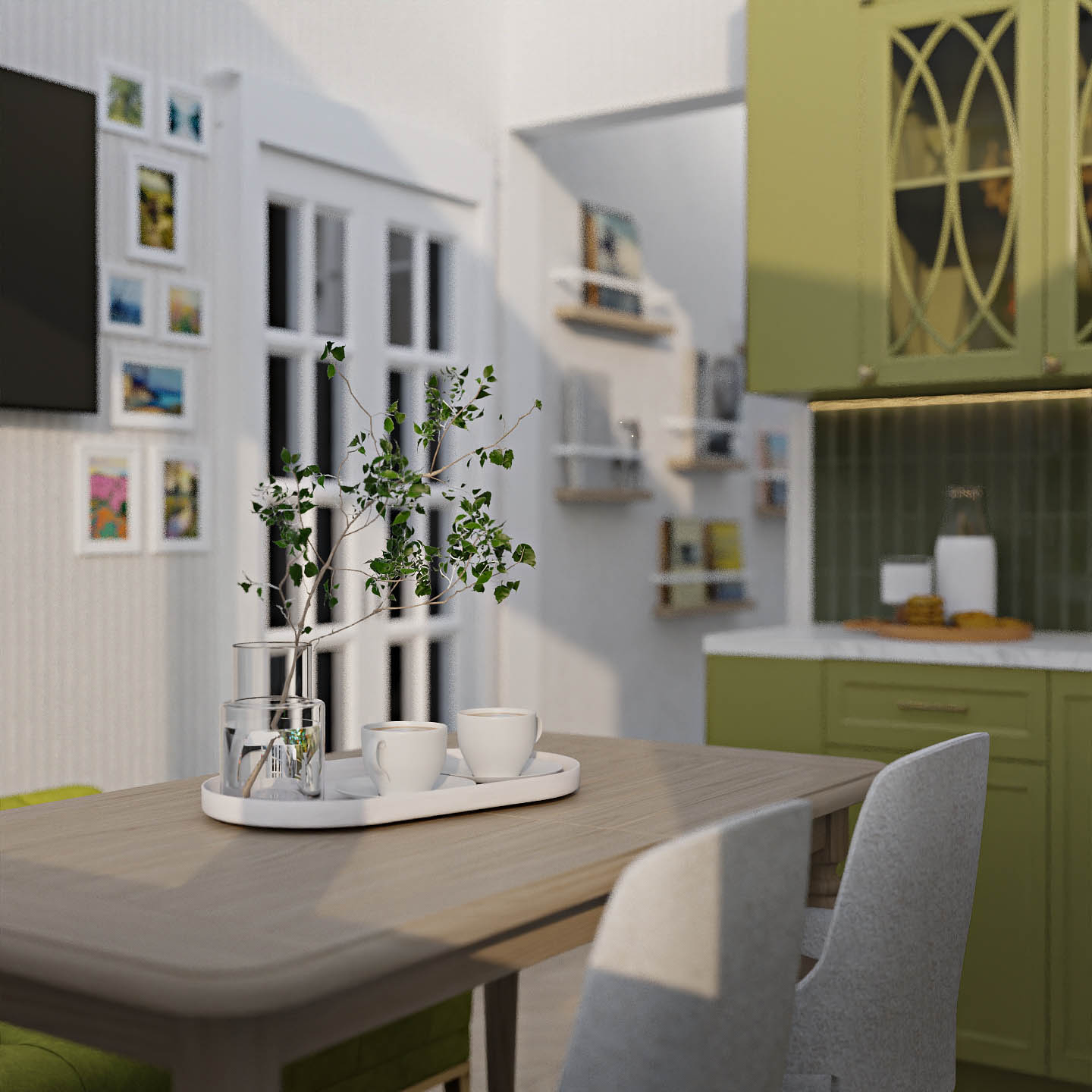
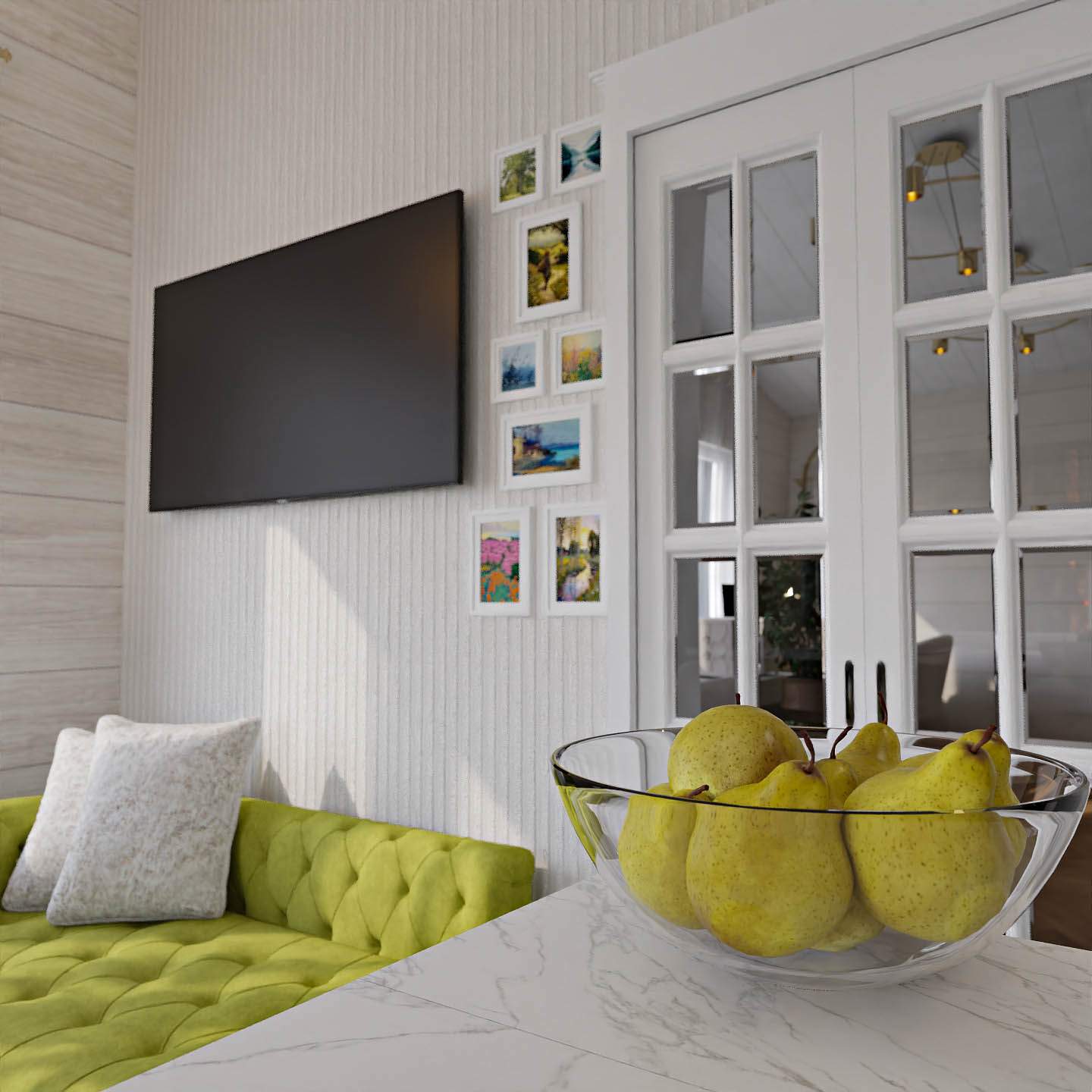
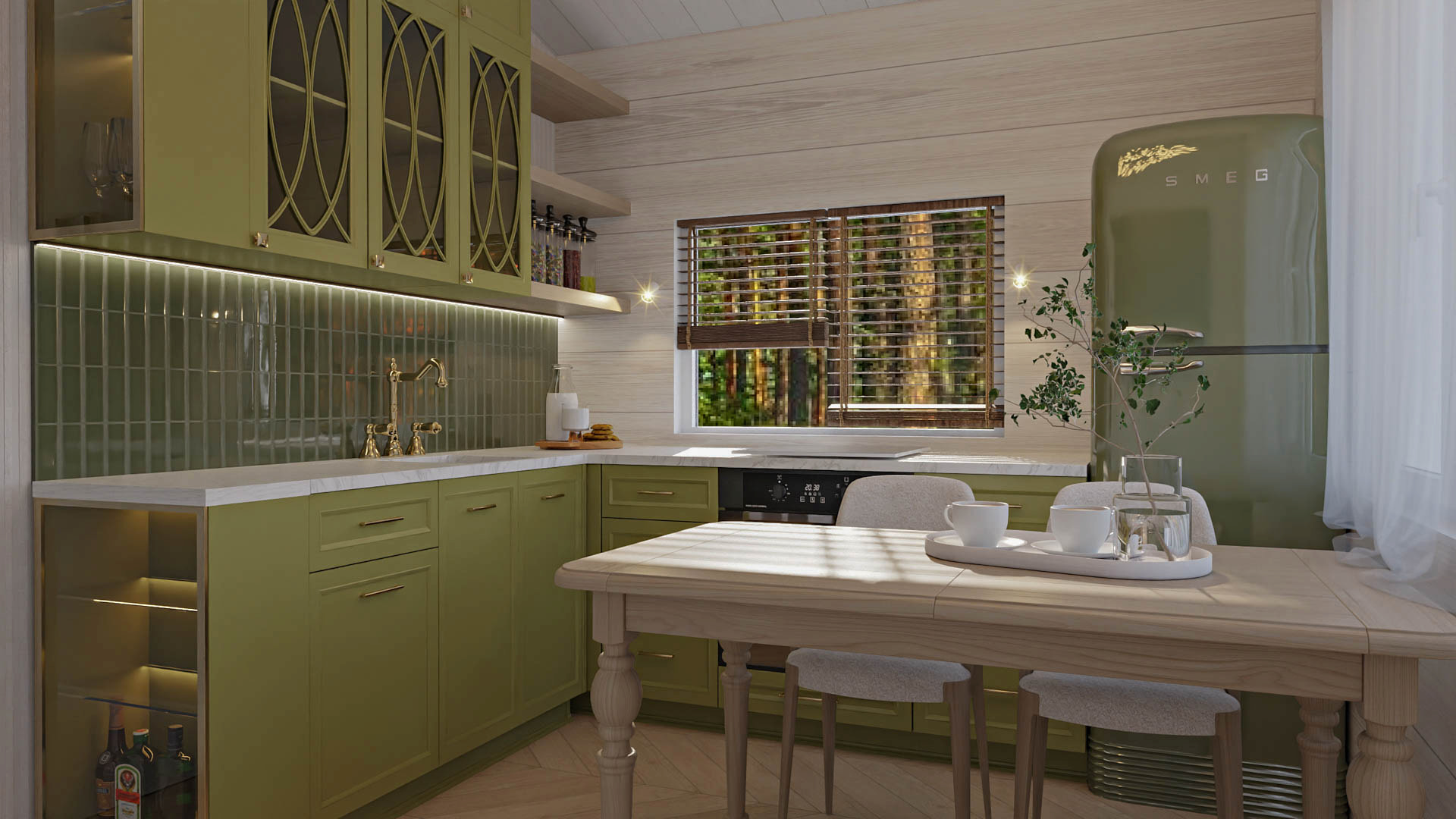
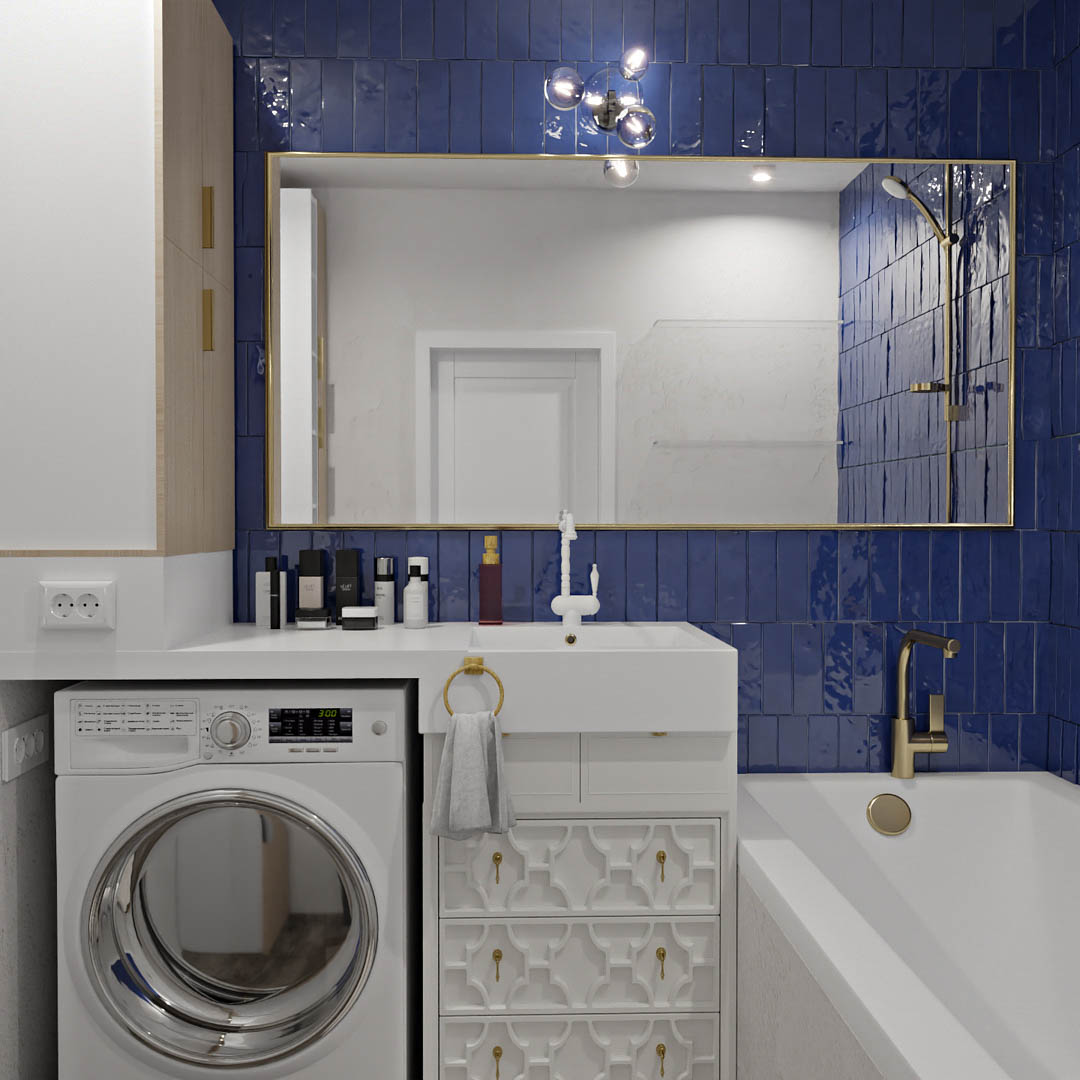
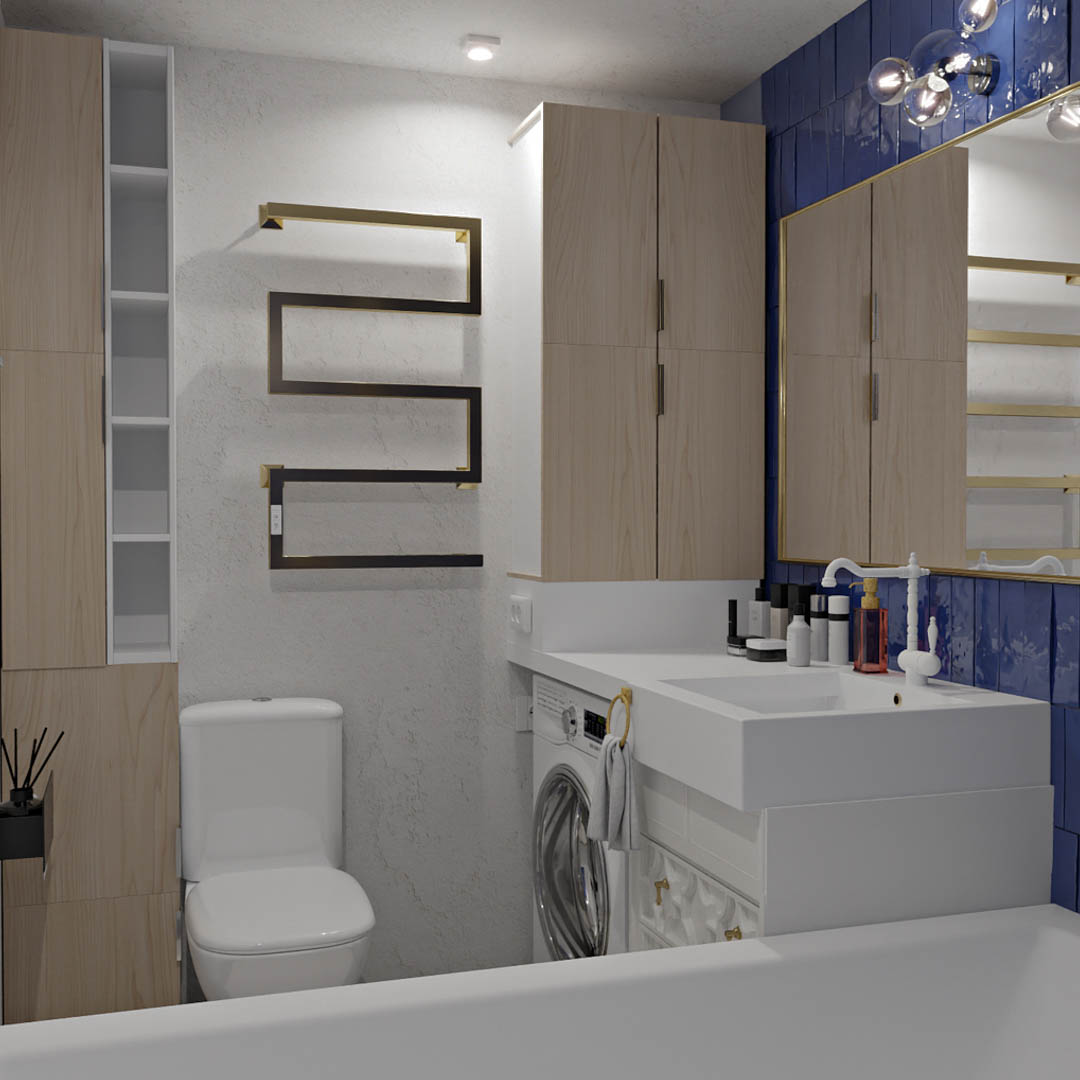
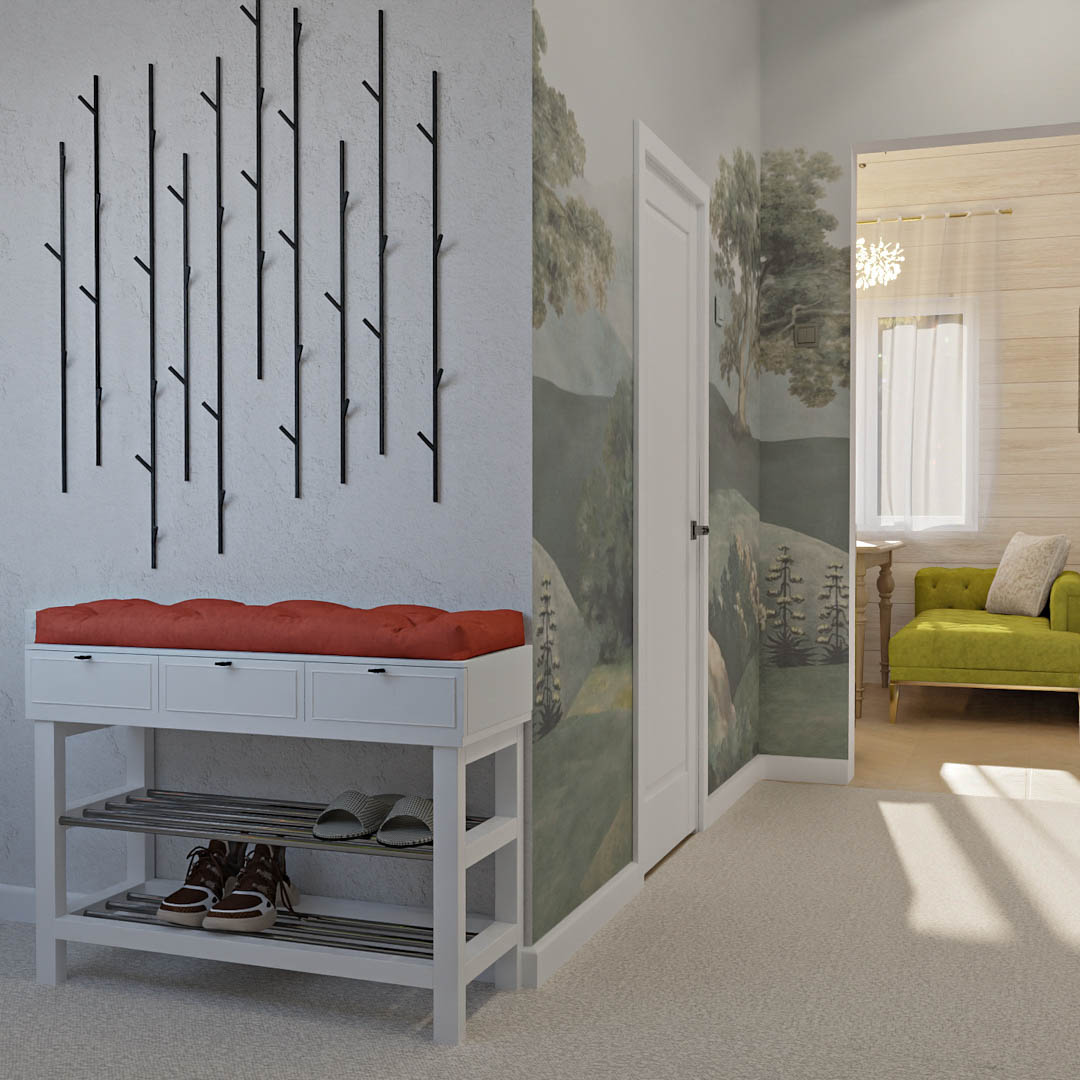
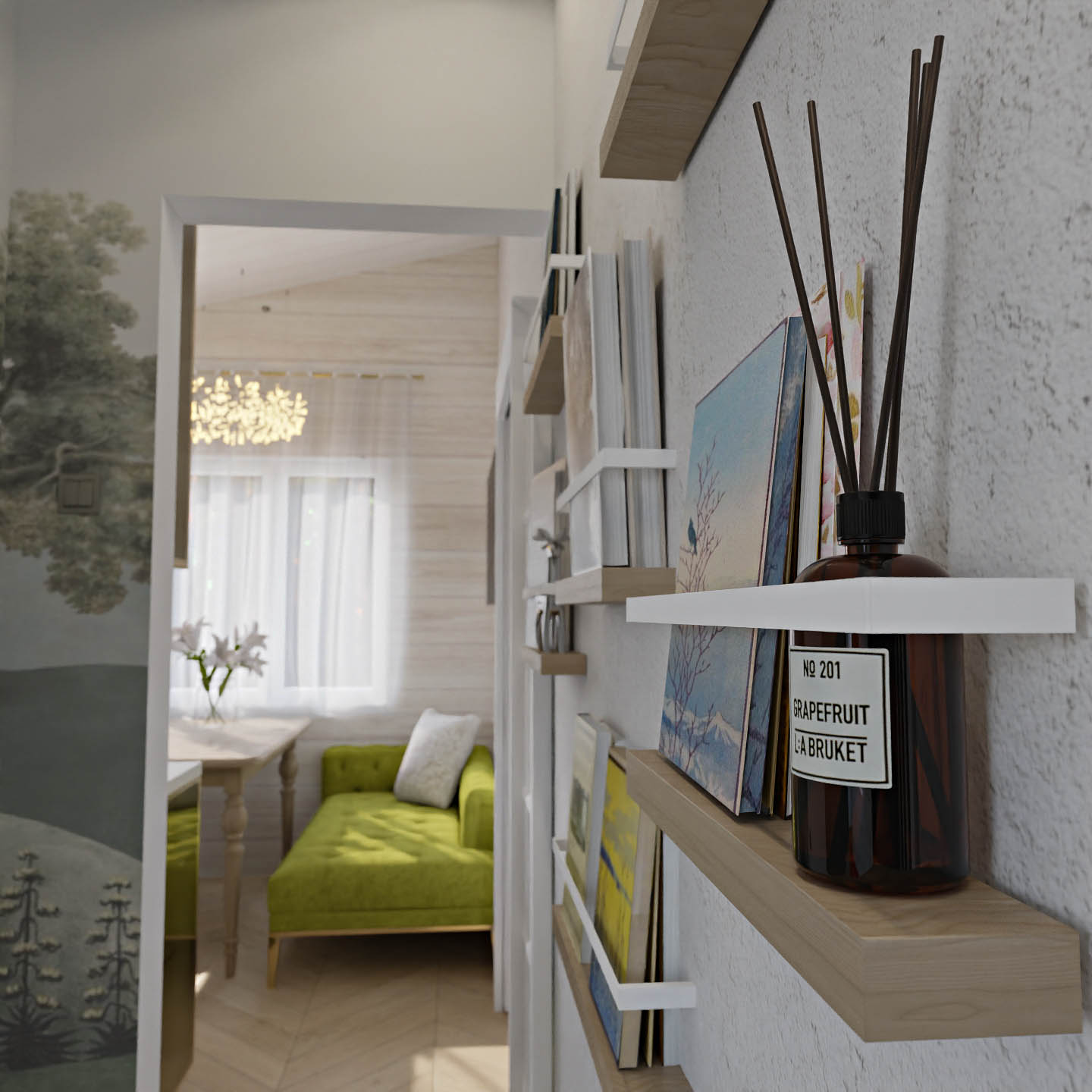
Forest house for two
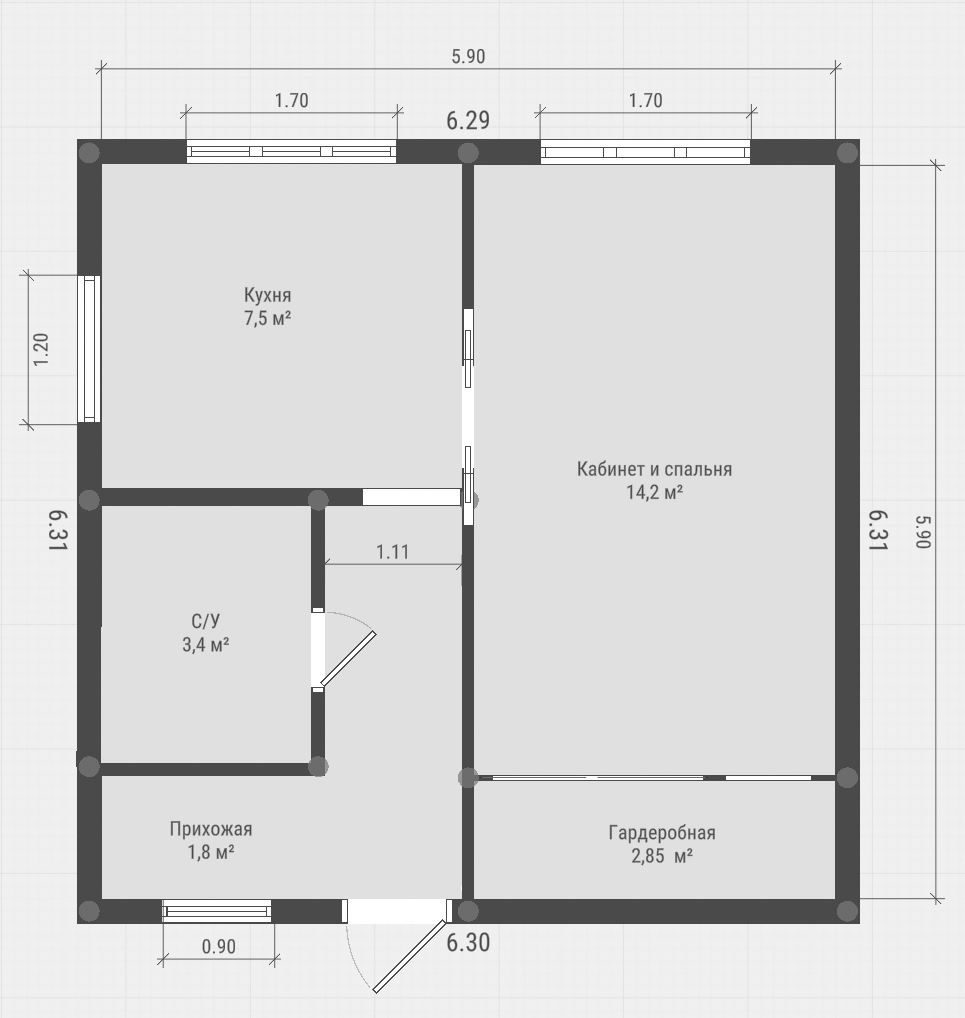
This project includes a virtual tour and a PDF presentation with more detailed descriptions
A funny case: how I got stuck under the house
I needed to take actual measurements of walls and windows inside the house. No floorboards yet — just dirt. A pile foundation. A homemade ladder led inside (no way out). The client left to pick up a material delivery, and I measured calmly.
I only realized I couldn’t get out of this box at the end of the work. The trap seemed too silly, so I was too embarrassed to call for help. I decided to crawl under the walls… and got stuck.
Do I need to say how awkward I felt when the client returned and saw this seal stuck under the house?
What I offer and what I charge
My services include planning walls, windows, and partitions based on site conditions. Furniture placement, creating comfort. Design (colors and materials) is an additional service on top of furnishing.
I also create virtual tours for projects — for example, a 215 sq ft shed conversion, and the 387 sq ft house described above. You can see an example below:
Since I’m just starting to move into interiors, my pricing is negotiable. I bill only for my time in Planoplan. Landscape work has a different rate. I can work for any location — remotely.
I’m willing to work for free if the project is very interesting and I have time. For me, it would be like a hobby, and my portfolio would grow.
How to deal with fear
If you have no prior experience working with clients before your first project — yes, it’s scary. To cope, keep two things in mind:
- They reached out to you for a reason. They like your work or your price.
- Insecurity comes from seeing work that’s much cooler than yours. But you forget that those results come from experience and consistent work. Don’t turn down a project out of fear — think that this very project will lead you to a cooler result.
What I wish I knew at the start
That all people are different. Tastes and thoughts vary. Some client decisions may seem absurd and go against yours — that’s normal. And also: it’s not just clients choosing the designer — designers can choose their clients, too.
Main advice for beginners
Interior design is like a worldview. Everyone has their own picture of the world. And there’s no such thing as “market oversaturation” in worldviews.
Interior Designer Etiquette: 5 Controversial Questions
We asked both designers five debatable questions about professional ethics.
– Only making pretty pictures without implementation or follow-up
Ksenia: Okay (if you work in a team and someone else handles that)
Alina: Okay
– Being self-taught (not graduating from formal design schools)
Ksenia: Okay
Alina: Okay
– Delegating site measurements to someone else
Ksenia: Okay (I always do that — I live in one city, but my projects are in two other major cities)
Alina: Cringe
– Being the cobbler’s children with no shoes — living in a builder-grade apartment with no renovation
Ksenia: Okay
Alina: Okay
– Working for free at the beginning, just for portfolio and experience
Ksenia: Okay, but better not for free — for a symbolic fee, because nothing motivates like money
Alina: Okay
Of course, there are no universal rules. One designer can’t live without construction supervision, while another calmly delegates measurements and lives in an unfinished apartment. And each is right in their own way. The main thing is that in the end, the client is happy, and you don’t burn out.
Your Path in Interior Design Is Unique — And That’s Great
Ksenia went through scammers, lost $4,500, and moved cities — but she didn’t give up on the profession, and she’s almost holding her diploma. Alina came to interior design from geomorphology and now designs houses with a view of old fir trees.
Such different stories, but what unites them: their creators are already making projects that delight clients.
If you’re also a beginner designer — don’t be shy. Join the Planoplan designer community. Here, we don’t judge. Here, we help you grow and support you at every stage.
What designers say about using Planoplan in their work
More real-life stories from practicing interior designers on our blog — from their first big project to fifteen years of private practice and working with students.