Interview with Pavel Lapitsky
Planoplan Chief Product Officer on mission, neural networks, community, and the future of the program he's fallen in love with
- 7 july 2026
- 61
Last time, we introduced you to the Planoplan support team — the people who answer your questions every day and help you through tricky situations. Today, we're going further: we're meeting the person who sets the direction for development and builds into the program everything you see in each update.
Meet Pavel Lapitsky, Product Director and chief ideologist of Planoplan. A man who still designs interfaces himself, conducts research, takes responsibility for every product decision, and sees the program not just as a set of tools, but as his own creation — one capable of changing the market and the lives of designers.
We talked about how a trained psychologist ended up making decisions in an IT product, why a neural network is a brush rather than an artist, where subscription money goes, and why Planoplan isn't on everyone's radar. In this interview, Pavel speaks more candidly than ever about strategy, personal values, and what he's ready to fight for every single day.

The Path to the Company
– Pavel, you hold the position of Chief Product Officer at Planoplan. Tell us how that journey came about.
The journey wasn't planned. By education, I'm a certified psychologist — I studied for five years at the university's psychology faculty. At the same time, from the age of sixteen, I was into digital design, interfaces, and graphics. When I joined Planoplan as a regular designer, there were about five of us on the team. Everything grew from there through initiative. I saw what could be improved in the product and I did it, without waiting for someone to assign me a task. I took an interest in global questions, went through training programs. So in the end, a designer became a product director.
As a manager, I keep the big picture in view and decide where the entire product is heading. As a psychologist, I try to hear the real task behind the request. A person might say, "I need a button," and I try to understand what problem that button solves for them. As a designer, I'm responsible for usability and clarity. In my free time, I make music, and that broadens my perspective a great deal. Rhythm and harmony exist in everything, including within the workflow — and it's important that a person moves through the product smoothly, without stumbling.
– What stereotype about a product director would you like to dispel right now?
That a product director is just a manager who only oversees things and never works hands-on.
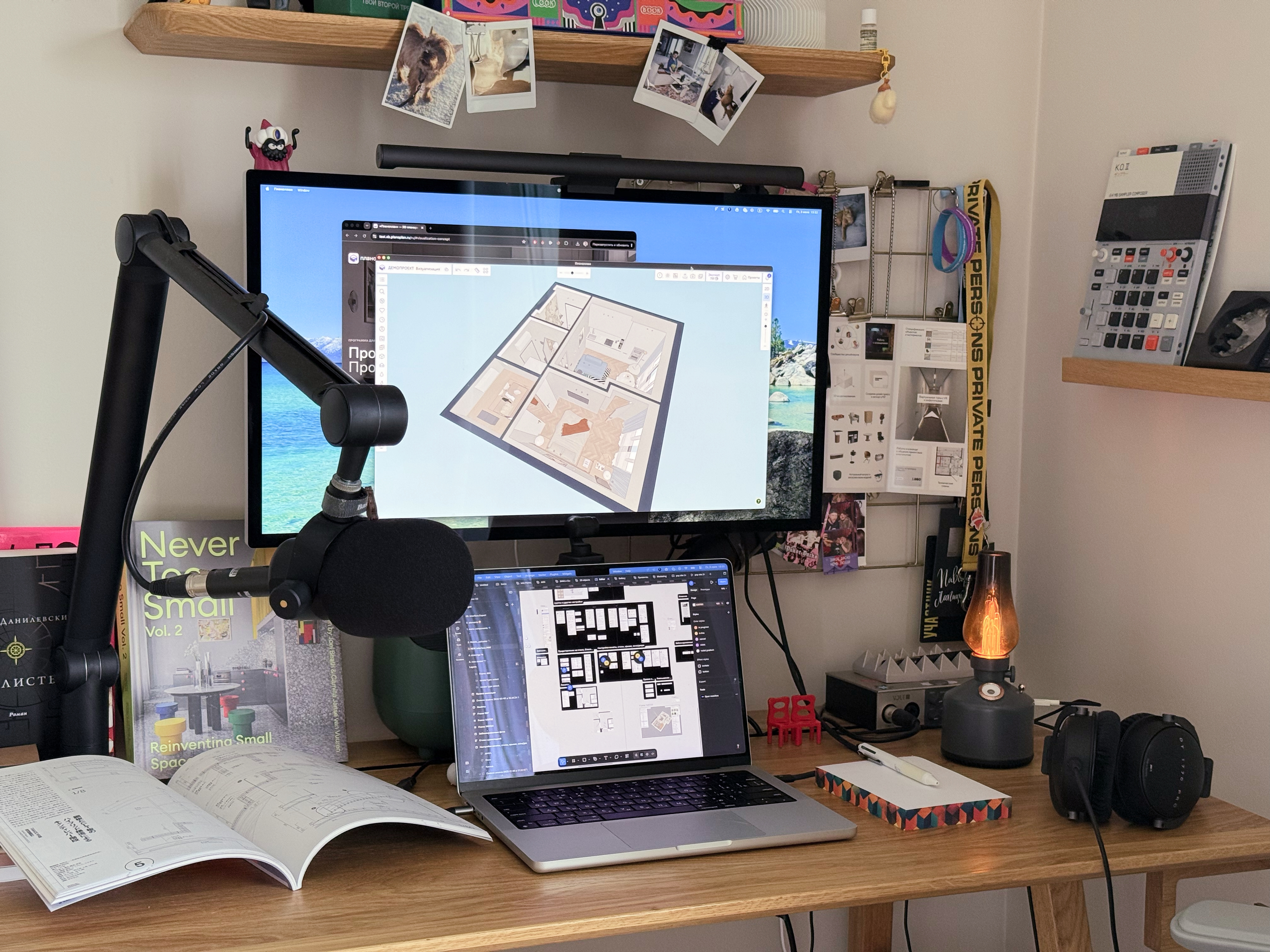
It's the opposite for me. I'm the product director, but I'm still the company's main designer. I design interfaces myself, conduct research myself, set tasks myself. I never stopped working on the product with my own hands — I just added responsibility on top of that.
And it's responsibility from three sides at once. To myself, because my name and my standard are on the line — I can't hide behind "that's what we all decided together." To the team, because we truly build the product together, and if I set the wrong direction, a lot of people's work goes to waste. And to the users, because behind every decision is someone's real working day.
That's why I don't let go of the "material." Once you stop touching the product yourself, you inevitably start making decisions based on presentations and second-hand reports rather than on what a person actually feels when interacting with the program. And at the end of the day, you're still the one responsible.
Psychology and Users
– You're a psychologist by education. How does that help you in your work?
Psychology taught me one thing: people almost never talk directly about their real need. They name a symptom — a specific action or feature — and beneath that lies something alive that they themselves often don't articulate. My job is to hear that second layer.
An interior designer comes in and asks for more objects in the catalogue, more realism, one more setting. That's an honest request. But if you dig deeper, almost always what's behind it isn't so much a feature as a real need. They need the client to say "yes." They need to look confident in that moment. They need to work fast and efficiently. The real task for a product director lives at exactly that level. The button and the feature are just tools — and not the only ones.
And there's one thing that almost no one says out loud. Many designers are internally afraid of "complicated" programs and don't want to feel stupid. They're creative people — software isn't their native environment — and it's awkward to talk about that openly. That's exactly why we simplify the product. The task for development sounds simple, but under the hood it's difficult to achieve. We want to make it so the person doesn't think about which button to press, but only about how to bring their idea to life in their project. When that works, the tool stops getting in the way, and the person regains the feeling that they're in charge here — not the kid standing at the blackboard failing the lesson.
– Neural networks are currently the main source of designers' fears: "I'll be replaced," "my work will be devalued." What do you say to that, both as a psychologist and as a product director?
First, as a psychologist. This fear is normal, and it shouldn't be dismissed. When something appears that can do part of your job for you, anxiety about yourself is a healthy reaction. So the first thing I'd say to those who are afraid: your fear is understandable and normal.
Now as a product leader. A neural network is a tool — just in text format. You control it with words, but essentially it's the same as any other brush. And here's an important detail: it's trained on averaged answers, so on its own it produces average results. It doesn't have your eye for design. It's not an art director and can't tell you, "this is good, that's bad." Where to direct it — that's entirely up to you.
Plus, it doesn't sit down at the table with your client. It doesn't sense that the client has two kids and a dog, that they hate clutter and love it when morning sun falls into the kitchen. It speeds up operations — that's true. But taste, appropriateness, talking to a real client, and taking responsibility for the outcome — all of that stays with you.
So I'd reframe the question. It's not neural networks you should be afraid of. An experienced designer will always outperform a beginner with a neural network, because the beginner can't tell a successful idea from a failed one and can't guess what the client will like. The model hands out the same average to everyone. It takes your trained eye to turn that into something good. So pick up the tool, optimize your workflow where needed. Your value was never in the picture itself. It's in your ability to tell good from bad.
– In one of your materials, you said: "Don't be embarrassed to be at the beginning." Why is that so important to you?
Because the beginning isn't a shortcoming — it's simply a point in time that everyone once occupied. Everyone has that first job they look back on a year later and cringe at. That's not something to be ashamed of — it's proof that you've grown. And shame about starting out usually holds you back just as much as a lack of skill. It stops you from taking on a project, from asking a question, from making the first move.
I've felt this myself. I'm generally quite comfortable stepping into places where I'm a beginner. I joined Planoplan as an ordinary designer; there was a lot I didn't know. But when you give yourself permission to be at the beginning, you learn. When you beat yourself up over it, you only slow yourself down.
This applies to new software too. When a user installs the program, they might be afraid of making mistakes in advance, put off the first steps, prepare for a long time instead of just diving in and figuring it out hands-on. I want the product itself to remove that fear. In Planoplan, an error costs nothing — you can try, undo, redo; nothing is permanently broken. And if someone gets stuck, there's live support and a community of fellow designers nearby — where you're not judged, but helped. That's exactly why I say: "You're at the beginning, and that's perfectly fine." The main thing is to start; we'll help you not get lost, at any stage.
– Why do you think there's a fear of "complicated" programs in the design community? How does Planoplan address this?
This fear isn't unfounded. Professional design programs were genuinely heavy for a long time. High barrier to entry, months to learn, and one wrong move could crash the entire project. People got burned by that for years. Plus, the industry cemented the belief that a serious tool had to be complicated — that simplicity was like a toy for amateurs. Complexity became something like a membership card to the profession.
We challenge that belief. Simplicity and power coexist beautifully. A tool becomes complicated when the person behind the screen is forgotten — the sheer number of features has nothing to do with it. You can deliver the same visualizations, blueprints, and tours while removing the pain of learning. That's harder to do than it sounds, but it's exactly what beginners love us for.
So we're not fighting features — we're fighting unnecessary friction. Clear interface, short path from installation to the first finished shot. And when a person sees that a powerful program can be friendly, the fear disappears on its own. Mastery stops being an ordeal you have to steel yourself for.
Strategy and Development
– Let's be honest. Planoplan has been around for several years, but not all designers know about it. Why do you think that is? And what are you doing to change it?
Honestly? Because for many years, all our energy went into the product: growing the team, developing functionality — almost nothing was left for making a loud noise about ourselves. And that was a conscious choice. First build a tool you're not embarrassed to use, then make noise later. That choice has an obvious cost. Not everyone knows us, and I acknowledge that calmly.
The second reason is market inertia. Interior design learned on several heavy programs for decades — education and the habits of an entire generation were built around them. Habit is hard to shift, even when something more convenient appears nearby. A person would rather tolerate familiar pain than switch tools.
And here's how we're overcoming it. We stopped being shy about talking about ourselves. We show real designers and their actual projects, build a community around the product, attend events, and start public conversations like this one. I believe in the slow, honest path. Not advertising that promises miracles, but people showing what they've made in the program. That kind of reputation and recognition grows slower, but it holds stronger.
– You call Planoplan your "creation." What is it about it that makes you ready to fight for it every day?
Planoplan is my creation in the most literal sense. When I joined, there were only a few of us, and many decisions at the product's foundation are mine. But you don't raise a creation alone. What Planoplan has become is thanks to the team — they share the vision and bring it to life every day. With a product like this, you don't have a nine-to-five contractual relationship.
What I fight for every day is one thing: keeping the distance between "I have an idea" and "I see it realized" as short as possible. Any product, over time, wants to bloat — to grow features and become more complex. That's what I resist constantly. Adding is easy; preserving clarity is hard — and that's daily work.
Because behind every task is a person — whether a student or a private designer. It's important to us that such a person doesn't have to become an engineer just to bring their idea to life. If tomorrow the product becomes powerful and valuable for insiders but alien to beginners, then we've lost.
– How do you decide which feature to add next?
Since I'm not an interior designer myself, I genuinely can't rely solely on my own instincts about the profession — so I have to listen, not assume. Listen to users, to the team — especially those closer to the craft than I am — and to living designers (not necessarily our users), whom I enjoy meeting and speaking with at length individually. And here's how I actually hear them and how that turns into a decision.
The main source is requests from our dear users. In support and in chats, we read everything — without exception — so when I say "we listen," it's not a figure of speech. But I read in a particular way. I look not at the wording of the request itself, but at the task and the designer's underlying need. In product circles, this approach is called Jobs To Be Done. A person asks for a specific feature, but what they're really trying to do is get some job done — and my job is to understand which one. Often, the same goal can be achieved in many different ways.
From there, a queue forms. If I hear the same pain from dozens of different people — even in different words — that's a signal. But sometimes it's the opposite. Someone asks for a specific button for two years; we don't build it, and from the outside it might look like we're not listening. We actually are. It's just that sometimes the task behind that button can be solved more conveniently another way, or it affects fewer people than something else. And sometimes it's simpler — the request hits technical limitations, or the team is relatively small and we can't get to everything at once. The queue forms by priorities and by what we can actually handle.
– Are neural networks just a trendy topic, or a real challenge for tools like Planoplan? How do you see it?
It's absolutely a real challenge — and anyone calling neural networks just a trend is probably hiding from them. They've already changed the most important thing: people's expectations of any visual tool. Pretending this will just pass is naive. We take it seriously.
Of course, the challenge isn't that the neural network will draw an interior instead of us. An image generator produces a beautiful picture — but it doesn't give precise dimensions, working drawings, specifications, furniture you can actually order, or a tour the client can walk through before renovation. A designer needs a project that can actually be built from. A nice render isn't enough for that. That precision and reality is our territory — and a neural network on its own doesn't cover it.
So we're not fighting neural networks — we're integrating them where they actually help. We're already testing such capabilities internally. We plan to incorporate AI at the stage of a finished render and its final polish — exactly where our users, according to surveys, already use it. To add a blurred silhouette to a frame, as is common in archviz. To tweak a detail without rebuilding the whole project. The precise project itself remains with the product and the person, while the neural network helps with the final image. And all of this carefully, without breaking the familiar workflows you value. The real risk is standing still and thinking this doesn't concern you. We don't allow ourselves to do that.
– Plans for 2026. Where is the product heading?
I won't reveal the roadmap point by point — that would be unfair both to the team and to the plans themselves, which are still evolving. But I'll name the direction. We're holding the same line: more capabilities with the same short path from idea to finished project. Every year the product becomes more powerful — and every year the main work is to make sure it doesn't become more complicated.
From the specific and near-term: we're continuing work on drawings — you already saw some of the improvements in the June release. Exporting plans to PDF and quick switching between projects, so you don't waste time when managing multiple versions of the same project. Comfort in routine tasks matters too.
A bit further on the horizon: that careful AI integration on top of finished renders that I mentioned. The near-term removes friction today; the long-term adds possibilities tomorrow.
Economics and Values
– One of the most frequent questions from beginners: "Why is Planoplan paid when there are free alternatives?" What do you answer?
Let me put it bluntly: there are no truly free products in our niche — there are freemium ones, where only the start is free. So Planoplan should be compared not with those, but with classic professional programs. And those either cost noticeably more than Planoplan, or they're used in cracked versions — where no one promises out-of-the-box functionality or stable performance.
At the same time, we try to make sure price isn't a barrier. In December 2025, we introduced a flexible pricing grid where everyone takes exactly the set of features they need and doesn't pay for extras. Plus, our visualization is done in the cloud — meaning you don't need to buy powerful hardware for rendering; our server does that for you. With classic programs, you're effectively paying for the same image with the cost of your own device.
And if we're talking money directly: even the fullest subscription costs noticeably less than what a single order brings in — so it pays for itself with the first commercial design project. Paying for a tool you earn your living with is normal. For me and for my goals, a good paid program has long been an investment in myself and in my professionalism.
– In your quote for one of our articles, there's a phrase: "Every dollar/euro you entrust to us is an investment in a shared future." What exactly does a user get in return for their investment, besides buttons in the program?
This phrase isn't just a beautiful turn of phrase — I truly believe it. When you pay, you're not just buying access to features for that month. You're investing in the product's continued life and growth. We release updates roughly every three months, and each one makes the program better. That's exactly the shared future — because we're growing together.
What else, besides the obvious, does a person get with a subscription?
- Influence — because we read every request, and your money, together with your voice, moves the product in your direction.
- Live support — in the form of a team that continuously develops the program and support staff who help when you run into difficulties.
- And one more thing, very important: stability. You're financially investing in a tool that won't disappear tomorrow and won't abandon you mid-project. In today's world, that's worth a lot.
That's what, beyond buttons, a person pays for. For the fact that their working tool has a future — and that they themselves are shaping that future.
Events and Community
– At which exhibitions and events can we meet Planoplan? Where have you been, and where do you dream of going, budget aside?
Over the past year, we've made it to several venues. We were at events by the Archialog team, at Design Joker, and at the Russian Days of Design and Architecture at Design District DAA. This isn't just to check a box — it's for live conversation with designers. When the program is right in front of them and you're presenting it at your booth, you immediately see what truly bothers people and what questions they ask.
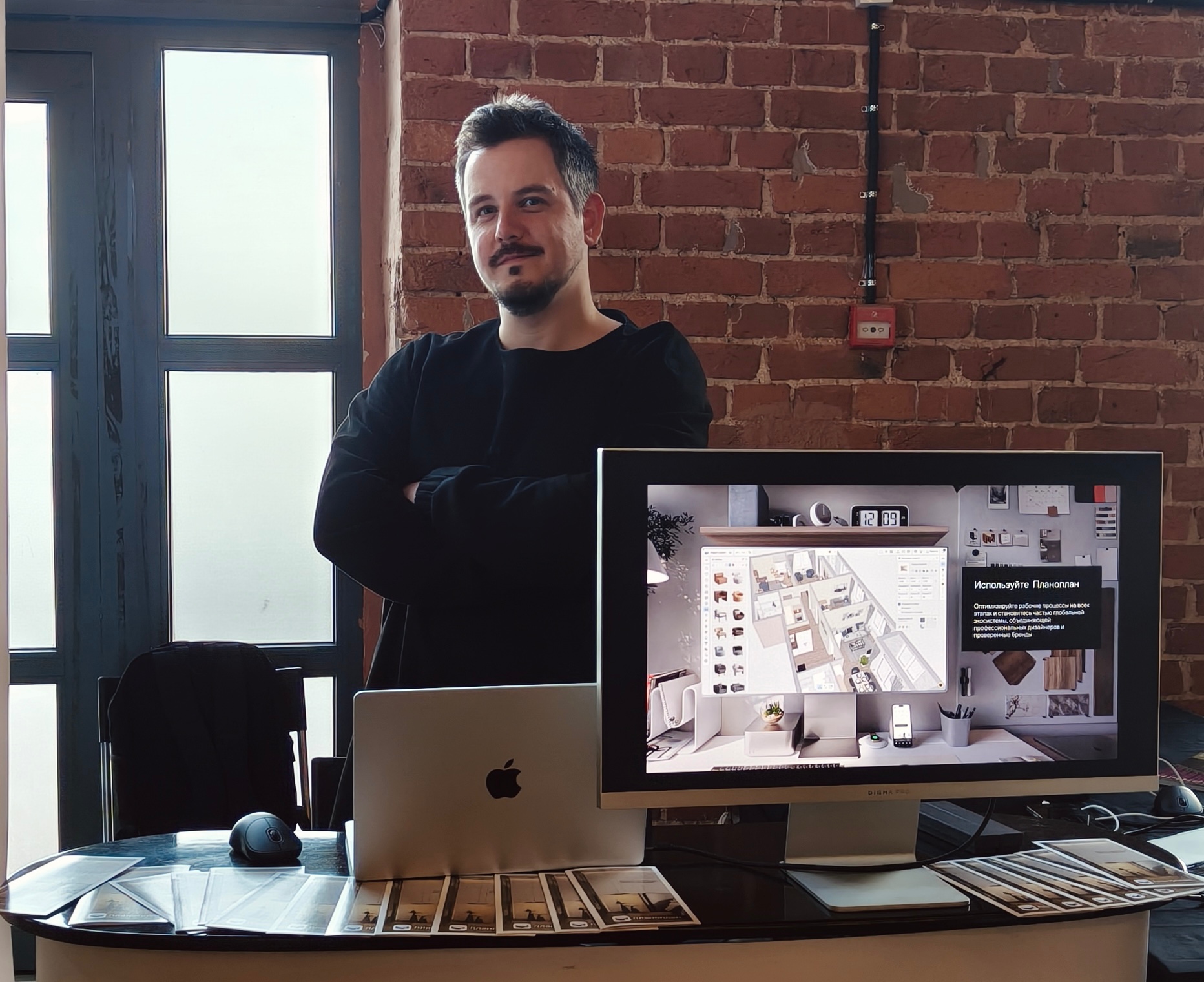
And now for the main reason to read to the end: this year, September 23–25, we're going to the Russian Days of Design and Architecture in St. Petersburg as a title partner. That's at our home base, Design District DAA on Krasnogvardeyskaya Square. So if you're reading this and wondering where to catch me in person — come on over. I'll show you the product and answer any question personally.
And if I can dream, budget aside — I want a big booth at ArtDome and at MosBuild with full workstations where everyone can sit down, try Planoplan right then and there, put together their first scene in a couple of minutes, and leave already as one of our people. Give me that booth, and I'm confident about the rest.
– What does "living community" around Planoplan mean to you personally? Give an example of when you saw real benefit from it.
A living community to me isn't follower numbers — not the likes and hearts on social media posts. Living starts where users begin to see Planoplan as a context and start helping each other on their own.
And we've partly built this right into the product. People share their models through the "Community" catalogue — giving others what they've collected and found valuable. Each model has the author's name on it, so sharing is also a calm way to showcase your expertise.
In our chats, experienced users answer beginners' questions and help them figure things out. Sometimes designers show their work, talk about materials and models used in renders. I especially value feedback through our users' work, because in a creative field, sharing what you're working on publicly is already a sign of great trust in the environment.
In those moments, I see that the product has stopped being only ours. It's become shared — and people feel at home in it.
Blitz and Personal
– What does interior design mean to you as a person?
Stepping away from work: for me, interior design is a way for a person to communicate with space. Any space affects the body and mood — and good design makes that conversation meaningful. A cozy home, a trendy clothing boutique, a dark techno club — each has its own task, and each should immerse a person in the right state. This is achieved through ergonomics and style — how the space is arranged and how it looks.
At its core, it's pure psychology. The environment shapes your state and gently tunes you to the right mood. In some places you breathe freely; in others you feel cramped.
And when it comes to housing, I have my own view: it's good when a home reflects the tastes and interests of the person living in it — not a magazine picture or someone else's ideal of beauty, but exclusively that particular person. Then the space becomes — and feels — their own.
– Which feature in Planoplan makes you personally proud?
My personal pride is virtual tours. A designer puts together a project, creates spherical panoramas within it, and with one motion turns it into a tour that the client can move through independently. Putting such a tour together is very simple — and that's fundamental for me. A powerful thing doesn't have to be complicated to assemble.
There's a lot inside that I love. You can create transitions between different states of one room — for example, showing it during the day and in the evening, or with different finishes. You can place info points anywhere and write any information or link into each one — to a specific product or an alternative. And you can share it all with the client via a direct link — the tour opens in any browser, no installation or registration needed.
And here's why I'm proud: the tour closes the most difficult moment in a designer's work — when you need to explain to the client what the result will look like. Not everyone can visualize from blueprints — but here, the person simply enters and finds themselves in their future space. The project stops being a picture from a single angle and becomes a place you can walk into before renovation even begins, getting the fullest possible impression.
Virtual Tours
How to take project presentations to a completely new level and significantly speed up the client's decision-making process? We share successful examples of using virtual tours in our article.
Blitz
Mac or Windows? Mac. But Planoplan is equally good on both.
Morning starts with...? Coffee. Without filter coffee, the day won't start.
What would you wish for a designer who just installed Planoplan and is terrified of making a mistake? Don't be afraid to do something wrong. Here, everything can be undone and redone — and the first mistake is usually the beginning of proper work.
What would you say to a user who left for a competitor? Thank you for trying our product. But keep an eye on updates — I think you'll soon want to come back.
Do you have any superstition or ritual before a release? Two, actually. Before a release, I always compile the change log myself and edit the release video myself — no update goes out without that. And we never release on a Friday. The golden rule of anyone who's ever rolled out an update on a Friday evening.
What book/film/album changed your view on design or product? The film "Perfect Days" by Wim Wenders — about a toilet cleaner in Tokyo. It struck me on two levels. As a designer, because the toilets themselves are part of a major architectural project, designed by renowned firms. And as a person, because of the protagonist's attitude to work. He does a simple job with such attention and dignity that it makes you see any kind of work differently.
If you weren't a product director, what would you be? A multidisciplinary designer. I still can't imagine myself without design — I'd just be doing it in some other form.
Your biggest fear as a product leader? Losing feedback from users. Once you stop hearing real people, you start inventing the product from your head — and that's the shortest path to making something nobody needs.
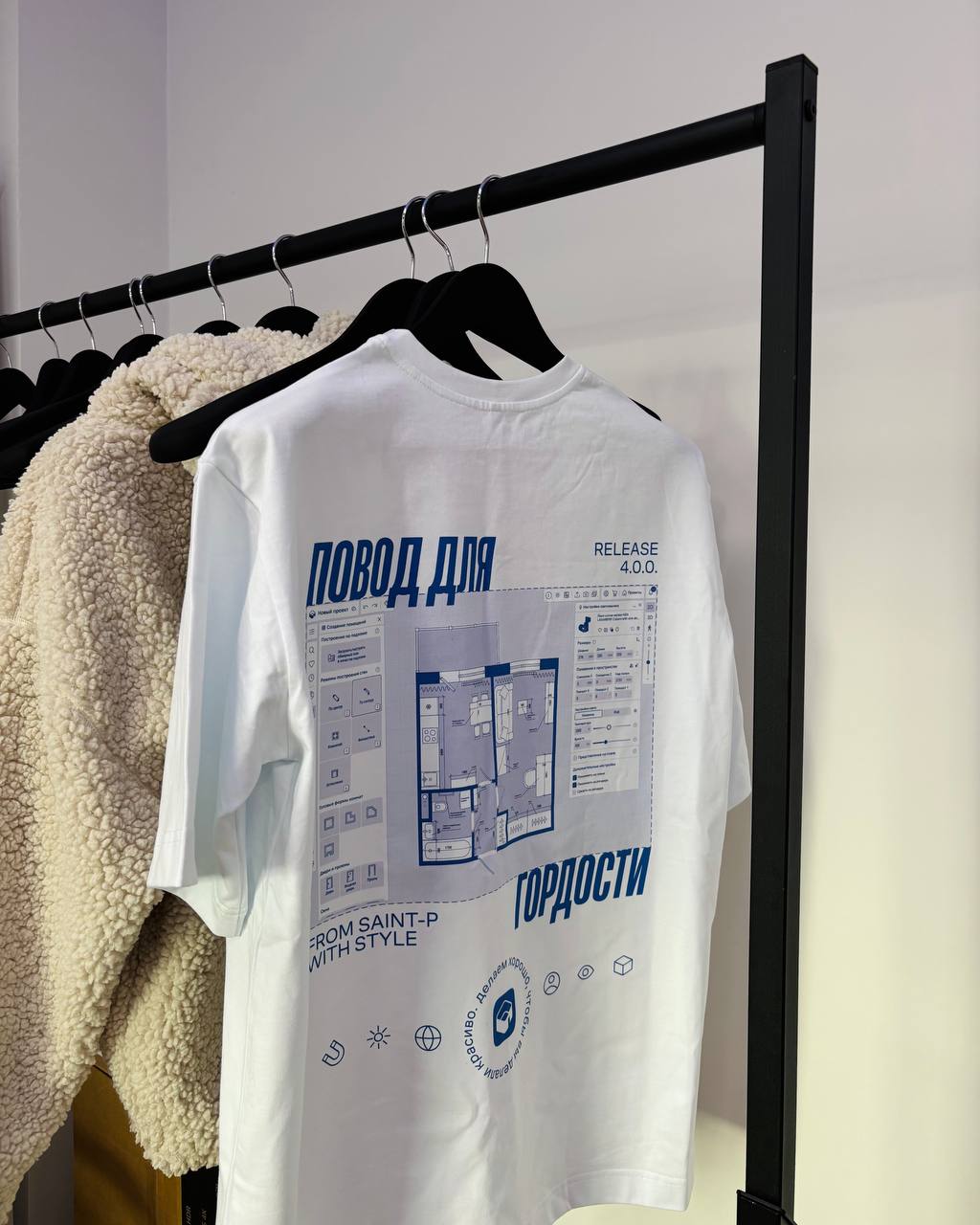
What would you write on a T-shirt you could wear to an exhibition? Our own T-shirt with the words "Reason to be Proud." I'd wear it without any irony. I genuinely am proud of the product and the team that makes it every day. At an exhibition, that's more honest than any made-up slogan.
A feature you hate but are forced to keep? There aren't any. If a feature exists in the product, then someone needs it. I may not personally like it — but that's no reason to take it away from someone for whom it matters.
How many times a day do you open the program just because? I don't actually close it. Some version of Planoplan is almost always open — most often the test version.
Ideal Planoplan user — what are they like? A person open to new things, who truly loves the product and finds value in it for themselves. They don't just work in the program — they're proud of it along with us and help shape the image of a professional product by telling friends, colleagues, and their audience about it. They remember that their value as a specialist lies beyond the ability to use a tool. In the community, they advise others, discuss changes, make wishes, and look forward to updates. It's with such people — and for such people — that I want to work.
Meet Planoplan Support
How our support is organized and why your question will be resolved faster if you know one trick. Interview with Andrey Pyatigorsky, Head of Client Support at Planoplan